THE ADVENTURE COLLECTIVE® · Independent discovery and booking for outdoor travel

Try hands-on ninjutsu in Tokyo: a focused 75-minute lesson in stealth movement, replica weapons and a photo shoot (costume optional). Learn safe handling and basic techniques from a licensed English guide in a city dojo setting.
Try hands-on ninjutsu in Tokyo: a focused 75-minute lesson in stealth movement, replica weapons and a photo shoot (costume optional). Learn safe handling and basic techniques from a licensed English guide in a city dojo setting.
Stepping into the training room, the air tightens around focused breaths and the rattle of wooden swords. Soft light falls on a short practice hall where visitors swap city shoes for quiet steps, learning how to move with intent rather than force. The session compresses centuries of covert craft into deliberate drills: shuriken throws, basic sword strikes, stealthy footwork and a staged "mission" that ends with a group photo—costume optional.
Verified experiences and guided adventures in the surrounding area.
Operated by True Japan Tour · Tokyo, Tokyo
Stepping into the training room, the air tightens around focused breaths and the rattle of wooden swords. Soft light falls on a short practice hall where visitors swap city shoes for quiet steps, learning how to move with intent rather than force. The session compresses centuries of covert craft into deliberate drills: shuriken throws, basic sword strikes, stealthy footwork and a staged "mission" that ends with a group photo—costume optional.
Ninjas emerged as intelligence agents in feudal Japan, serving regional lords from the 15th through 19th centuries. The techniques taught today are modern reconstructions—practical movement, tool-handling and the philosophy of observation—rather than battlefield tactics. Geographically, this experience sits in Tokyo on the broad Kanto Plain, a dense urban landscape that contrasts with the rural hideouts of historical shinobi, yet preserves cultural threads through dojo practice and ritualized movement.
Participants will get hands-on time with replica weapons under licensed English-speaking guidance, learning safe grips, throwing lines and basic evasion. The session is short—about 75 minutes—so it favors focused practice over mastery. Expect light physical activity: balance, coordination and repeated movements, suitable for many fitness levels but not recommended for people with spinal or serious heart conditions.
Practical tips: book ahead to reserve a costume (¥3,500 optional), arrive early for pickup or orientation, wear flexible clothing and closed-toe shoes, and follow the instructor’s safety brief when handling shuriken and wooden swords. The experience blends theatrical photo moments with disciplined practice—an urban, hands-on window into a shadowed element of Japanese history.
easy.
1–1.5 hours.
Suitable for most fitness levels; requires basic balance and light mobility. Not recommended for those with serious heart or spinal conditions.
No—the costume is optional and costs about ¥3,500; request it in advance by email to ensure availability.
Yes—participants use blunted or replica tools under direct supervision with a safety briefing before any handling.
Yes—the operator lists wheelchair accessibility, but contact the provider ahead of time to confirm logistics and any assistance required.
The activity is suitable for most ages and fitness levels, but it is not recommended for people with serious cardiovascular or spinal conditions.
Shinobi served as scouts and intelligence operatives for regional lords from the 15th to 19th centuries; modern 'ninja' schools often reconstruct techniques from historical texts and oral tradition.
Providers emphasize safe handling of replica weapons and respect for cultural artifacts; travelers are encouraged to follow instructor guidelines and avoid photographing private ritual elements.
True Japan Tour operates guided outdoor trips and adventures with an emphasis on safety, stewardship, and memorable experiences.
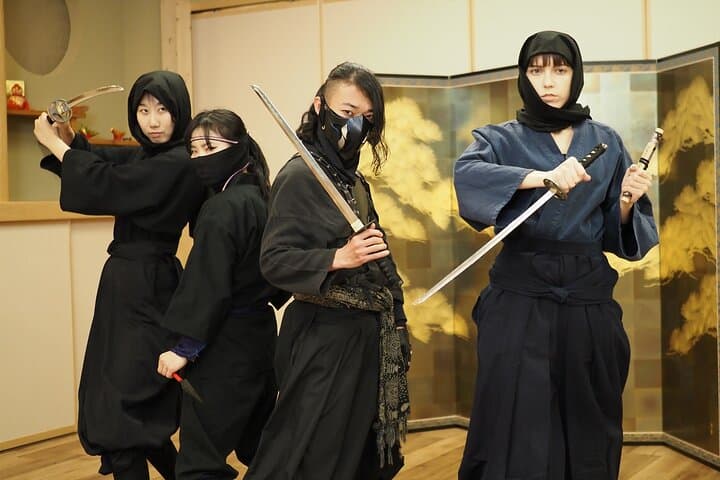
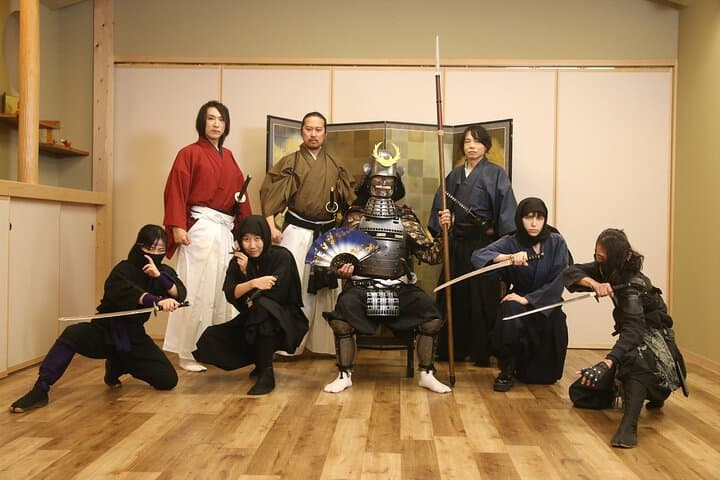
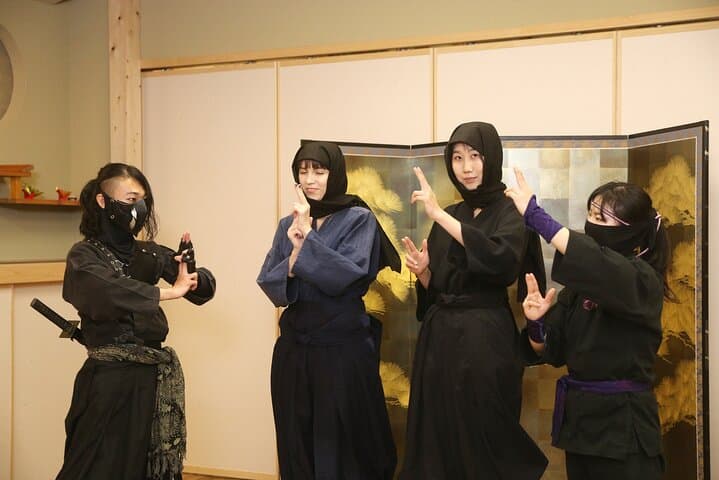
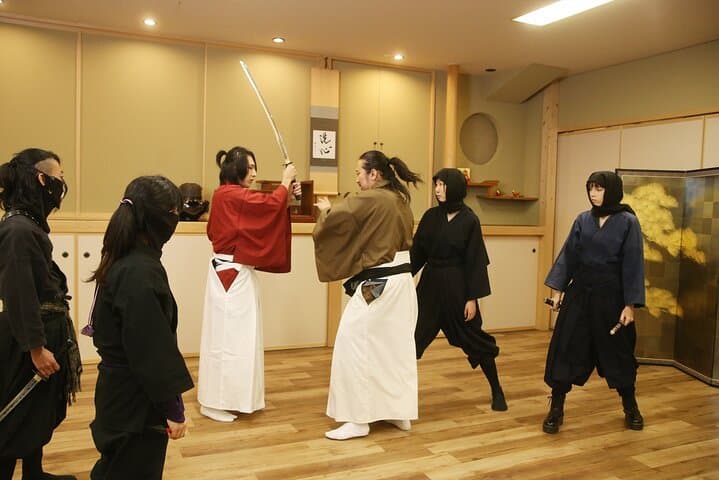
Stepping into the training room, the air tightens around focused breaths and the rattle of wooden swords. Soft light falls on a short practice hall where visitors swap city shoes for quiet steps, learning how to move with intent rather than force. The session compresses centuries of covert craft into deliberate drills: shuriken throws, basic sword strikes, stealthy footwork and a staged "mission" that ends with a group photo—costume optional.
Stepping into the training room, the air tightens around focused breaths and the rattle of wooden swords. Soft light falls on a short practice hall where visitors swap city shoes for quiet steps, learning how to move with intent rather than force. The session compresses centuries of covert craft into deliberate drills: shuriken throws, basic sword strikes, stealthy footwork and a staged "mission" that ends with a group photo—costume optional.
Ninjas emerged as intelligence agents in feudal Japan, serving regional lords from the 15th through 19th centuries. The techniques taught today are modern reconstructions—practical movement, tool-handling and the philosophy of observation—rather than battlefield tactics. Geographically, this experience sits in Tokyo on the broad Kanto Plain, a dense urban landscape that contrasts with the rural hideouts of historical shinobi, yet preserves cultural threads through dojo practice and ritualized movement.
Participants will get hands-on time with replica weapons under licensed English-speaking guidance, learning safe grips, throwing lines and basic evasion. The session is short—about 75 minutes—so it favors focused practice over mastery. Expect light physical activity: balance, coordination and repeated movements, suitable for many fitness levels but not recommended for people with spinal or serious heart conditions.
Practical tips: book ahead to reserve a costume (¥3,500 optional), arrive early for pickup or orientation, wear flexible clothing and closed-toe shoes, and follow the instructor’s safety brief when handling shuriken and wooden swords. The experience blends theatrical photo moments with disciplined practice—an urban, hands-on window into a shadowed element of Japanese history.