THE ADVENTURE COLLECTIVE® · Independent discovery and booking for outdoor travel

Spend a day moving through Ninh Binh’s limestone rivers and rice fields: a private itinerary that combines the ruined temples of Hoa Lu, a UNESCO boat trip through Trang An’s grottoes, and a steep climb up Hang Mua for panoramic views. Practical, scenic, and doable in a long day from Hanoi or Ninh Binh.
Spend a day moving through Ninh Binh’s limestone rivers and rice fields: a private itinerary that combines the ruined temples of Hoa Lu, a UNESCO boat trip through Trang An’s grottoes, and a steep climb up Hang Mua for panoramic views. Practical, scenic, and doable in a long day from Hanoi or Ninh Binh.
You arrive before sunrise on the quiet provincal road; limestone towers lift out of mist like islands in a green sea and the driver eases the car toward a riverside wharf. The boatmen push off and the river, cool and patient, carries you into a world of low caves and echoed bird calls.
Verified experiences and guided adventures in the surrounding area.
Operated by LOCAL TOURS VIETNAM · Ninh Binh, Ninh Binh
You arrive before sunrise on the quiet provincal road; limestone towers lift out of mist like islands in a green sea and the driver eases the car toward a riverside wharf. The boatmen push off and the river, cool and patient, carries you into a world of low caves and echoed bird calls.
This single-day loop ties three of Ninh Binh’s defining experiences. Hoa Lu was Vietnam’s medieval capital (10th–11th centuries) and its ruined temples give a compact lesson in dynastic rites. Trang An’s karst maze—limestone shaped by rivers over millions of years—was inscribed as a UNESCO site in 2014 and offers close-up views of cave mouths and submerged passages. Hang Mua (Mua Cave) finishes the day with a steep staircase of nearly 500 steps and a sweeping panorama across rice flats and river bends.
Expect a mix of easy walking, a shared 2–3 hour rowed boat trip through grottoes, short rural cycling, and a strenuous climb to the viewpoint. Local guides explain irrigation, rice cycles and the area’s role as a film location for Skull Island. Culture is direct and tactile: boatmen paddle wooden sampans, roadside vendors sell sticky rice, and village life happens at eye level.
Practical notes: start early to avoid heat and crowds, wear grippy shoes for the Mua climb, and bring a light rain layer in monsoon months. Cash is useful for small purchases; entrances and transport are included on private-day itineraries from Hanoi or Ninh Binh. Pace yourself—the day is long but rewards are immediate: caves that invite exploration and a viewpoint that makes the river feel alive and urgent.
moderate.
10–12 hours.
Moderate fitness; able to climb stairs and walk 2–4 miles over varied terrain during the day.
Yes—most private-day options include round-trip pickup from Hanoi; confirm your pickup location when booking.
The climb is roughly 400–500 stone steps with uneven surfaces—expect a 20–30 minute ascent depending on pace.
Boat trips in Trang An are often shared with local rowers running multiple boats; private sampans can sometimes be arranged for an extra fee.
The tour suits many ages, but the Mua climb and longer day may be strenuous for very young children or those with mobility issues; discuss alternatives with your operator.
Hoa Lu was Vietnam’s capital in the 10th–11th centuries under the Dinh and Le dynasties and contains small temple complexes dedicated to early rulers.
Trang An and surrounding karsts are protected UNESCO landscapes; visitors are encouraged to avoid littering, respect boatman guidance, and minimize single-use plastics.
LOCAL TOURS VIETNAM operates guided outdoor trips and adventures with an emphasis on safety, stewardship, and memorable experiences.

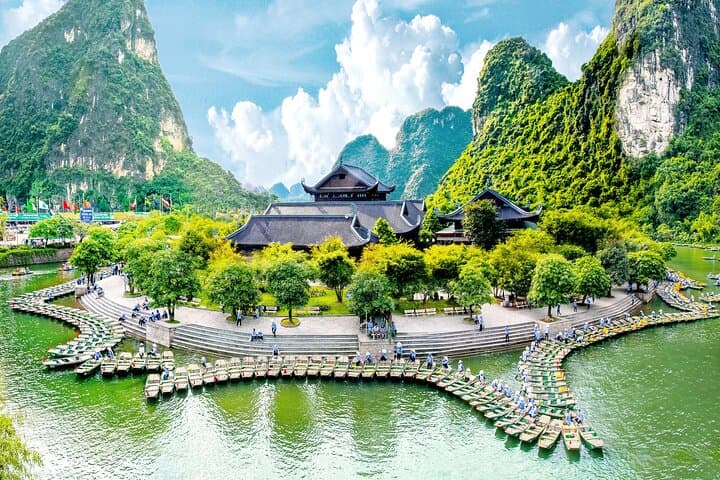

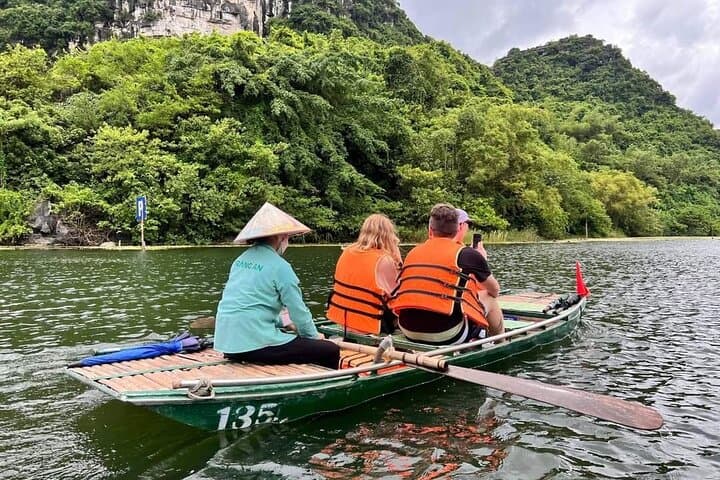
You arrive before sunrise on the quiet provincal road; limestone towers lift out of mist like islands in a green sea and the driver eases the car toward a riverside wharf. The boatmen push off and the river, cool and patient, carries you into a world of low caves and echoed bird calls.
You arrive before sunrise on the quiet provincal road; limestone towers lift out of mist like islands in a green sea and the driver eases the car toward a riverside wharf. The boatmen push off and the river, cool and patient, carries you into a world of low caves and echoed bird calls.
This single-day loop ties three of Ninh Binh’s defining experiences. Hoa Lu was Vietnam’s medieval capital (10th–11th centuries) and its ruined temples give a compact lesson in dynastic rites. Trang An’s karst maze—limestone shaped by rivers over millions of years—was inscribed as a UNESCO site in 2014 and offers close-up views of cave mouths and submerged passages. Hang Mua (Mua Cave) finishes the day with a steep staircase of nearly 500 steps and a sweeping panorama across rice flats and river bends.
Expect a mix of easy walking, a shared 2–3 hour rowed boat trip through grottoes, short rural cycling, and a strenuous climb to the viewpoint. Local guides explain irrigation, rice cycles and the area’s role as a film location for Skull Island. Culture is direct and tactile: boatmen paddle wooden sampans, roadside vendors sell sticky rice, and village life happens at eye level.
Practical notes: start early to avoid heat and crowds, wear grippy shoes for the Mua climb, and bring a light rain layer in monsoon months. Cash is useful for small purchases; entrances and transport are included on private-day itineraries from Hanoi or Ninh Binh. Pace yourself—the day is long but rewards are immediate: caves that invite exploration and a viewpoint that makes the river feel alive and urgent.