THE ADVENTURE COLLECTIVE® · Independent discovery and booking for outdoor travel

Spend a full day exploring Ninh Binh’s karst valleys, from the cavernous boat tours of Tam Coc and Trang An to the panoramic summit of Mua Cave. This practical guide explains what to expect and how to prepare for a long, scenic day trip from Hanoi.
Spend a full day exploring Ninh Binh’s karst valleys, from the cavernous boat tours of Tam Coc and Trang An to the panoramic summit of Mua Cave. This practical guide explains what to expect and how to prepare for a long, scenic day trip from Hanoi.
Morning light slices between limestone towers as the shuttle leaves Hanoi and the lowlands of Ninh Binh unfold: emerald rice paddies, river scars, and karst peaks rising like folded pages. The day begins with a choice—Bai Dinh's broad stone terraces and vast bronze Buddha, or the quieter temples of Hoa Lư, the country’s 10th-century capital—each an entrance into Vietnam's layered past.
Verified experiences and guided adventures in the surrounding area.
Operated by Authentic Hanoi Homestay & Travel · Ninh Binh, Ninh Binh Province
Morning light slices between limestone towers as the shuttle leaves Hanoi and the lowlands of Ninh Binh unfold: emerald rice paddies, river scars, and karst peaks rising like folded pages. The day begins with a choice—Bai Dinh's broad stone terraces and vast bronze Buddha, or the quieter temples of Hoa Lư, the country’s 10th-century capital—each an entrance into Vietnam's layered past.
Geologically, this landscape is a young karst plain, rivers carving tunnels through soluble limestone to create the caves and channels that earned Trang An UNESCO recognition. Culturally, rice paddies and village lanes still set the pace: boatmen pole narrow sampans through cave mouths and farmers tend low bunds between harvests.
On the water, light and shadow play across cave walls; on land, the 500-step ascent at Mua Cave rewards effort with a panorama that maps Tam Coc’s serpentine waterways and patchwork fields. Expect a practical mix of activities—short walks, a bamboo-boat glide, optional cycling through villages, and temple visits—packed into a long but accessible day.
Plan for heat and sun with layered, quick-dry clothing, a hat, and a refillable water bottle. Footwear should be grippy for steps and slick riverboardings. Keep a small daypack for camera, rain shell, and snacks; allow time if you want to linger at viewpoints. With modest fitness and curiosity about history and geology, this full-day loop delivers a compact primer on why Ninh Binh is often called Ha Long Bay on land.
moderate.
10–11 hours.
Suitable for travelers with moderate fitness able to walk on uneven surfaces and climb stairs; not strenuous but full-day.
The transfer typically takes about 2 hours each way by road, depending on traffic.
Boat trips at Tam Coc or Trang An are included only if guests select the option that specifies them; confirm when booking.
The climb involves nearly 500 steps and uneven terrain; it is doable for many but may be challenging for those with mobility issues.
Vegetarian and basic dietary requests can usually be arranged if notified in advance through booking questions.
Hoa Lư served as Vietnam’s capital in the 10th–11th centuries and retains temples linked to the Dinh and Le dynasties.
Visitor pressure concentrates at key sites; stick to marked paths, minimize single-use plastics, and respect local agriculture to reduce impact.
Authentic Hanoi Homestay & Travel operates guided outdoor trips and adventures with an emphasis on safety, stewardship, and memorable experiences.

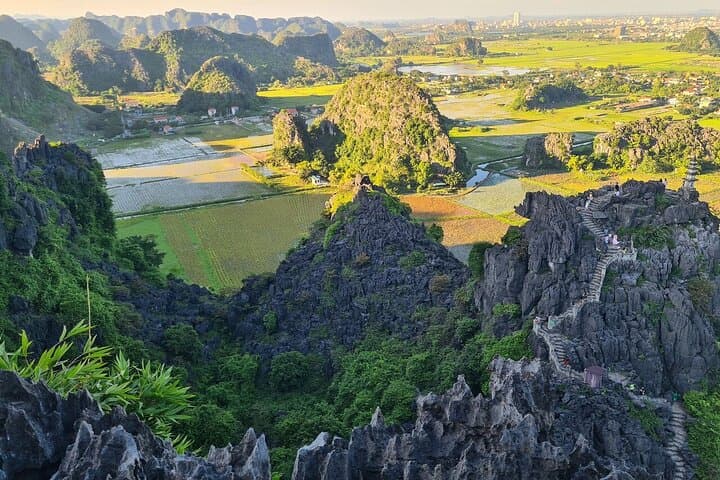


Morning light slices between limestone towers as the shuttle leaves Hanoi and the lowlands of Ninh Binh unfold: emerald rice paddies, river scars, and karst peaks rising like folded pages. The day begins with a choice—Bai Dinh's broad stone terraces and vast bronze Buddha, or the quieter temples of Hoa Lư, the country’s 10th-century capital—each an entrance into Vietnam's layered past.
Morning light slices between limestone towers as the shuttle leaves Hanoi and the lowlands of Ninh Binh unfold: emerald rice paddies, river scars, and karst peaks rising like folded pages. The day begins with a choice—Bai Dinh's broad stone terraces and vast bronze Buddha, or the quieter temples of Hoa Lư, the country’s 10th-century capital—each an entrance into Vietnam's layered past.
Geologically, this landscape is a young karst plain, rivers carving tunnels through soluble limestone to create the caves and channels that earned Trang An UNESCO recognition. Culturally, rice paddies and village lanes still set the pace: boatmen pole narrow sampans through cave mouths and farmers tend low bunds between harvests.
On the water, light and shadow play across cave walls; on land, the 500-step ascent at Mua Cave rewards effort with a panorama that maps Tam Coc’s serpentine waterways and patchwork fields. Expect a practical mix of activities—short walks, a bamboo-boat glide, optional cycling through villages, and temple visits—packed into a long but accessible day.
Plan for heat and sun with layered, quick-dry clothing, a hat, and a refillable water bottle. Footwear should be grippy for steps and slick riverboardings. Keep a small daypack for camera, rain shell, and snacks; allow time if you want to linger at viewpoints. With modest fitness and curiosity about history and geology, this full-day loop delivers a compact primer on why Ninh Binh is often called Ha Long Bay on land.