THE ADVENTURE COLLECTIVE® · Independent discovery and booking for outdoor travel

A single long day from Hanoi delivers the region’s spiritual scale, karst tunnels and a ridge-top panorama. Ride a sampan through Trang An’s cave network, tour Southeast Asia’s largest pagoda complex, and climb Mua Cave’s 500 steps for sweeping rice-field views.
A single long day from Hanoi delivers the region’s spiritual scale, karst tunnels and a ridge-top panorama. Ride a sampan through Trang An’s cave network, tour Southeast Asia’s largest pagoda complex, and climb Mua Cave’s 500 steps for sweeping rice-field views.
Morning light slices between limestone towers as a shuttle leaves Hanoi and the lowlands of Red River Delta unfurl—rice paddies, oxen, and a river that threads around karst islands like a ribbon daring you to follow.
Verified experiences and guided adventures in the surrounding area.
Operated by Vietnam Tonkin Travel · Ninh Binh, Ninh Binh Province
Morning light slices between limestone towers as a shuttle leaves Hanoi and the lowlands of Red River Delta unfurl—rice paddies, oxen, and a river that threads around karst islands like a ribbon daring you to follow.
At Bai Dinh Pagoda the scene shifts: vast courtyards, rows of stone arhats and a bronze bell that anchors a modern pilgrimage site built on centuries of Buddhist practice. Geologically, this region is classic karst—limestone bedrock sculpted by water into caves, tunnels and steep-sided hills that became Tam Coc and Trang An’s defining features.
Trang An’s boat circuit passes through low cave mouths, where a gentle current pushes the sampan and daylight dims to silver. Locals still tend small plots and temples here; the landscape holds traces of imperial-era routes and village rhythms that predate tourism.
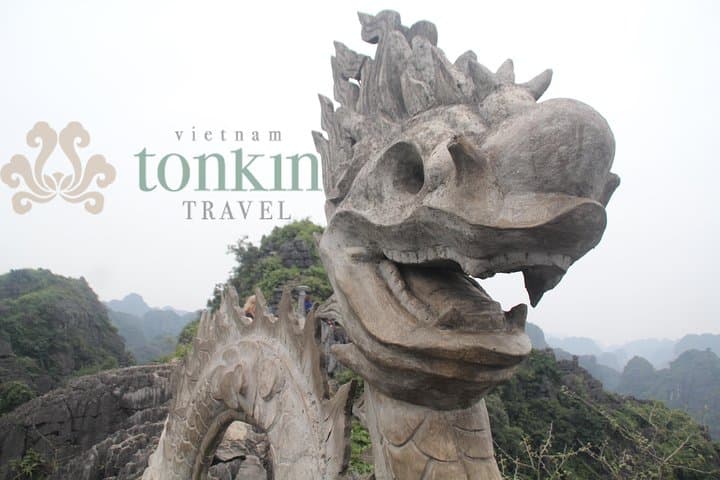
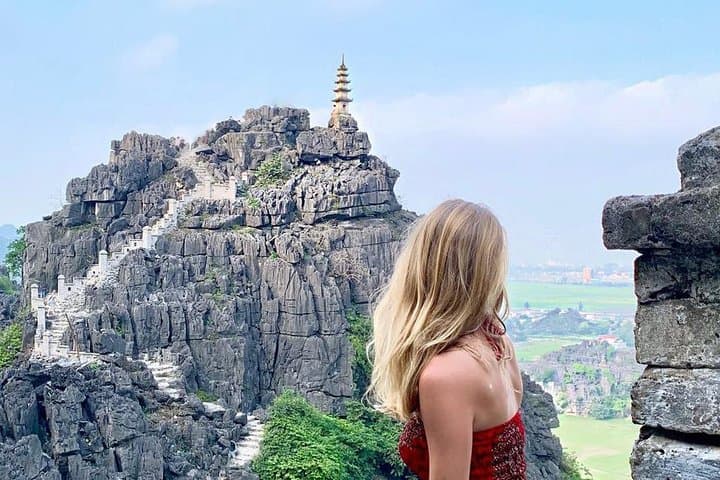
Mua Cave’s 500-step climb finishes on a narrow ridge with a wide view of Tam Coc’s flooded fields—an immediate payoff for stout legs and steady breathing.
Practical guidance: expect a long day (12–13 hours) with about two hours on the water and a steep 500-step ascent at Mua. Wear grippy shoes, sun protection, and bring small change for local snacks and temple donations. Boats are rowed in low tunnels—stable but narrow—so anyone with tight spaces concerns should plan accordingly. Start with water and layers; afternoons can shift from sun to sudden showers. This itinerary packs culture, geology, and panorama into a single, manageable day out of Hanoi.
moderate.
12–13 hours.
Suitable for travelers in average fitness who can manage a 2-hour boat trip plus a steep 500-step climb; expect some standing and short walks.
The boat circuit lasts about 2–2.5 hours, threading through multiple caves and low tunnels; the pace is steady and guided by local boatmen.
The climb is steep—roughly 500 uneven stone steps—but short; take breaks, and it’s accessible for reasonably fit travelers comfortable with stairs.
Yes; the included lunch typically offers vegetarian options and many restaurants in the area accommodate plant-based diets if requested in advance.
Yes, but assess mobility—boat seating is low and the Mua ascent may be challenging for very young children or those with reduced mobility; inform the operator if you have any concerns.
Trang An sits on karst terrain shaped over millions of years and was declared a UNESCO World Heritage Site in 2014; Bai Dinh is a contemporary large-scale pagoda complex built on older religious sites.
Boat operators limit engine use in cave sections and local guides encourage low-impact behavior; stick to paths, avoid littering, and support local services to keep tourism sustainable.
Vietnam Tonkin Travel operates guided outdoor trips and adventures with an emphasis on safety, stewardship, and memorable experiences.


Morning light slices between limestone towers as a shuttle leaves Hanoi and the lowlands of Red River Delta unfurl—rice paddies, oxen, and a river that threads around karst islands like a ribbon daring you to follow.
Morning light slices between limestone towers as a shuttle leaves Hanoi and the lowlands of Red River Delta unfurl—rice paddies, oxen, and a river that threads around karst islands like a ribbon daring you to follow.
At Bai Dinh Pagoda the scene shifts: vast courtyards, rows of stone arhats and a bronze bell that anchors a modern pilgrimage site built on centuries of Buddhist practice. Geologically, this region is classic karst—limestone bedrock sculpted by water into caves, tunnels and steep-sided hills that became Tam Coc and Trang An’s defining features.
Trang An’s boat circuit passes through low cave mouths, where a gentle current pushes the sampan and daylight dims to silver. Locals still tend small plots and temples here; the landscape holds traces of imperial-era routes and village rhythms that predate tourism.
Mua Cave’s 500-step climb finishes on a narrow ridge with a wide view of Tam Coc’s flooded fields—an immediate payoff for stout legs and steady breathing.
Practical guidance: expect a long day (12–13 hours) with about two hours on the water and a steep 500-step ascent at Mua. Wear grippy shoes, sun protection, and bring small change for local snacks and temple donations. Boats are rowed in low tunnels—stable but narrow—so anyone with tight spaces concerns should plan accordingly. Start with water and layers; afternoons can shift from sun to sudden showers. This itinerary packs culture, geology, and panorama into a single, manageable day out of Hanoi.