THE ADVENTURE COLLECTIVE® · Independent discovery and booking for outdoor travel

Spend a long day among Ninh Bình’s limestone towers: explore Hoa Lư’s ruins, glide through Tam Cốc’s cave-carved river in a bamboo boat, cycle village lanes, and climb Mua Cave for sweeping views. This full-day trip blends history, geology and rural life with practical access from Hanoi.
Spend a long day among Ninh Bình’s limestone towers: explore Hoa Lư’s ruins, glide through Tam Cốc’s cave-carved river in a bamboo boat, cycle village lanes, and climb Mua Cave for sweeping views. This full-day trip blends history, geology and rural life with practical access from Hanoi.
Morning light thins through rice paddies as the bus leaves Hanoi’s bustle and the karst limestone peaks of Ninh Bình rise like broken cliffs from a green sea. The river threads between them; bamboo boats wait, low and steady, ready to slide under cave mouths while paddlers push with practised strokes.
Verified experiences and guided adventures in the surrounding area.
Operated by David Tran Travel - Day Tours · Tam Coc, Ninh Bình Province
Morning light thins through rice paddies as the bus leaves Hanoi’s bustle and the karst limestone peaks of Ninh Bình rise like broken cliffs from a green sea. The river threads between them; bamboo boats wait, low and steady, ready to slide under cave mouths while paddlers push with practised strokes.
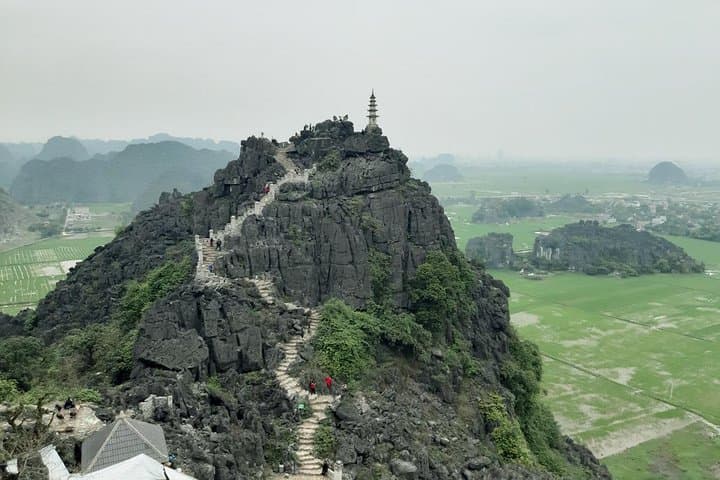
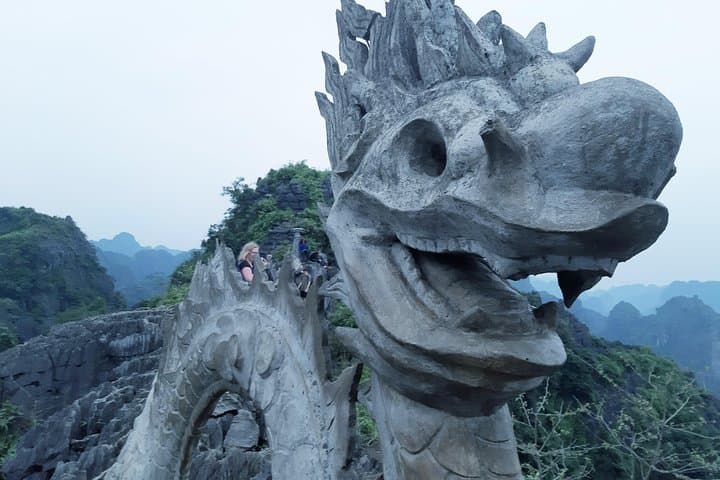
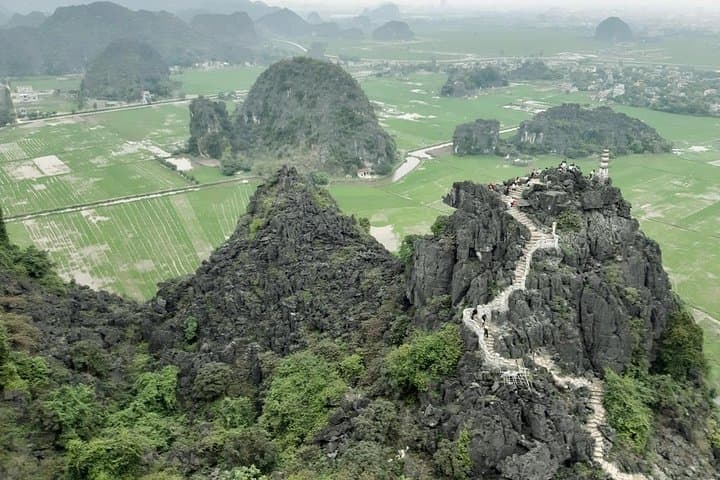
The day moves from Hoa Lư’s ruined citadel — the short-lived 10th–11th century capital that shaped early Vietnamese statecraft — into quieter valleys carved by karst geology: steep limestone towers, narrow caves, and seasonally flooded fields. Tam Cốc’s three caves cut a cool, shadowed corridor through stone, and at Mua Cave you climb roughly 500 steps to the Lying Dragon ridge for a panoramic sweep of rice plots and winding channels.
Culture here is agricultural and immediate: cyclists pass small houses, water buffalo graze pond edges, and boat crews often come from lineages of river workers. Geology dictates the pace — water daring you forward through tunnels, cliffs forcing quiet observation.
Practical guidance: plan a full 12–13 hour day leaving Hanoi early, carry shade and water, and expect flat to uneven terrain and many steps at Mua. Wear closed shoes for biking and a light rain layer in the wet season. Bring local currency for small purchases and tips; toilets are available at tourist sites but limited on the river. The route is accessible to most fit travellers but includes short hikes, stairs and a gentle bike loop through villages.
moderate.
12–13 hours.
Suitable for travelers in regular physical condition who can handle several hours of walking, a short bike ride on flat village roads, and a long stair ascent.
Most tours pick up and drop off in Hanoi’s Old Quarter; if you aren’t in the Old Quarter you’ll typically meet at Opera House by the stated time.
The bamboo boat portion lasts about 1.5 hours and includes passage through three caves along a calm river.
The cycling section is a roughly 45-minute, mostly flat loop through village roads and rice fields — basic cycling ability is enough.
A buffet lunch is included; basic site entrance fees for places like Mua Cave and Tam Coc are generally covered by the operator but confirm at booking.
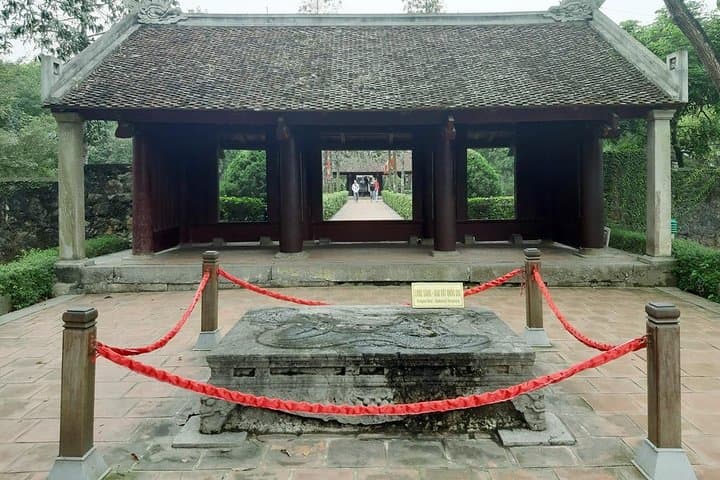
Hoa Lư served as Vietnam’s capital in the 10th–11th centuries and holds remnants of early dynastic temples and citadel walls.
The karst and wetland systems are fragile; stick to marked paths, avoid single-use plastics, and support local boat families and guides to keep tourism benefits in the community.
David Tran Travel - Day Tours operates guided outdoor trips and adventures with an emphasis on safety, stewardship, and memorable experiences.
Morning light thins through rice paddies as the bus leaves Hanoi’s bustle and the karst limestone peaks of Ninh Bình rise like broken cliffs from a green sea. The river threads between them; bamboo boats wait, low and steady, ready to slide under cave mouths while paddlers push with practised strokes.
Morning light thins through rice paddies as the bus leaves Hanoi’s bustle and the karst limestone peaks of Ninh Bình rise like broken cliffs from a green sea. The river threads between them; bamboo boats wait, low and steady, ready to slide under cave mouths while paddlers push with practised strokes.
The day moves from Hoa Lư’s ruined citadel — the short-lived 10th–11th century capital that shaped early Vietnamese statecraft — into quieter valleys carved by karst geology: steep limestone towers, narrow caves, and seasonally flooded fields. Tam Cốc’s three caves cut a cool, shadowed corridor through stone, and at Mua Cave you climb roughly 500 steps to the Lying Dragon ridge for a panoramic sweep of rice plots and winding channels.
Culture here is agricultural and immediate: cyclists pass small houses, water buffalo graze pond edges, and boat crews often come from lineages of river workers. Geology dictates the pace — water daring you forward through tunnels, cliffs forcing quiet observation.
Practical guidance: plan a full 12–13 hour day leaving Hanoi early, carry shade and water, and expect flat to uneven terrain and many steps at Mua. Wear closed shoes for biking and a light rain layer in the wet season. Bring local currency for small purchases and tips; toilets are available at tourist sites but limited on the river. The route is accessible to most fit travellers but includes short hikes, stairs and a gentle bike loop through villages.