THE ADVENTURE COLLECTIVE® · Independent discovery and booking for outdoor travel

Spend a full day exploring Ninh Binh’s karst valleys: climb Mua Cave for panoramic views, pedal through rural lanes, glide through three limestone caves on a sampan, and visit the ancient capital of Hoa Lu.
Spend a full day exploring Ninh Binh’s karst valleys: climb Mua Cave for panoramic views, pedal through rural lanes, glide through three limestone caves on a sampan, and visit the ancient capital of Hoa Lu.
You step off the air-conditioned van into a widening valley where limestone karsts rise like sculpted cliffs from green rice fields. Morning mist clings to the Ngo Dong River while local boats glide into cave mouths; the air smells of wet earth and cooking fires. The day moves with a practical rhythm: a 500-step climb at Mua Cave, a flat bicycle loop through villages, a patient sampan ride through three low, echoing caves at Tam Coc, and a quieter visit to temples at Hoa Lu.
Verified experiences and guided adventures in the surrounding area.
Operated by Authenitc Travel DA NANG · Ninh Binh, Ninh Binh Province
You step off the air-conditioned van into a widening valley where limestone karsts rise like sculpted cliffs from green rice fields. Morning mist clings to the Ngo Dong River while local boats glide into cave mouths; the air smells of wet earth and cooking fires. The day moves with a practical rhythm: a 500-step climb at Mua Cave, a flat bicycle loop through villages, a patient sampan ride through three low, echoing caves at Tam Coc, and a quieter visit to temples at Hoa Lu.
Geologically, this is classic lowland karst—limestone folded and dissolved over millennia to create steep towers, caves and subterranean channels. Culturally, Hoa Lu was Vietnam’s capital in the 10th–11th centuries; its temples preserve wooden altars and ancestral inscriptions. Rural life here revolves around VAC systems (garden-pond-cage), rice cultivation and small-scale aquaculture—expect to meet families who can explain the seasonal cycle of planting and harvest.
Practically, the route is a full day (about 10 hours) with easy moments and short, steep sections (Mua’s staircase). Weather shifts quickly—hot, sunny plains give way to sudden rain. Bring water, sun protection and a camera with a wide-angle lens for sweeping valley views. Plan for modest temple dress, comfortable biking shoes, and patience during peak tourist hours on the sampan. The payoff is straightforward: wide panoramas from Mua, reflective paddling under karst canopies, and a compact, layered portrait of northern Vietnam’s landscape and history.
easy.
10 hours (full day).
Suitable for most fitness levels; be able to handle short steep stair climbs and a few hours on a bicycle.
The boat segment typically lasts 1–1.5 hours and passes through three caves (Ca, Hai, Ba) while following the Ngo Dong River.
Yes—most sections are gentle; however, the Mua Cave climb involves many steps and may be strenuous for some—consider skipping the summit if mobility is limited.
Yes; this tour includes a Vietnamese lunch at a local restaurant and entrance fees to listed attractions.
Bicycles are provided and helmets may not be standard—if you prefer, bring your own or request one from the operator in advance.
Hoa Lu served as Vietnam’s capital in the 10th–11th centuries under the Đinh and Early Lê dynasties; surviving temples honor early emperors and local deities.
Karst ecosystems and rice paddies are sensitive to tourism and pollution—stick to paths, avoid single-use plastics, and support local operators who limit boat numbers and promote waste management.
Authenitc Travel DA NANG operates guided outdoor trips and adventures with an emphasis on safety, stewardship, and memorable experiences.
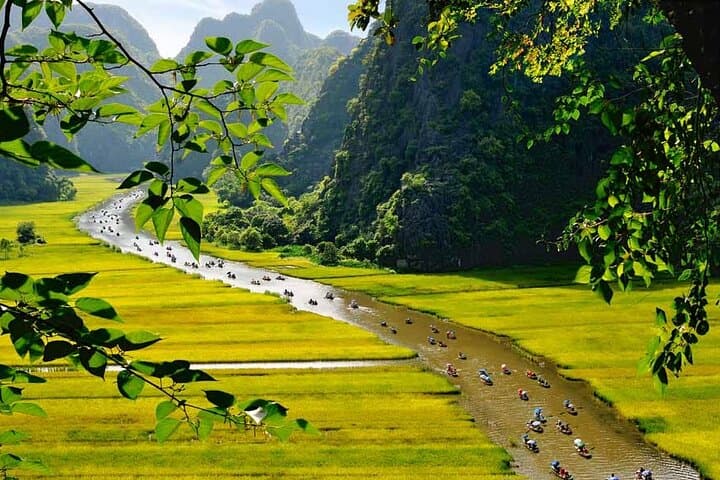
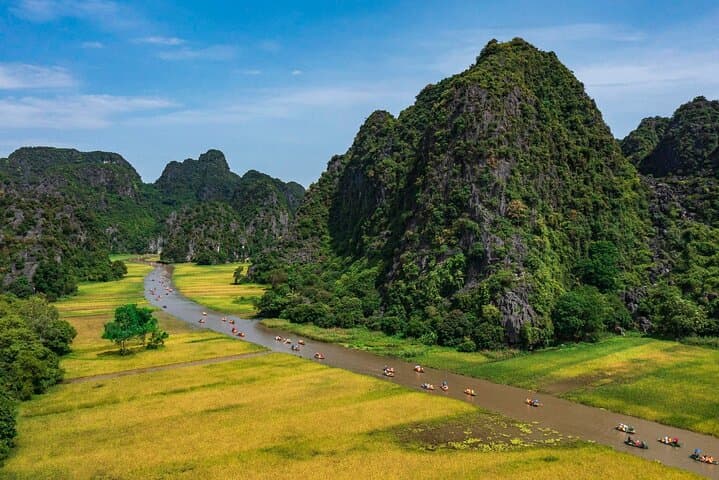


You step off the air-conditioned van into a widening valley where limestone karsts rise like sculpted cliffs from green rice fields. Morning mist clings to the Ngo Dong River while local boats glide into cave mouths; the air smells of wet earth and cooking fires. The day moves with a practical rhythm: a 500-step climb at Mua Cave, a flat bicycle loop through villages, a patient sampan ride through three low, echoing caves at Tam Coc, and a quieter visit to temples at Hoa Lu.
You step off the air-conditioned van into a widening valley where limestone karsts rise like sculpted cliffs from green rice fields. Morning mist clings to the Ngo Dong River while local boats glide into cave mouths; the air smells of wet earth and cooking fires. The day moves with a practical rhythm: a 500-step climb at Mua Cave, a flat bicycle loop through villages, a patient sampan ride through three low, echoing caves at Tam Coc, and a quieter visit to temples at Hoa Lu.
Geologically, this is classic lowland karst—limestone folded and dissolved over millennia to create steep towers, caves and subterranean channels. Culturally, Hoa Lu was Vietnam’s capital in the 10th–11th centuries; its temples preserve wooden altars and ancestral inscriptions. Rural life here revolves around VAC systems (garden-pond-cage), rice cultivation and small-scale aquaculture—expect to meet families who can explain the seasonal cycle of planting and harvest.
Practically, the route is a full day (about 10 hours) with easy moments and short, steep sections (Mua’s staircase). Weather shifts quickly—hot, sunny plains give way to sudden rain. Bring water, sun protection and a camera with a wide-angle lens for sweeping valley views. Plan for modest temple dress, comfortable biking shoes, and patience during peak tourist hours on the sampan. The payoff is straightforward: wide panoramas from Mua, reflective paddling under karst canopies, and a compact, layered portrait of northern Vietnam’s landscape and history.