THE ADVENTURE COLLECTIVE® · Independent discovery and booking for outdoor travel

Swap Hanoi’s bustle for a full-day in Ninh Binh: ancient temples at Hoa Lu, a bamboo boat through Tam Coc’s cave passages, and a steep climb to Mua Cave’s panoramic ridge. Expect calm river travel, working rice fields, and a rewarding 500-step viewpoint.
Swap Hanoi’s bustle for a full-day in Ninh Binh: ancient temples at Hoa Lu, a bamboo boat through Tam Coc’s cave passages, and a steep climb to Mua Cave’s panoramic ridge. Expect calm river travel, working rice fields, and a rewarding 500-step viewpoint.
Morning light slices through limestone pinnacles as the minivan leaves Hanoi’s crowded streets for Ninh Binh’s open rice plains.
Verified experiences and guided adventures in the surrounding area.
Operated by Authentic HA GIANG · Ninh Binh, Ninh Bình
Morning light slices through limestone pinnacles as the minivan leaves Hanoi’s crowded streets for Ninh Binh’s open rice plains.
You arrive first at Hoa Lu, where modest temple ruins mark Vietnam’s 10th-century capital—stone altars and low courtyards that anchor a landscape defined by karst towers. The geology here is blunt and ancient: weathered limestone rising from flat floodplains, caves scored by slow water and centuries of monsoon.
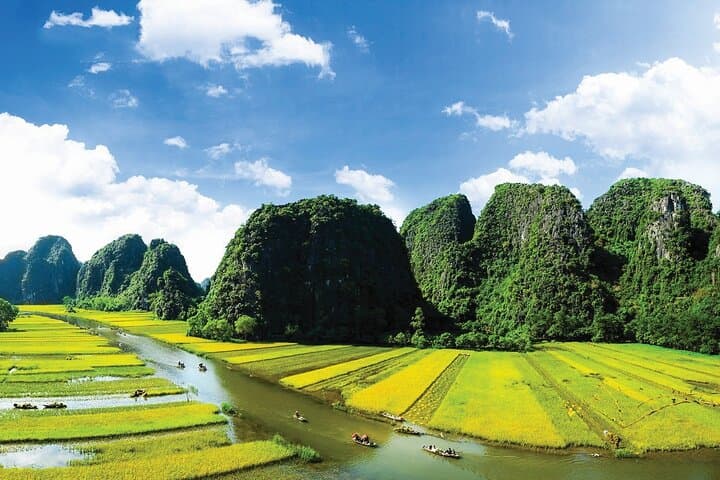
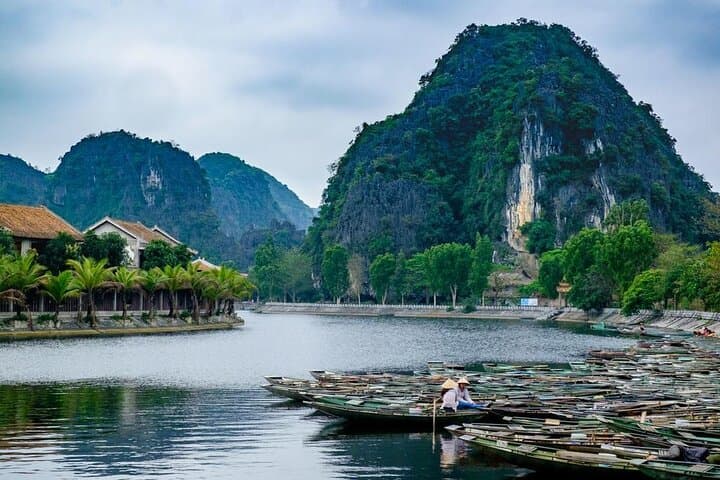
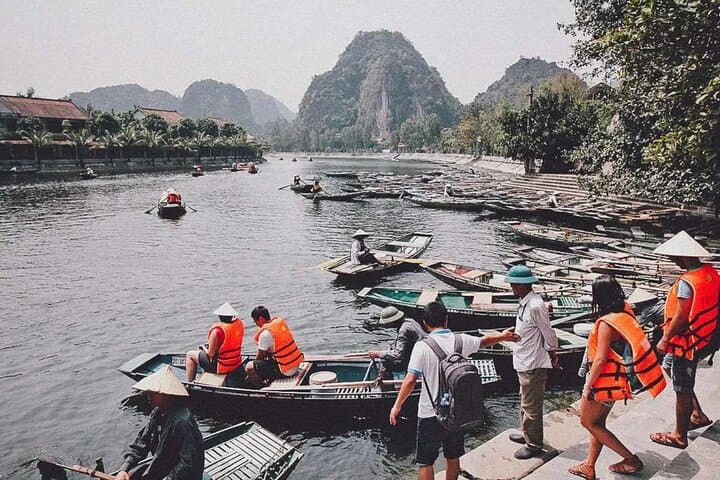
At Tam Coc a bamboo sampan slips forward on the Ngo Dong River, the boatman’s pole nudging you under three cave mouths while green paddies press close to the hull. Locals still plant and harvest by hand; oxen graze in the low fields and stork-like egrets punctuate the shallows.
Mua Cave’s steep stair demands attention—roughly 500 stone steps—to reach a ridge with a broad, cinematic view of meandering waterways and patchwork rice. The spot captures both human history and raw landscape: temples from Dinh and Le dynasties below, limestone towers shaped by millennia above.
Practical side: this is a long, full-day outing (11–12 hours) with a mix of short walks, a seated boat trip, and a strenuous stair climb. Bring steady shoes for the Mua ascent, sun protection for exposed paddies, and cash for small vendors. Timing matters—late afternoon light softens the karst and cools the climb, but mornings are quieter on the water.
Whether you’re after easy cultural stops or active viewpoints, the day balances calm river travel, short rural cycling, and a worthwhile climb that rewards with one of northern Vietnam’s clearest panoramas.
easy.
11–12 hours.
Suitable for travelers in average physical condition; includes short walks, a seated boat trip, optional cycling, and a steep stair climb to a viewpoint.
Expect roughly 2 to 2.5 hours each way depending on traffic, with one short rest stop en route.
Yes—boats are low and calm, and trips are guided by experienced boatmen; however, cautious riders should remain seated and supervise children.
Yes—the climb is optional; you can remain at the base or explore local trails and still enjoy the boat and temples.
The tour includes a Vietnamese buffet lunch and listed admissions; confirm specifics with the operator before booking for any changes.
Hoa Lu was Vietnam’s 10th-century capital under the Dinh and Le dynasties; the surviving temples commemorate those early rulers amid the karst plain.
Tourism pressure and agriculture affect waterways and rice paddies; stick to paths, avoid plastic waste, and support local guides to help sustain communities and habitats.
Authentic HA GIANG operates guided outdoor trips and adventures with an emphasis on safety, stewardship, and memorable experiences.

Morning light slices through limestone pinnacles as the minivan leaves Hanoi’s crowded streets for Ninh Binh’s open rice plains.
Morning light slices through limestone pinnacles as the minivan leaves Hanoi’s crowded streets for Ninh Binh’s open rice plains.
You arrive first at Hoa Lu, where modest temple ruins mark Vietnam’s 10th-century capital—stone altars and low courtyards that anchor a landscape defined by karst towers. The geology here is blunt and ancient: weathered limestone rising from flat floodplains, caves scored by slow water and centuries of monsoon.
At Tam Coc a bamboo sampan slips forward on the Ngo Dong River, the boatman’s pole nudging you under three cave mouths while green paddies press close to the hull. Locals still plant and harvest by hand; oxen graze in the low fields and stork-like egrets punctuate the shallows.
Mua Cave’s steep stair demands attention—roughly 500 stone steps—to reach a ridge with a broad, cinematic view of meandering waterways and patchwork rice. The spot captures both human history and raw landscape: temples from Dinh and Le dynasties below, limestone towers shaped by millennia above.
Practical side: this is a long, full-day outing (11–12 hours) with a mix of short walks, a seated boat trip, and a strenuous stair climb. Bring steady shoes for the Mua ascent, sun protection for exposed paddies, and cash for small vendors. Timing matters—late afternoon light softens the karst and cools the climb, but mornings are quieter on the water.
Whether you’re after easy cultural stops or active viewpoints, the day balances calm river travel, short rural cycling, and a worthwhile climb that rewards with one of northern Vietnam’s clearest panoramas.