THE ADVENTURE COLLECTIVE® · Independent discovery and booking for outdoor travel

Escape Hanoi for a full-day tour across Ninh Binh’s karst valleys: boat trips through Trang An and Tam Coc, climb Mua Cave for wide rice-field panoramas, and visit Hoa Lu and Bai Dinh pagoda. Practical tips on timing, footwear, and what to expect on the water.
Escape Hanoi for a full-day tour across Ninh Binh’s karst valleys: boat trips through Trang An and Tam Coc, climb Mua Cave for wide rice-field panoramas, and visit Hoa Lu and Bai Dinh pagoda. Practical tips on timing, footwear, and what to expect on the water.
Dawn leaves Hanoi’s Old Quarter and the road unfurls toward karst towers rising from rice paddies — blunt limestone spires that seem to push the sky aside. By midmorning you step onto a narrow bamboo boat as the river dares you onward, threading through caves and mirror-flat fields where water buffalo wade and kingfishers flash.
Verified experiences and guided adventures in the surrounding area.
Operated by Authentic Travel VIETNAM · Ninh Binh, Ninh Binh
Dawn leaves Hanoi’s Old Quarter and the road unfurls toward karst towers rising from rice paddies — blunt limestone spires that seem to push the sky aside. By midmorning you step onto a narrow bamboo boat as the river dares you onward, threading through caves and mirror-flat fields where water buffalo wade and kingfishers flash.
This one-day loop stitches together Vietnam’s layered past and visible geology: Hoa Lu’s stone temples recall the Dinh and Le dynasties that ruled here in the 10th–11th centuries; the karst landscape is the product of riverine erosion on Permian limestone, cleaved into towers and caves that sailors and sampans now navigate. Bai Dinh adds a modern religious scale — thousands of statues and a 10‑meter bronze Buddha speak to contemporary pilgrimage culture.
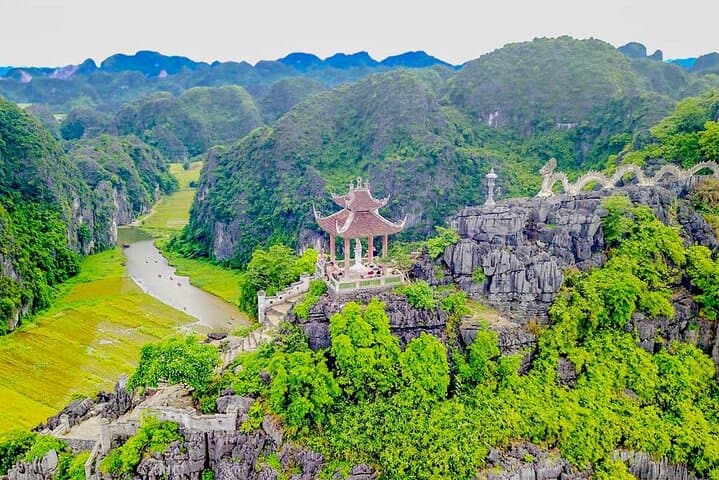
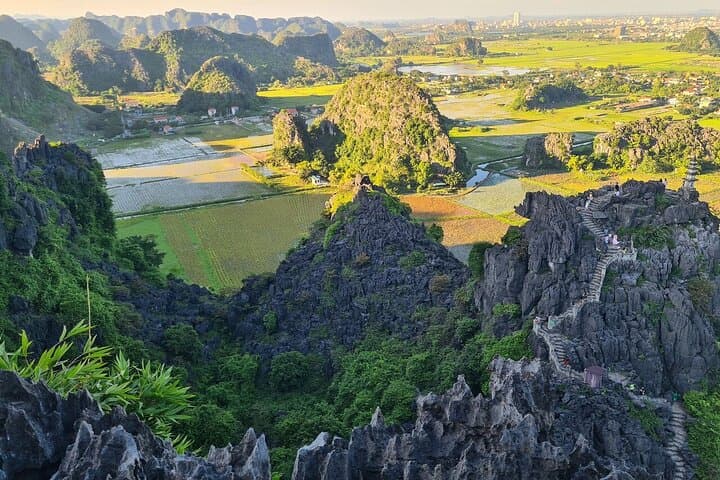
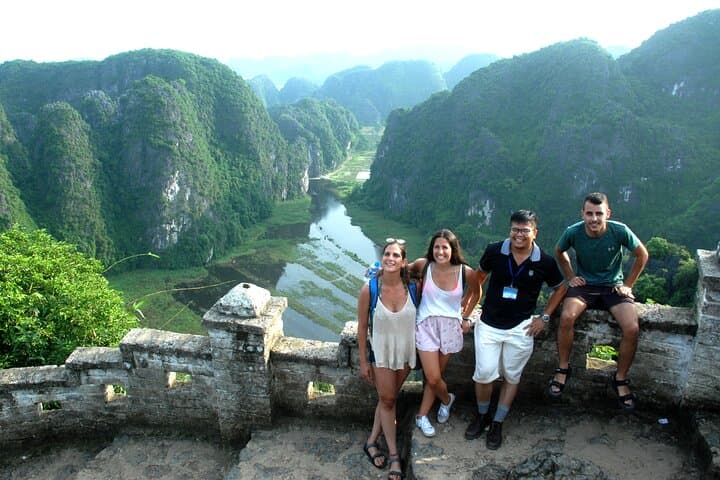
Expect calm boat passages at Trang An or Tam Coc, 500 stone steps at Mua Caves for a panoramic look over the Lying Dragon ridge, and quiet village lanes for a short bicycle stretch. Local guides explain rice-crop cycles, pagoda etiquette and why this area is nicknamed “Halong Bay on land.”
Practical edge: leave Hanoi early (pickup in the Old Quarter), wear grippy shoes for stairs and slippery boat decks, and bring sun protection and a refillable bottle. If rain appears, waterproof layers are essential — midday downpours are common in summer. Lunch is typically local Vietnamese fare at a nearby restaurant. Overall, the day balances easy walking with short climbs and the steady rhythm of the river — approachable for most travelers who can handle a few stairs and a full day on the move.
moderate.
11–12 hours.
Suitable for travelers in average fitness who can walk up to 500 steps, handle short bicycle rides, and spend a day on their feet.
Expect about 2 hours each way from Hanoi’s Old Quarter, with a short stop en route; total tour time is roughly 11–12 hours.
Yes — bamboo or motorized boats on Trang An and Tam Coc are part of the tour; operators maintain standard safety practices but watch your step boarding and disembarking.
Yes — the operator can usually accommodate vegetarian, vegan, and gluten-free requests if noted when booking.
The climb involves nearly 500 steps; children and older adults can still enjoy lower viewpoints, but the summit requires steady mobility and caution on stairs.
Hoa Lu served as Vietnam’s capital in the 10th–11th centuries under the Dinh and early Le dynasties; many temples and stone markers remain from that era.
Trang An is a UNESCO World Heritage Site; visitors should avoid littering, limit single-use plastics, and follow local guidance to reduce erosion on trails and riverbanks.
Authentic Travel VIETNAM operates guided outdoor trips and adventures with an emphasis on safety, stewardship, and memorable experiences.

Dawn leaves Hanoi’s Old Quarter and the road unfurls toward karst towers rising from rice paddies — blunt limestone spires that seem to push the sky aside. By midmorning you step onto a narrow bamboo boat as the river dares you onward, threading through caves and mirror-flat fields where water buffalo wade and kingfishers flash.
Dawn leaves Hanoi’s Old Quarter and the road unfurls toward karst towers rising from rice paddies — blunt limestone spires that seem to push the sky aside. By midmorning you step onto a narrow bamboo boat as the river dares you onward, threading through caves and mirror-flat fields where water buffalo wade and kingfishers flash.
This one-day loop stitches together Vietnam’s layered past and visible geology: Hoa Lu’s stone temples recall the Dinh and Le dynasties that ruled here in the 10th–11th centuries; the karst landscape is the product of riverine erosion on Permian limestone, cleaved into towers and caves that sailors and sampans now navigate. Bai Dinh adds a modern religious scale — thousands of statues and a 10‑meter bronze Buddha speak to contemporary pilgrimage culture.
Expect calm boat passages at Trang An or Tam Coc, 500 stone steps at Mua Caves for a panoramic look over the Lying Dragon ridge, and quiet village lanes for a short bicycle stretch. Local guides explain rice-crop cycles, pagoda etiquette and why this area is nicknamed “Halong Bay on land.”
Practical edge: leave Hanoi early (pickup in the Old Quarter), wear grippy shoes for stairs and slippery boat decks, and bring sun protection and a refillable bottle. If rain appears, waterproof layers are essential — midday downpours are common in summer. Lunch is typically local Vietnamese fare at a nearby restaurant. Overall, the day balances easy walking with short climbs and the steady rhythm of the river — approachable for most travelers who can handle a few stairs and a full day on the move.