THE ADVENTURE COLLECTIVE® · Independent discovery and booking for outdoor travel

A full‑day escape from Hanoi into Ninh Binh’s karst valleys—climb 500 steps for a sweeping view, glide by sampan through rice paddies, and cycle past village life. Expect history, limestone scenery, and a hands‑on local lunch.
A full‑day escape from Hanoi into Ninh Binh’s karst valleys—climb 500 steps for a sweeping view, glide by sampan through rice paddies, and cycle past village life. Expect history, limestone scenery, and a hands‑on local lunch.
You step off the air‑conditioned minivan and the air shifts—warmer, wet with rice and river mud, karst towers rising like old cliffs around a living map. The day moves in beats: stone temples in the soft morning, a climb of stairs that rewards with a wide, unsettled panorama, a low-slung sampan cutting through reed-lined waterways, and a slow pedal past fields where farmers bend to their work.
Verified experiences and guided adventures in the surrounding area.
Operated by OCA Journeys Vietnam · Ninh Binh, Ninh Binh Province
You step off the air‑conditioned minivan and the air shifts—warmer, wet with rice and river mud, karst towers rising like old cliffs around a living map. The day moves in beats: stone temples in the soft morning, a climb of stairs that rewards with a wide, unsettled panorama, a low-slung sampan cutting through reed-lined waterways, and a slow pedal past fields where farmers bend to their work.
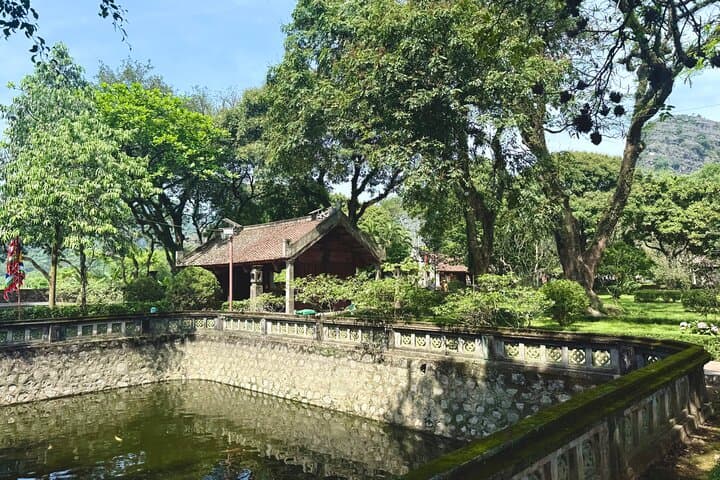
This route threads history and geology. Hoa Lu, Vietnam’s 10th–11th century capital, anchors the area’s past; its temples of Kings Dinh and Le hold simple wooden altars and stories of early Vietnamese statecraft. The region’s dramatic topography is ancient marine limestone—carved into steep karst towers and caves over millions of years—giving Tam Coc and Mua Cave their vertical drama.
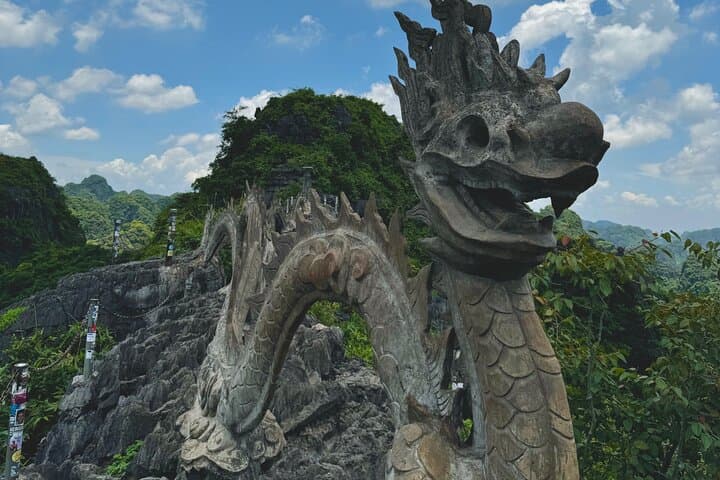
Culture here is tactile: family‑style lunches served with local greens, guides who point out irrigation lines that shape rice cycles, and cyclists sharing narrow lanes with water buffalo. Practicalities matter: the Mua Cave climb is roughly 500 steps with uneven stone; the sampan trip is calm but low‑to‑water; bikes are included but alternatives are available for non‑cyclists.
Plan for a full 9–10 hour day, dress in layers for humid heat or sudden tropical showers, and bring sun protection and cash for small purchases or tips. Move deliberately—pause at village turnoffs, photograph from the viewpoint before midday haze, and leave plastic in your bag. This is a day that pairs physical moments—steps, pedals, the gentle boat push—with quiet local encounters that linger after you return to Hanoi.
moderate.
9–10 hours.
Moderate fitness: able to climb 500 uneven steps, ride a bicycle on flat rural lanes, and be on your feet for much of the day.
Expect a 9–10 hour day trip departing Hanoi early, visiting Hoa Lu temples, climbing to Mua Cave viewpoint, enjoying lunch, a sampan boat ride through paddies, and a short bike ride to a mountaintop pagoda.
No—bicycles are offered for the village segment, but options include car transport or a scooter with rider for a small additional fee if you can’t or prefer not to ride.
Most reasonably fit people can make the climb with rest breaks; the stairs are steep and uneven so take your time and wear proper shoes.
A family‑style 8‑dish lunch is included and guides can accommodate vegetarian, vegan, gluten‑free, and halal requests if noted during booking.
Hoa Lu served as Vietnam’s capital in the 10th–11th centuries; its temples honor the Dinh and Le kings and mark the area’s early political center.
Karst ecosystems and rice terraces are sensitive; avoid single‑use plastics, keep to paths, and support small local operators who invest in sustainable tourism.
OCA Journeys Vietnam operates guided outdoor trips and adventures with an emphasis on safety, stewardship, and memorable experiences.


You step off the air‑conditioned minivan and the air shifts—warmer, wet with rice and river mud, karst towers rising like old cliffs around a living map. The day moves in beats: stone temples in the soft morning, a climb of stairs that rewards with a wide, unsettled panorama, a low-slung sampan cutting through reed-lined waterways, and a slow pedal past fields where farmers bend to their work.
You step off the air‑conditioned minivan and the air shifts—warmer, wet with rice and river mud, karst towers rising like old cliffs around a living map. The day moves in beats: stone temples in the soft morning, a climb of stairs that rewards with a wide, unsettled panorama, a low-slung sampan cutting through reed-lined waterways, and a slow pedal past fields where farmers bend to their work.
This route threads history and geology. Hoa Lu, Vietnam’s 10th–11th century capital, anchors the area’s past; its temples of Kings Dinh and Le hold simple wooden altars and stories of early Vietnamese statecraft. The region’s dramatic topography is ancient marine limestone—carved into steep karst towers and caves over millions of years—giving Tam Coc and Mua Cave their vertical drama.
Culture here is tactile: family‑style lunches served with local greens, guides who point out irrigation lines that shape rice cycles, and cyclists sharing narrow lanes with water buffalo. Practicalities matter: the Mua Cave climb is roughly 500 steps with uneven stone; the sampan trip is calm but low‑to‑water; bikes are included but alternatives are available for non‑cyclists.
Plan for a full 9–10 hour day, dress in layers for humid heat or sudden tropical showers, and bring sun protection and cash for small purchases or tips. Move deliberately—pause at village turnoffs, photograph from the viewpoint before midday haze, and leave plastic in your bag. This is a day that pairs physical moments—steps, pedals, the gentle boat push—with quiet local encounters that linger after you return to Hanoi.