THE ADVENTURE COLLECTIVE® · Independent discovery and booking for outdoor travel

Spend two days moving from Tam Coc’s rice‑filled valleys to Cuc Phuong’s ancient forest—bamboo boat rides, a viewpoint climb at Mua Cave, village motorbike rides, and a short trek to a thousand‑year‑old tree. Practical, scenic, and culturally rich.
Spend two days moving from Tam Coc’s rice‑filled valleys to Cuc Phuong’s ancient forest—bamboo boat rides, a viewpoint climb at Mua Cave, village motorbike rides, and a short trek to a thousand‑year‑old tree. Practical, scenic, and culturally rich.
Morning light slices across rice paddies as a small convoy leaves Hanoi for Ninh Binh, and the highway opens onto a landscape of limestone towers and flooded fields. On day one, the tour threads through Ninh Hai Village by bike, rides a bamboo boat along Tam Coc’s slow river through limestone caves, and climbs toward Mua Cave’s viewpoint for a broad, wind-braced panorama. Evenings are spent with a host family in Tam Coc—an opportunity to learn local cooking and rural rhythms.
Verified experiences and guided adventures in the surrounding area.
Operated by Ninh Binh 2 days1 night · Tam Coc, Ninh Binh Province
Morning light slices across rice paddies as a small convoy leaves Hanoi for Ninh Binh, and the highway opens onto a landscape of limestone towers and flooded fields. On day one, the tour threads through Ninh Hai Village by bike, rides a bamboo boat along Tam Coc’s slow river through limestone caves, and climbs toward Mua Cave’s viewpoint for a broad, wind-braced panorama. Evenings are spent with a host family in Tam Coc—an opportunity to learn local cooking and rural rhythms.
The second day shifts from cultivated valley to primeval forest. Cuc Phuong National Park—Vietnam’s oldest national park—preserves lowland evergreen forest, ancient trees, and a network of trails where guides point out a 1,000‑year‑old tree and small caves. The itinerary includes a 4–5 km guided trek and a motorbike transfer roughly 30 km into the park to reach less-visited areas.
Geology here is karst: limestone pillars carved by water over millions of years, the same process that created nearby Ha Long Bay. Cultural history includes Hoa Lu’s 10th–11th century relics and traditional village life centered on wet‑rice agriculture.
Practical notes: expect mixed terrain—flat paddy tracks, paved lanes, riverboat decks, and forest trails—with intermittent steep steps at the Mua viewpoint. Bring a modest level of fitness for hour‑long rides, short hikes, and the Mua climb. Hydrate, wear grippy shoes for riverboat landings, and carry light rain protection in the monsoon season.
moderate.
2 days.
Moderate fitness: comfortable walking, short hikes, and sitting on motorbike transfers; not technical endurance required.
Cycling in Ninh Hai Village and valley lanes includes mostly easy, flat rides of 1–2 hours with short stretches on rural tracks.
Yes; boats are stable and rowed by experienced boatmen—life jackets may not always be provided, so take care on boarding and disembarking.
Expect a guided 4–5 km trek on well-worn trails with modest elevation changes; a stair climb at the 1,000‑year tree and some uneven ground are possible.
Night one is a homestay or bungalow with basic comforts and local meals; the focus is cultural immersion rather than luxury.
The Hoa Lu area was Vietnam’s imperial capital in the 10th–11th centuries; limestone karst has shaped settlement and rice agriculture for centuries.
Cuc Phuong is a conservation stronghold protecting lowland tropical forest and endemic species; visitors should stick to trails and avoid feeding wildlife to minimize impact.
Ninh Binh 2 days1 night operates guided outdoor trips and adventures with an emphasis on safety, stewardship, and memorable experiences.
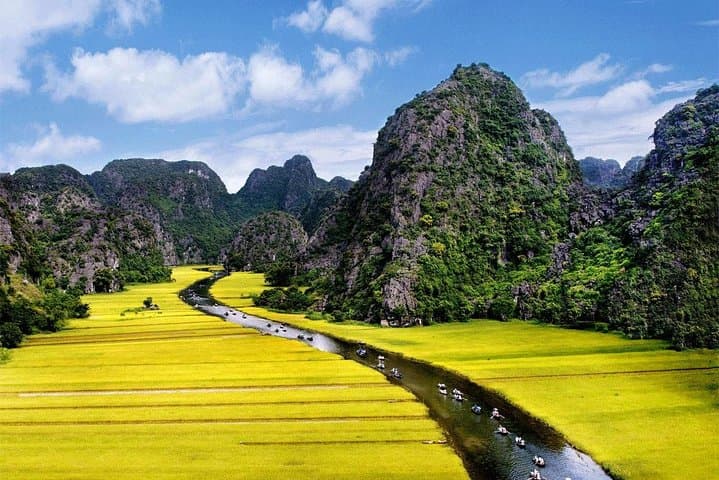
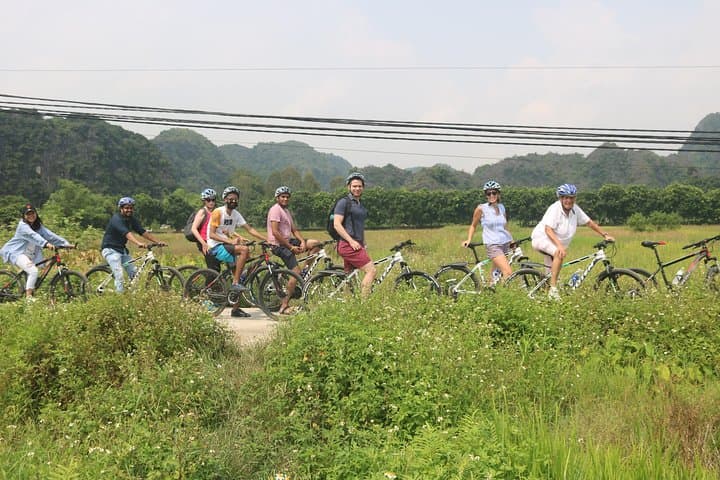

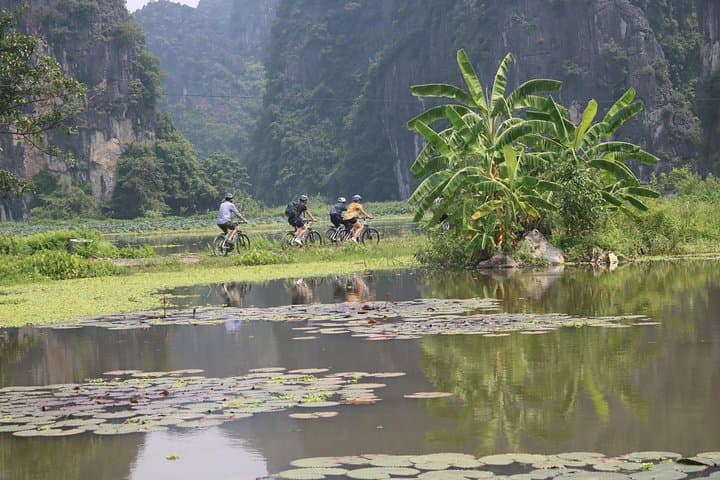
Morning light slices across rice paddies as a small convoy leaves Hanoi for Ninh Binh, and the highway opens onto a landscape of limestone towers and flooded fields. On day one, the tour threads through Ninh Hai Village by bike, rides a bamboo boat along Tam Coc’s slow river through limestone caves, and climbs toward Mua Cave’s viewpoint for a broad, wind-braced panorama. Evenings are spent with a host family in Tam Coc—an opportunity to learn local cooking and rural rhythms.
Morning light slices across rice paddies as a small convoy leaves Hanoi for Ninh Binh, and the highway opens onto a landscape of limestone towers and flooded fields. On day one, the tour threads through Ninh Hai Village by bike, rides a bamboo boat along Tam Coc’s slow river through limestone caves, and climbs toward Mua Cave’s viewpoint for a broad, wind-braced panorama. Evenings are spent with a host family in Tam Coc—an opportunity to learn local cooking and rural rhythms.
The second day shifts from cultivated valley to primeval forest. Cuc Phuong National Park—Vietnam’s oldest national park—preserves lowland evergreen forest, ancient trees, and a network of trails where guides point out a 1,000‑year‑old tree and small caves. The itinerary includes a 4–5 km guided trek and a motorbike transfer roughly 30 km into the park to reach less-visited areas.
Geology here is karst: limestone pillars carved by water over millions of years, the same process that created nearby Ha Long Bay. Cultural history includes Hoa Lu’s 10th–11th century relics and traditional village life centered on wet‑rice agriculture.
Practical notes: expect mixed terrain—flat paddy tracks, paved lanes, riverboat decks, and forest trails—with intermittent steep steps at the Mua viewpoint. Bring a modest level of fitness for hour‑long rides, short hikes, and the Mua climb. Hydrate, wear grippy shoes for riverboat landings, and carry light rain protection in the monsoon season.