THE ADVENTURE COLLECTIVE® · Independent discovery and booking for outdoor travel

Walk Nin’s compact medieval streets, swim at the shallow Queen’s Beach, and learn why this tiny town was a cradle of early Croatian kingship. This short guided trip from Zadar pairs history and easy coastal swimming for a family-friendly day out.
Walk Nin’s compact medieval streets, swim at the shallow Queen’s Beach, and learn why this tiny town was a cradle of early Croatian kingship. This short guided trip from Zadar pairs history and easy coastal swimming for a family-friendly day out.
A low stone quay slides into the Adriatic; wind threads across shallow salt pans while a guide points out the town's eight-century church and the compact cathedral claimed as the world's smallest. You arrive from Zadar along a short coastal drive and step onto streets that still carry the geometry of early medieval planning: narrow alleys, Romanesque doorways, and low walls that have kept watch for more than a thousand years.
Verified experiences and guided adventures in the surrounding area.
Operated by Taxi Zadar · Nin, Zadar County
A low stone quay slides into the Adriatic; wind threads across shallow salt pans while a guide points out the town's eight-century church and the compact cathedral claimed as the world's smallest. You arrive from Zadar along a short coastal drive and step onto streets that still carry the geometry of early medieval planning: narrow alleys, Romanesque doorways, and low walls that have kept watch for more than a thousand years.
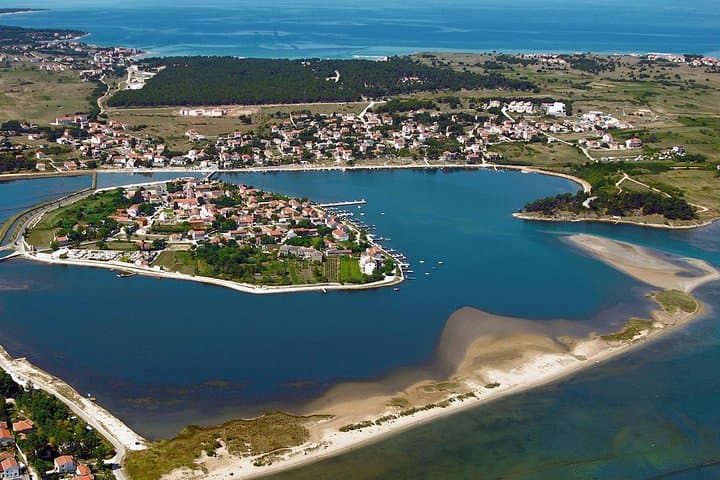
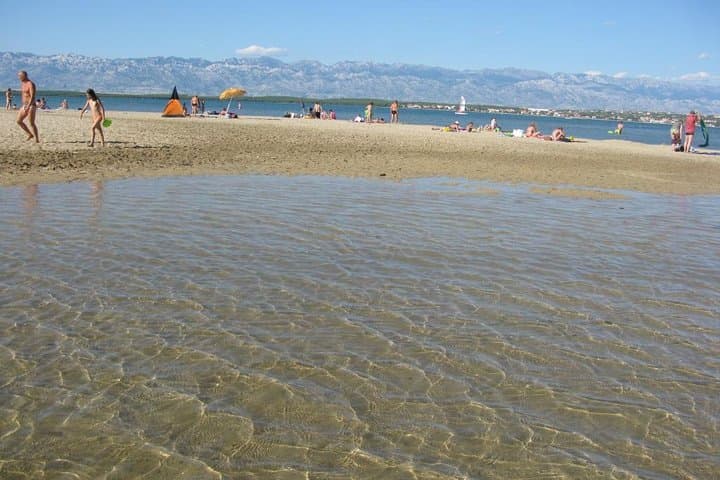
Nin sits on a tiny spit of land where lagoon, beach, and town meet. The geology is recent coastal alluvium and protected wetlands; the Queen’s Beach — fine, shallow sand warmed by the shallow bay — was historically reserved for royalty and bathing rituals. Culturally, Nin played a central role in early Croatian statehood and ecclesiastical life, visible in archaeological remains and the 9th-century church fragments that survive in museum displays.
Expect a mix of short walking tours and relaxed beach time: an interpretive stroll past ramparts and churches, followed by swimming and sun on Queen’s Beach. The town’s compact size means low walking distances but uneven stone streets and some exposed sun on the shore.
Practical guidance: bring sun protection and reef-appropriate footwear for the sand and occasional pebbles; the shallow water is family-friendly but watch for changing winds. Travel time from Zadar is roughly 15–20 minutes by car; allow 3–5 hours for a guided visit and swim. Respect protected lagoon areas, sample local oyster-and-salt history exhibits, and plan afternoon returns when sea breezes pick up to cool the walk back to the vehicle.
easy.
3–5 hours.
Suitable for all fitness levels; involves short walks on uneven historical paving and light beach activity
The drive is roughly 15–20 minutes (about 15 kilometers) each way from central Zadar, depending on traffic.
Yes—Queen's Beach has shallow, warm water and gentle entry, making it family-friendly, though supervision is still recommended.
Guided commentary typically highlights key historical sites and visible remains; museum admissions may be separate depending on the operator.
Many main areas and the beach approach are accessible, but some historic streets and sites have uneven stone surfaces—check operator notes for specifics.
Nin served as an early center of Croatian rule; archaeological remains and a compact medieval church complex reflect its role in regional governance and religion.
The lagoon and salt pans are sensitive coastal ecosystems—visitors are encouraged to stick to paths and avoid disturbing nesting birds or salt-harvest areas.
Taxi Zadar operates guided outdoor trips and adventures with an emphasis on safety, stewardship, and memorable experiences.

A low stone quay slides into the Adriatic; wind threads across shallow salt pans while a guide points out the town's eight-century church and the compact cathedral claimed as the world's smallest. You arrive from Zadar along a short coastal drive and step onto streets that still carry the geometry of early medieval planning: narrow alleys, Romanesque doorways, and low walls that have kept watch for more than a thousand years.
A low stone quay slides into the Adriatic; wind threads across shallow salt pans while a guide points out the town's eight-century church and the compact cathedral claimed as the world's smallest. You arrive from Zadar along a short coastal drive and step onto streets that still carry the geometry of early medieval planning: narrow alleys, Romanesque doorways, and low walls that have kept watch for more than a thousand years.
Nin sits on a tiny spit of land where lagoon, beach, and town meet. The geology is recent coastal alluvium and protected wetlands; the Queen’s Beach — fine, shallow sand warmed by the shallow bay — was historically reserved for royalty and bathing rituals. Culturally, Nin played a central role in early Croatian statehood and ecclesiastical life, visible in archaeological remains and the 9th-century church fragments that survive in museum displays.
Expect a mix of short walking tours and relaxed beach time: an interpretive stroll past ramparts and churches, followed by swimming and sun on Queen’s Beach. The town’s compact size means low walking distances but uneven stone streets and some exposed sun on the shore.
Practical guidance: bring sun protection and reef-appropriate footwear for the sand and occasional pebbles; the shallow water is family-friendly but watch for changing winds. Travel time from Zadar is roughly 15–20 minutes by car; allow 3–5 hours for a guided visit and swim. Respect protected lagoon areas, sample local oyster-and-salt history exhibits, and plan afternoon returns when sea breezes pick up to cool the walk back to the vehicle.