THE ADVENTURE COLLECTIVE® · Independent discovery and booking for outdoor travel

Cruise the Nile from Luxor to Aswan on a four-night guided voyage that pairs relaxed river travel with expert-led tours of Karnak, the Valley of the Kings, Edfu, Kom Ombo, and Philae. Perfect for travelers who want archaeology, scenery, and downtime rolled into one trip.
Cruise the Nile from Luxor to Aswan on a four-night guided voyage that pairs relaxed river travel with expert-led tours of Karnak, the Valley of the Kings, Edfu, Kom Ombo, and Philae. Perfect for travelers who want archaeology, scenery, and downtime rolled into one trip.
You step onto the wooden deck as the river pulls you downstream: palms blur against sun-baked cliffs, fishermen in feluccas cast slender silhouettes, and minarets punctuate distant towns. The Nile here still sets pace—slow, deliberate, carrying millennia of sediment and story past cathedrals of stone.
Verified experiences and guided adventures in the surrounding area.
Operated by Egypt VIP Tours · Luxor, Luxor Governorate
You step onto the wooden deck as the river pulls you downstream: palms blur against sun-baked cliffs, fishermen in feluccas cast slender silhouettes, and minarets punctuate distant towns. The Nile here still sets pace—slow, deliberate, carrying millennia of sediment and story past cathedrals of stone.
This four-night cruise links Luxor’s temple complex to Aswan’s island sanctuaries. Geologically the valley is a narrow ribbon of fertile alluvium carved through desert, which is why pharaohs built monumental tombs and temples on its banks. On this itinerary you’ll move from Karnak’s avenue of columns to the painted tombs in the Valley of the Kings, then onward to Edfu’s intact Temple of Horus, Kom Ombo’s dual sanctuaries, and Philae’s island shrine—each site revealing layers of New Kingdom statecraft, Greco-Roman devotion, and Nubian influence.
Culturally the river remains central: villages trade dates and pottery, and local guides weave language, ritual, and architecture into readable context. The modern High Dam at Aswan is a reminder that the Nile’s flow now balances ancient heritage against 20th-century engineering.
Practicalities matter. Expect multiple short guided walks from the ship—light hiking on uneven stone, steps, and sandy paths. Days are hot; mornings and evenings are calm and the best times to roam. Bring sun protection, closed shoes for temple floors, a hat, and a reusable water bottle. Carry passport copies and local currency for small purchases and museum tickets not included. Pace your days aboard, use the deck to watch changing light, and let the river’s slow momentum shape a trip that’s equal parts archaeology and relaxation.
easy.
4–5 days.
Basic mobility required—comfortable walking for short to moderate durations, stair negotiation at temple sites.
Some standard guided visits are included but specific tomb or special-entry tickets (like certain KV tombs) may require extra purchase on-site; confirm with your operator.
Transfers from Luxor arrival points to the ship and from the ship to Aswan departure points are included; confirm exact pickup location and flight timing when you book.
Yes—meals from lunch on day 1 through breakfast on day 5 are included, with typical Egyptian and international options served aboard.
The cruise is generally rated easy, but temple sites include steps and uneven surfaces; travelers with limited mobility should check accessibility at individual sites and notify the operator in advance.
The Nile Valley sustained ancient Egyptian civilization—monuments here span Pharaonic dynasties through Greco-Roman periods, with later Nubian and Islamic layers.
High visitor numbers accelerate wear on fragile surfaces; practice no-touch policies in tombs, use designated paths, and support local guides and conservation fees where possible.
Egypt VIP Tours operates guided outdoor trips and adventures with an emphasis on safety, stewardship, and memorable experiences.


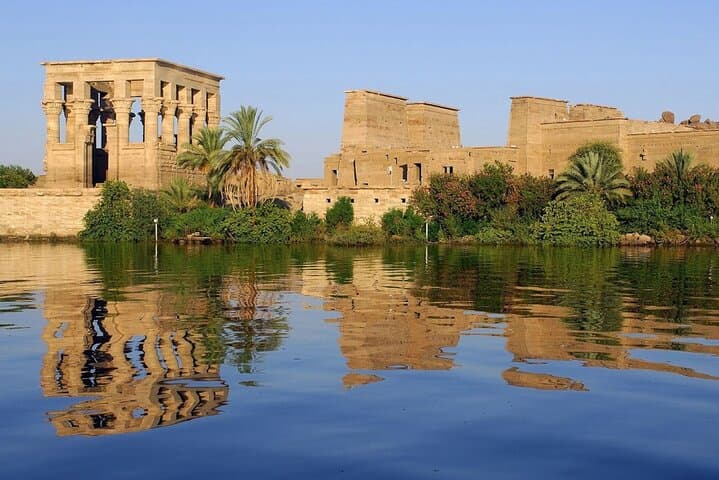
You step onto the wooden deck as the river pulls you downstream: palms blur against sun-baked cliffs, fishermen in feluccas cast slender silhouettes, and minarets punctuate distant towns. The Nile here still sets pace—slow, deliberate, carrying millennia of sediment and story past cathedrals of stone.
You step onto the wooden deck as the river pulls you downstream: palms blur against sun-baked cliffs, fishermen in feluccas cast slender silhouettes, and minarets punctuate distant towns. The Nile here still sets pace—slow, deliberate, carrying millennia of sediment and story past cathedrals of stone.
This four-night cruise links Luxor’s temple complex to Aswan’s island sanctuaries. Geologically the valley is a narrow ribbon of fertile alluvium carved through desert, which is why pharaohs built monumental tombs and temples on its banks. On this itinerary you’ll move from Karnak’s avenue of columns to the painted tombs in the Valley of the Kings, then onward to Edfu’s intact Temple of Horus, Kom Ombo’s dual sanctuaries, and Philae’s island shrine—each site revealing layers of New Kingdom statecraft, Greco-Roman devotion, and Nubian influence.
Culturally the river remains central: villages trade dates and pottery, and local guides weave language, ritual, and architecture into readable context. The modern High Dam at Aswan is a reminder that the Nile’s flow now balances ancient heritage against 20th-century engineering.
Practicalities matter. Expect multiple short guided walks from the ship—light hiking on uneven stone, steps, and sandy paths. Days are hot; mornings and evenings are calm and the best times to roam. Bring sun protection, closed shoes for temple floors, a hat, and a reusable water bottle. Carry passport copies and local currency for small purchases and museum tickets not included. Pace your days aboard, use the deck to watch changing light, and let the river’s slow momentum shape a trip that’s equal parts archaeology and relaxation.