THE ADVENTURE COLLECTIVE® · Independent discovery and booking for outdoor travel

A four-night Nile cruise from Luxor to Aswan moves like a slow archaeological tourboat—temples, tombs, and riverside life pass in deliberate sequence. This classic itinerary pairs expert Egyptologist commentary with relaxed sailing and onshore explorations at Karnak, Edfu, Kom Ombo, and Philae.
A four-night Nile cruise from Luxor to Aswan moves like a slow archaeological tourboat—temples, tombs, and riverside life pass in deliberate sequence. This classic itinerary pairs expert Egyptologist commentary with relaxed sailing and onshore explorations at Karnak, Edfu, Kom Ombo, and Philae.
Dawn finds the Nile a sheet of hammered brass, the cruise ship carving a slow wake as palm-lined banks slide past. On deck, the river seems to have a will of its own—pulling you south, carrying a record of empires in its current. Over four nights, the journey reads like a moving museum: temple façades rise from alabaster light, sandstone cliffs watch in patient rows, and village life unfurls on the river margin.
Verified experiences and guided adventures in the surrounding area.
Operated by Egypt VIP Tours · Luxor, Luxor Governorate
Dawn finds the Nile a sheet of hammered brass, the cruise ship carving a slow wake as palm-lined banks slide past. On deck, the river seems to have a will of its own—pulling you south, carrying a record of empires in its current. Over four nights, the journey reads like a moving museum: temple façades rise from alabaster light, sandstone cliffs watch in patient rows, and village life unfurls on the river margin.
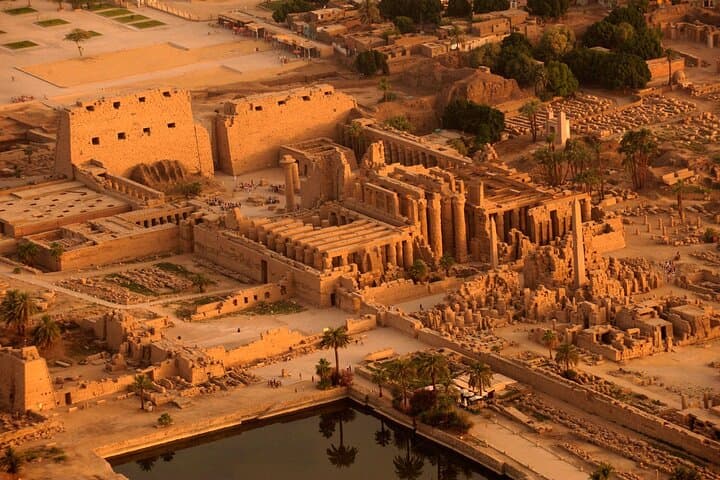
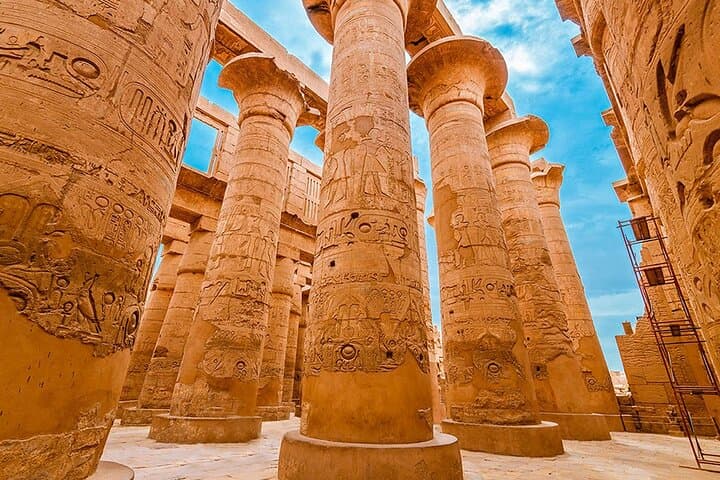
This route traces Egypt's ancient spine. Luxor and Karnak mark the religious heart of the New Kingdom; the West Bank's Valley of the Kings holds pharaonic tombs cut into the Theban cliffs. Edfu and Kom Ombo preserve Ptolemaic and Greco-Roman layers, while Aswan's High Dam and the transplanted Temple of Philae show modern interventions in a long human story. Geology here is straightforward—Nile alluvium against Precambrian granite in Aswan—yet the contrast creates the striking temple settings.
Expect guided walks at each site, short transfers, and relaxed sailing between stops. Mornings are best for monuments—light is calmer, crowds thinner—and evenings suit the ship: dinner, cultural performances, and time on deck. Practical notes: sun protection and a reusable water bottle are necessities; modest dress is required at religious sites. Mobility is generally easy but some tombs include low passages and uneven stone steps.
For planning: book morning slots for hot-air balloon and Valley of the Kings early; allow one flexible day for weather or museum time; and factor tipping and entrance fees into your budget. The Nile keeps you moving; travel ready to listen.
easy.
4 nights / 5 days.
Suitable for travelers in average health; involves short walks, steps, and some uneven terrain at archaeological sites.
Hot air balloon rides are listed as an inclusion in some packages but are often optional or scheduled early—confirm timing and availability when you book.
Guided tours at the listed sites by an Egyptologist are included; standard entrance fees for major sites are typically covered but verify specifics with the operator.
Most activities are easy: short walks, stairs, and some narrow tomb passages; travelers with limited mobility should check specific site access and ship transfer procedures.
Plan for local guide and crew tips, optional excursions like balloon rides, and personal purchases—carry local currency (Egyptian pounds) for small vendors.
This corridor formed the core of the New Kingdom's Theban capital; many temples were later modified in Greco-Roman times and several monuments (notably Abu Simbel and Philae) were relocated to survive modern dams.
Large infrastructure projects like the Aswan High Dam altered river ecology and archaeological contexts; travelers can minimize impact by following site rules, staying on paths, and avoiding single-use plastics.
Egypt VIP Tours operates guided outdoor trips and adventures with an emphasis on safety, stewardship, and memorable experiences.
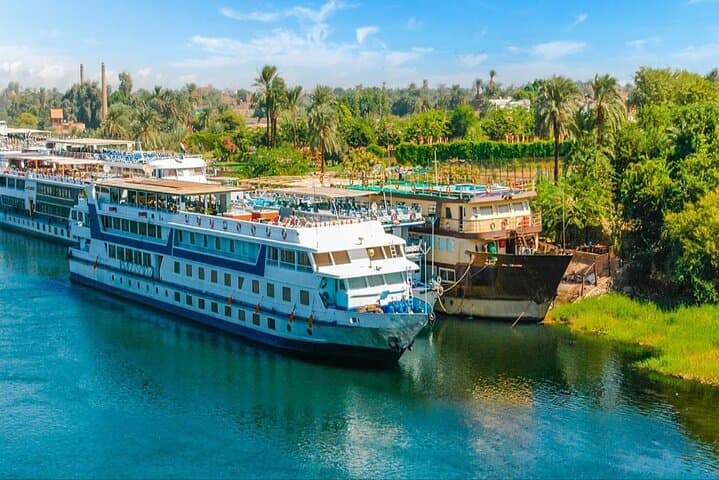
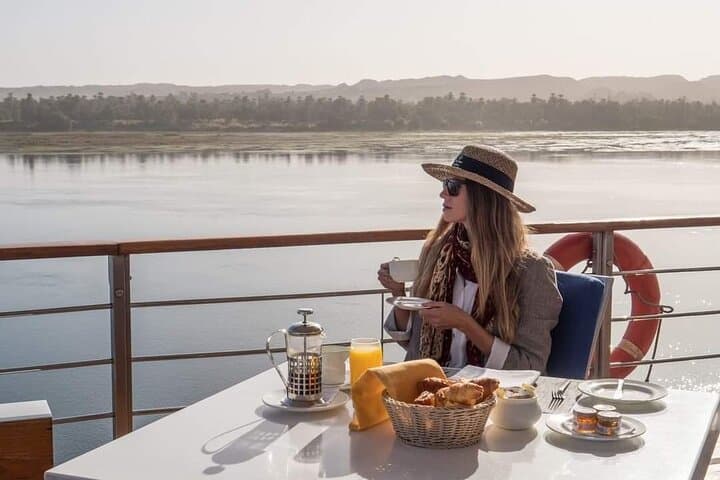
Dawn finds the Nile a sheet of hammered brass, the cruise ship carving a slow wake as palm-lined banks slide past. On deck, the river seems to have a will of its own—pulling you south, carrying a record of empires in its current. Over four nights, the journey reads like a moving museum: temple façades rise from alabaster light, sandstone cliffs watch in patient rows, and village life unfurls on the river margin.
Dawn finds the Nile a sheet of hammered brass, the cruise ship carving a slow wake as palm-lined banks slide past. On deck, the river seems to have a will of its own—pulling you south, carrying a record of empires in its current. Over four nights, the journey reads like a moving museum: temple façades rise from alabaster light, sandstone cliffs watch in patient rows, and village life unfurls on the river margin.
This route traces Egypt's ancient spine. Luxor and Karnak mark the religious heart of the New Kingdom; the West Bank's Valley of the Kings holds pharaonic tombs cut into the Theban cliffs. Edfu and Kom Ombo preserve Ptolemaic and Greco-Roman layers, while Aswan's High Dam and the transplanted Temple of Philae show modern interventions in a long human story. Geology here is straightforward—Nile alluvium against Precambrian granite in Aswan—yet the contrast creates the striking temple settings.
Expect guided walks at each site, short transfers, and relaxed sailing between stops. Mornings are best for monuments—light is calmer, crowds thinner—and evenings suit the ship: dinner, cultural performances, and time on deck. Practical notes: sun protection and a reusable water bottle are necessities; modest dress is required at religious sites. Mobility is generally easy but some tombs include low passages and uneven stone steps.
For planning: book morning slots for hot-air balloon and Valley of the Kings early; allow one flexible day for weather or museum time; and factor tipping and entrance fees into your budget. The Nile keeps you moving; travel ready to listen.