THE ADVENTURE COLLECTIVE® · Independent discovery and booking for outdoor travel

Sail four days along the Nile from Aswan to Luxor with an Egyptologist guide, visiting Philae, Kom Ombo, Edfu, and Luxor’s East and West Banks. This all‑inclusive cruise pairs comfortable onboard service with guided temple tours and private transfers.
Sail four days along the Nile from Aswan to Luxor with an Egyptologist guide, visiting Philae, Kom Ombo, Edfu, and Luxor’s East and West Banks. This all‑inclusive cruise pairs comfortable onboard service with guided temple tours and private transfers.
You step off the transfer van into Aswan’s dry heat and the Nile instantly claims your attention — a ribbon of blue threading through ochre desert, boats charting slow arcs as minarets and palm shadows slide by. Boarding a five‑star dahabiya-style cruise, you find a shaded lounge, the guide’s voice already sketching gods and kings that shaped this river.
Verified experiences and guided adventures in the surrounding area.
Operated by Saray El-Nile · Aswan, Aswan Governorate
You step off the transfer van into Aswan’s dry heat and the Nile instantly claims your attention — a ribbon of blue threading through ochre desert, boats charting slow arcs as minarets and palm shadows slide by. Boarding a five‑star dahabiya-style cruise, you find a shaded lounge, the guide’s voice already sketching gods and kings that shaped this river.
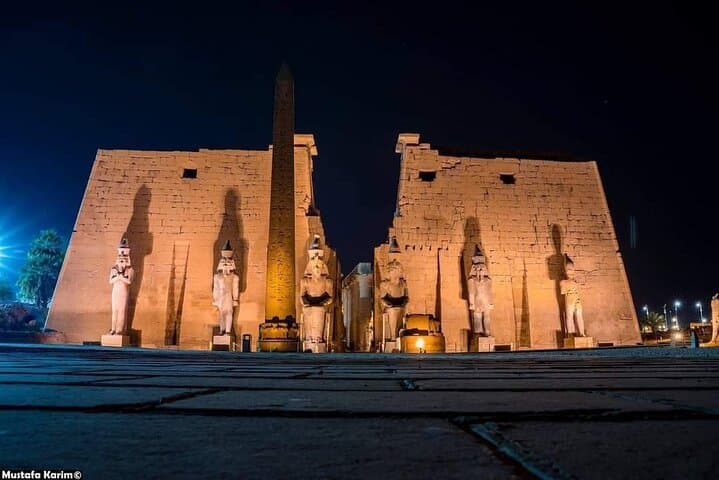
This route follows millennia of history. Philae’s island temple honors Isis; Kom Ombo’s double sanctuary tells of Sobek and Horus; Edfu’s towering pylons frame the cultic drama of Horus the falcon. The West Bank around Luxor holds the Valley of the Kings and Hatshepsut’s terraces—stone architecture raised from desert cliffs where tombs map ancient beliefs about death and rebirth. Geologically, the Nile’s floodplain cuts a narrow fertile corridor through crystalline desert; towns cluster where irrigation reaches fields.
Local life remains quietly present — farmers tending felucca fields, Nubian neighborhoods with painted houses, market stalls selling spices and sugar‑sweet tea. Guides explain hieroglyphic scenes and point out reused stonework, offering context that turns columns and cartouches into readable history.
Practical notes: the cruise is low‑impact but sun and sand are constant companions. Bring a wide‑brim hat, high‑SPF sunscreen, comfortable walking shoes for uneven temple surfaces, and a refillable water bottle (filtered water is usually available onboard). Expect early starts for cooler light at tombs and routine private transfers at embarkation and disembarkation. Photographers should carry a small tripod for low‑light interiors and respect signage that restricts flash. With easy paced travel and expert commentary, this four‑day cruise balances rivertime relaxation with concentrated archaeological discovery.
easy.
4 days.
Suitable for travelers of most fitness levels; expect several short walks and stairs at archaeological sites.
Most nationalities require an Egyptian entry visa obtained before travel or on arrival—check your embassy for current rules before booking.
This cruise includes entrance fees to the listed sites between Aswan and Luxor as part of the itinerary.
Access varies by vessel; expect gangway steps and uneven surfaces at sites—contact the operator in advance for mobility accommodations.
Full board meals are provided; filtered drinking water is typically available, but bring a refillable bottle for convenience.
The Nile corridor has sustained Egyptian civilization for millennia; many temples here were constructed or modified by successive pharaohs across New Kingdom and Ptolemaic periods.
Tourism concentrates pressure on fragile archaeological sites and local water resources—use refillable containers, avoid touching wall reliefs, and follow guide instructions to reduce impact.
Saray El-Nile operates guided outdoor trips and adventures with an emphasis on safety, stewardship, and memorable experiences.
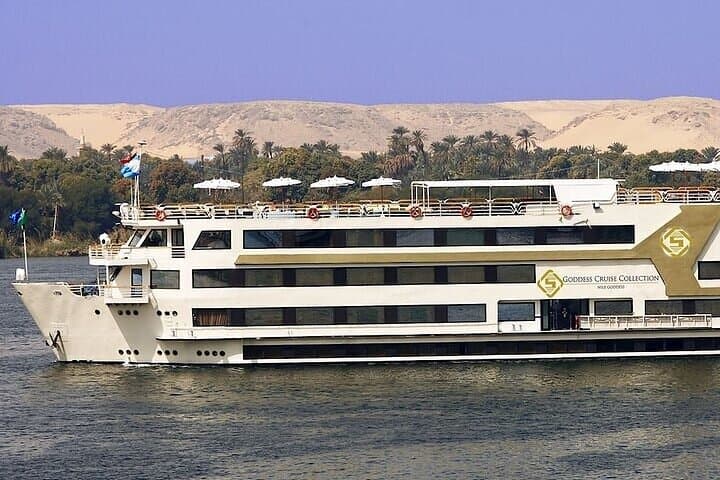
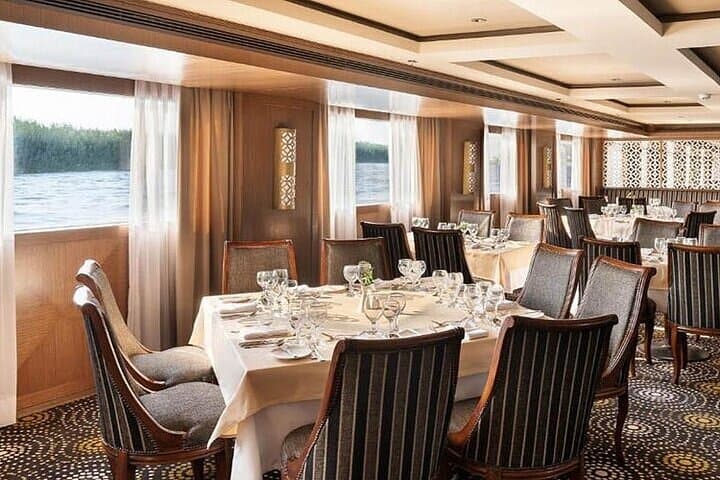
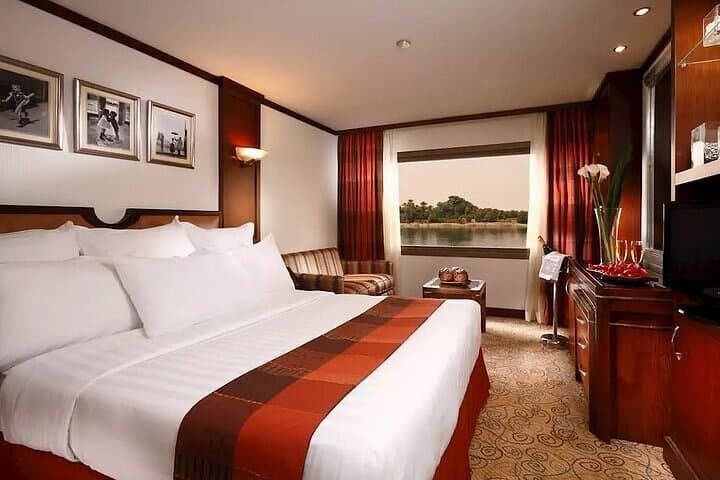
You step off the transfer van into Aswan’s dry heat and the Nile instantly claims your attention — a ribbon of blue threading through ochre desert, boats charting slow arcs as minarets and palm shadows slide by. Boarding a five‑star dahabiya-style cruise, you find a shaded lounge, the guide’s voice already sketching gods and kings that shaped this river.
You step off the transfer van into Aswan’s dry heat and the Nile instantly claims your attention — a ribbon of blue threading through ochre desert, boats charting slow arcs as minarets and palm shadows slide by. Boarding a five‑star dahabiya-style cruise, you find a shaded lounge, the guide’s voice already sketching gods and kings that shaped this river.
This route follows millennia of history. Philae’s island temple honors Isis; Kom Ombo’s double sanctuary tells of Sobek and Horus; Edfu’s towering pylons frame the cultic drama of Horus the falcon. The West Bank around Luxor holds the Valley of the Kings and Hatshepsut’s terraces—stone architecture raised from desert cliffs where tombs map ancient beliefs about death and rebirth. Geologically, the Nile’s floodplain cuts a narrow fertile corridor through crystalline desert; towns cluster where irrigation reaches fields.
Local life remains quietly present — farmers tending felucca fields, Nubian neighborhoods with painted houses, market stalls selling spices and sugar‑sweet tea. Guides explain hieroglyphic scenes and point out reused stonework, offering context that turns columns and cartouches into readable history.
Practical notes: the cruise is low‑impact but sun and sand are constant companions. Bring a wide‑brim hat, high‑SPF sunscreen, comfortable walking shoes for uneven temple surfaces, and a refillable water bottle (filtered water is usually available onboard). Expect early starts for cooler light at tombs and routine private transfers at embarkation and disembarkation. Photographers should carry a small tripod for low‑light interiors and respect signage that restricts flash. With easy paced travel and expert commentary, this four‑day cruise balances rivertime relaxation with concentrated archaeological discovery.