THE ADVENTURE COLLECTIVE® · Independent discovery and booking for outdoor travel

Walk the famous torii at dusk to see Fushimi Inari in a quieter, cooler light. This guided one-hour evening tour is a compact cultural walk that explains shrine history, fox imagery, and practical etiquette while avoiding daytime crowds.
Walk the famous torii at dusk to see Fushimi Inari in a quieter, cooler light. This guided one-hour evening tour is a compact cultural walk that explains shrine history, fox imagery, and practical etiquette while avoiding daytime crowds.
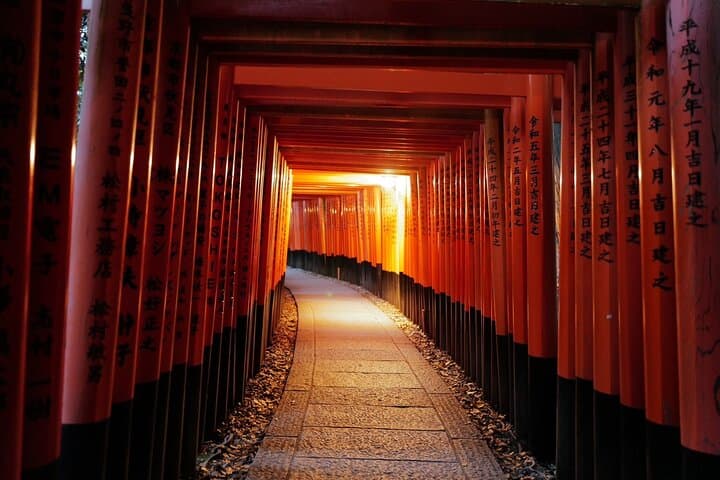
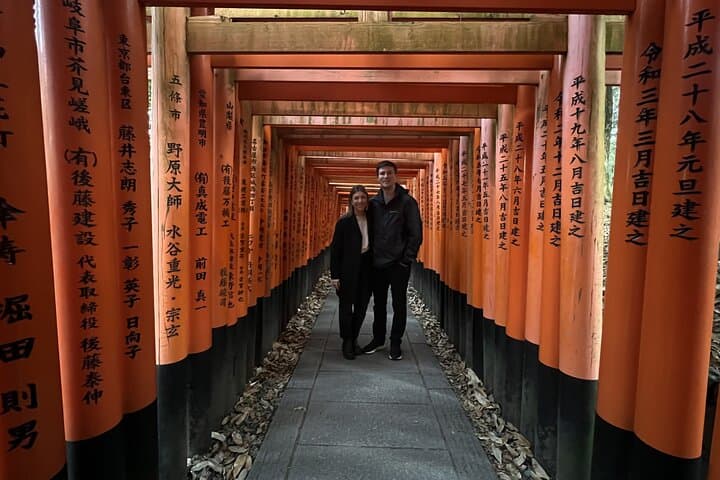
A single orange gate glows against the deep blue of Kyoto evening as you step from JR Inari Station past the convenience store and toward the fox statue greeting the shrine entrance. The path under the torii narrows, shadows lengthen, and the wooden columns take on a rhythm — a corridor that pushes you forward through light and dark.
Verified experiences and guided adventures in the surrounding area.
Operated by GuideMe Japan · Kyoto, Kyoto Prefecture
A single orange gate glows against the deep blue of Kyoto evening as you step from JR Inari Station past the convenience store and toward the fox statue greeting the shrine entrance. The path under the torii narrows, shadows lengthen, and the wooden columns take on a rhythm — a corridor that pushes you forward through light and dark.
Fushimi Inari Taisha sits at the base of Mount Inari and dates to the 8th century, a working Shinto shrine dedicated to Inari, the kami of rice and commerce. The thousands of vermilion torii are donations from merchants across centuries; they climb the mountain in a roughly 4 km circuit that gains about 230 m of elevation. The site is more cultural than geological, but the ridge trail slices through cedar stands and small streams that shape the shrine’s microclimate.
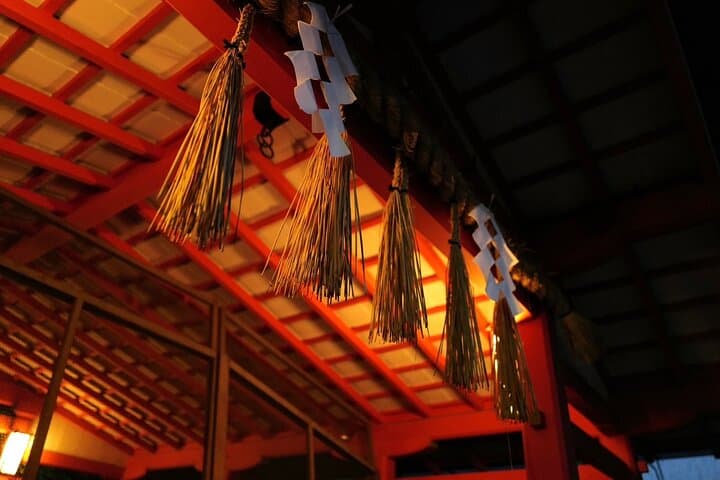
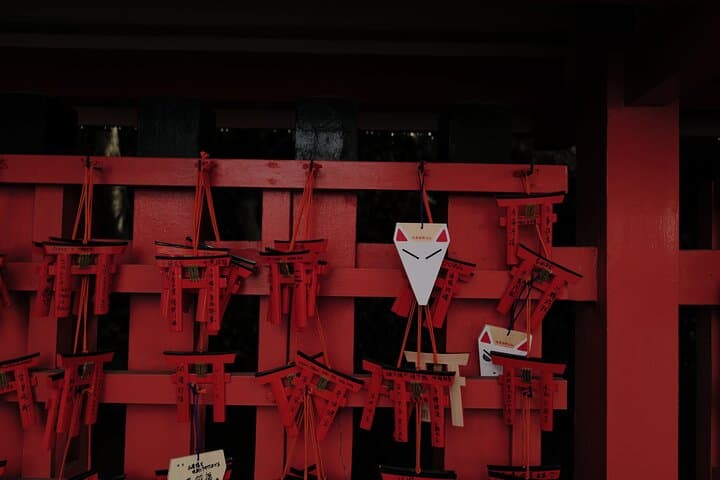
Evening visits change the altar’s scale: fewer tourists, cooler air, and strong lines of gates that throw long shadows. Guides will explain fox symbolism, votive plaques, and differences between Shinto and Buddhism while pointing out small stone altars and hidden inari shrines.
Practical guidance: this one-hour tour covers paved and stone stair sections—comfortable walking shoes and a light jacket are recommended. Bring a small headlamp or use your phone light in darker stretches; keep noise low and follow shrine etiquette. Meet at JR Inari exit by the Daily Yamazaki storefront; the guide will hold a board labeled GuideMe Japan. The pace is leisurely but expect brief uphill segments. Nighttime means fewer crowds but cooler temps and limited restroom access—plan accordingly. This walk is ideal as a quick, interpretive introduction to one of Kyoto’s most striking spiritual landscapes.
easy.
1 hour.
Suitable for most fitness levels; requires walking and short stone stair climbs.
The tour runs about 60 minutes and focuses on the shrine entrance and lower torii, covering roughly 1–2 km with brief uphill sections.
Yes; Fushimi Inari is accessible 24 hours, which makes nighttime tours common to avoid crowds—some inner areas may be dimly lit.
Yes—it's rated easy, but there are stone steps and short inclines; anyone with limited mobility should notify the operator in advance.
There’s no entrance fee for the shrine, but small donations at altars and purchases at nearby stalls typically require cash.
Fushimi Inari’s foundation is recorded in the 8th century; the stacked donor torii reflect centuries of merchant patronage tied to Inari worship.
The shrine manages foot traffic to protect stonework and cedar groves; visitors are asked to stay on paths and avoid climbing over barriers to limit erosion.
GuideMe Japan operates guided outdoor trips and adventures with an emphasis on safety, stewardship, and memorable experiences.
A single orange gate glows against the deep blue of Kyoto evening as you step from JR Inari Station past the convenience store and toward the fox statue greeting the shrine entrance. The path under the torii narrows, shadows lengthen, and the wooden columns take on a rhythm — a corridor that pushes you forward through light and dark.
A single orange gate glows against the deep blue of Kyoto evening as you step from JR Inari Station past the convenience store and toward the fox statue greeting the shrine entrance. The path under the torii narrows, shadows lengthen, and the wooden columns take on a rhythm — a corridor that pushes you forward through light and dark.
Fushimi Inari Taisha sits at the base of Mount Inari and dates to the 8th century, a working Shinto shrine dedicated to Inari, the kami of rice and commerce. The thousands of vermilion torii are donations from merchants across centuries; they climb the mountain in a roughly 4 km circuit that gains about 230 m of elevation. The site is more cultural than geological, but the ridge trail slices through cedar stands and small streams that shape the shrine’s microclimate.
Evening visits change the altar’s scale: fewer tourists, cooler air, and strong lines of gates that throw long shadows. Guides will explain fox symbolism, votive plaques, and differences between Shinto and Buddhism while pointing out small stone altars and hidden inari shrines.
Practical guidance: this one-hour tour covers paved and stone stair sections—comfortable walking shoes and a light jacket are recommended. Bring a small headlamp or use your phone light in darker stretches; keep noise low and follow shrine etiquette. Meet at JR Inari exit by the Daily Yamazaki storefront; the guide will hold a board labeled GuideMe Japan. The pace is leisurely but expect brief uphill segments. Nighttime means fewer crowds but cooler temps and limited restroom access—plan accordingly. This walk is ideal as a quick, interpretive introduction to one of Kyoto’s most striking spiritual landscapes.