THE ADVENTURE COLLECTIVE® · Independent discovery and booking for outdoor travel

Move quietly under a wet‑zone canopy and watch for the slender loris’ reflective eyes on a guided night walk at Sam Popham’s Arboretum near Kitulgala. This intimate, three‑hour tour pairs trained naturalists with low‑light searching for rare nocturnal mammals.
Move quietly under a wet‑zone canopy and watch for the slender loris’ reflective eyes on a guided night walk at Sam Popham’s Arboretum near Kitulgala. This intimate, three‑hour tour pairs trained naturalists with low‑light searching for rare nocturnal mammals.
The path narrows to a ribbon of shadow and leaf litter as a guide dims a white torch and switches to a red beam; eyes begin to appear — small, round, reflective — clinging to thin branches above. On a three-hour evening walk at Sam Popham’s Arboretum near Kitulgala you move slowly, ears tuned to the forest’s creaks, searching treetops for the slender loris and other secretive mammals.
Verified experiences and guided adventures in the surrounding area.
Operated by Lakpura LLC · Kitulgala, Sabaragamuwa Province
The path narrows to a ribbon of shadow and leaf litter as a guide dims a white torch and switches to a red beam; eyes begin to appear — small, round, reflective — clinging to thin branches above. On a three-hour evening walk at Sam Popham’s Arboretum near Kitulgala you move slowly, ears tuned to the forest’s creaks, searching treetops for the slender loris and other secretive mammals.
The arboretum began as a private planting by a British naval officer and grew into a thirty-plus acre sanctuary now associated with Sri Lanka’s research institutions. Geologically the area sits in the island’s wet lowlands where lateritic soils and steep, weathered slopes feed a dense secondary evergreen canopy. Local communities have long used nearby river corridors for transport and rubber smallholdings, and guides bring both naturalist training and local knowledge to the walk.
Expect a low-impact night hike on uneven forest trails, guided by experienced naturalists who use red lights to minimize disturbance and white lights only for identification. Wildlife sightings are unpredictable but include slender loris, mouse deer, civet, and nocturnal birds and insects; the atmosphere is part mystery, part careful, deliberate observation.
Practical notes: the tour lasts about three hours and is suitable for most fitness levels; wear closed-toe shoes with good tread, bring insect repellent, a layered jacket and a headlamp with a red filter if you have one. Photography without flash is preferred. Entrance is included; small-group, private formats make for an intimate, conservation-minded experience.
easy.
3 hours.
Suitable for most fitness levels; participants should be able to walk on uneven forest trails for up to three hours.
No—lorises are unpredictable and nocturnal; guides increase your chances through habitat knowledge and low-light search techniques, but sightings cannot be guaranteed.
Yes for many families, but young children may struggle with long periods of stillness in the dark—check age restrictions with the operator and book family-friendly slots.
Most tours include local pickup or meet at a designated point in Kitulgala; private transfers or tuk-tuks are common for short distances in the area.
Yes, but avoid flash and use silent modes; high‑ISO settings and steadying equipment produce the best images without disturbing wildlife.
The arboretum began as a private planting by a British naval officer and expanded after being entrusted to local research institutions, creating a managed patch of forest important for rare nocturnals.
Tours follow low-impact guidelines—red lights, small groups, and no‑flash photography—to minimize disturbance; local guides also promote habitat protection and community benefits.
Lakpura LLC operates guided outdoor trips and adventures with an emphasis on safety, stewardship, and memorable experiences.
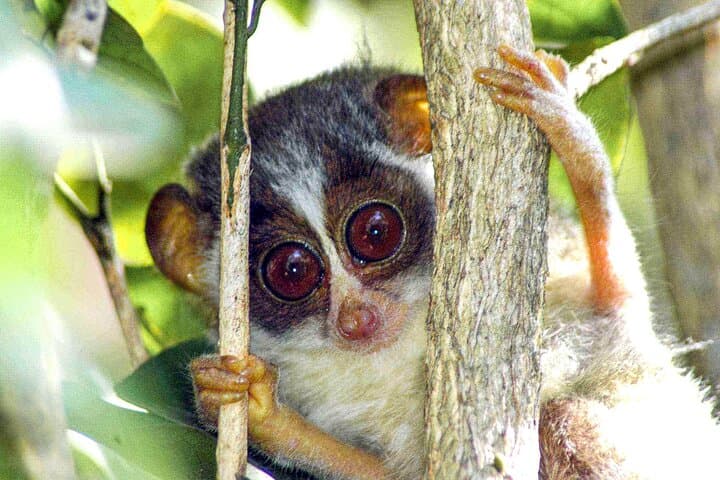
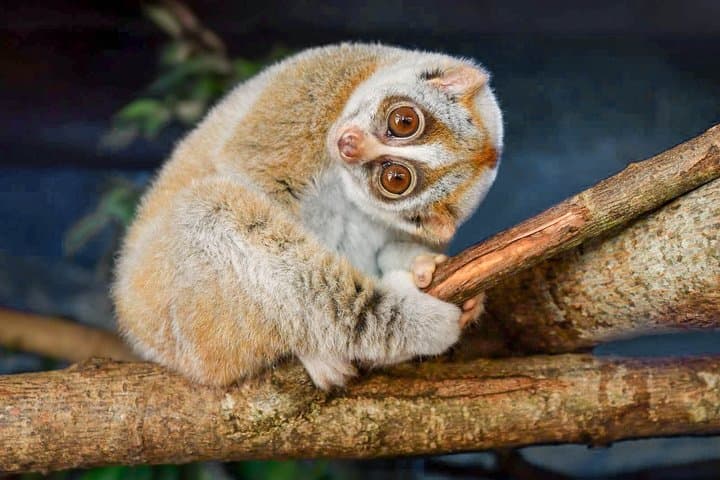
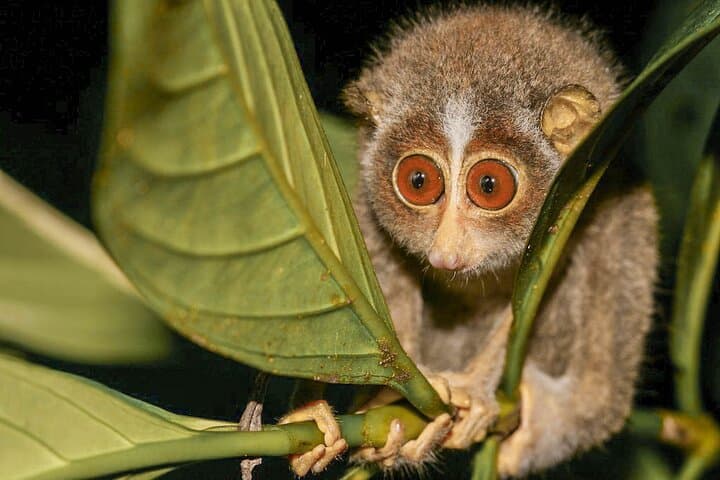
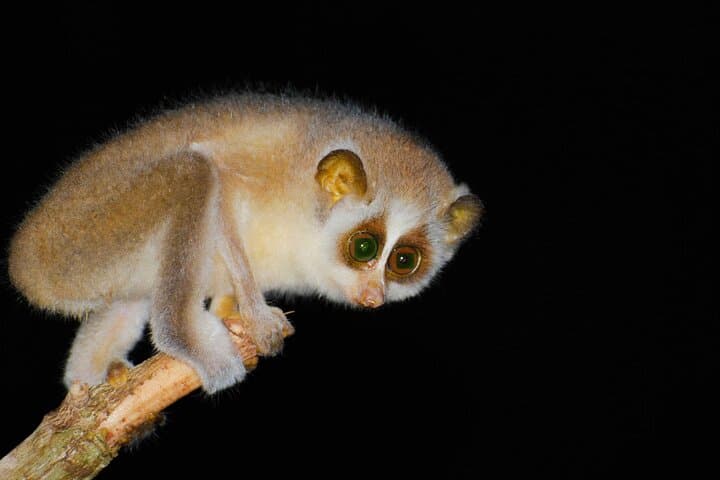
The path narrows to a ribbon of shadow and leaf litter as a guide dims a white torch and switches to a red beam; eyes begin to appear — small, round, reflective — clinging to thin branches above. On a three-hour evening walk at Sam Popham’s Arboretum near Kitulgala you move slowly, ears tuned to the forest’s creaks, searching treetops for the slender loris and other secretive mammals.
The path narrows to a ribbon of shadow and leaf litter as a guide dims a white torch and switches to a red beam; eyes begin to appear — small, round, reflective — clinging to thin branches above. On a three-hour evening walk at Sam Popham’s Arboretum near Kitulgala you move slowly, ears tuned to the forest’s creaks, searching treetops for the slender loris and other secretive mammals.
The arboretum began as a private planting by a British naval officer and grew into a thirty-plus acre sanctuary now associated with Sri Lanka’s research institutions. Geologically the area sits in the island’s wet lowlands where lateritic soils and steep, weathered slopes feed a dense secondary evergreen canopy. Local communities have long used nearby river corridors for transport and rubber smallholdings, and guides bring both naturalist training and local knowledge to the walk.
Expect a low-impact night hike on uneven forest trails, guided by experienced naturalists who use red lights to minimize disturbance and white lights only for identification. Wildlife sightings are unpredictable but include slender loris, mouse deer, civet, and nocturnal birds and insects; the atmosphere is part mystery, part careful, deliberate observation.
Practical notes: the tour lasts about three hours and is suitable for most fitness levels; wear closed-toe shoes with good tread, bring insect repellent, a layered jacket and a headlamp with a red filter if you have one. Photography without flash is preferred. Entrance is included; small-group, private formats make for an intimate, conservation-minded experience.