THE ADVENTURE COLLECTIVE® · Independent discovery and booking for outdoor travel

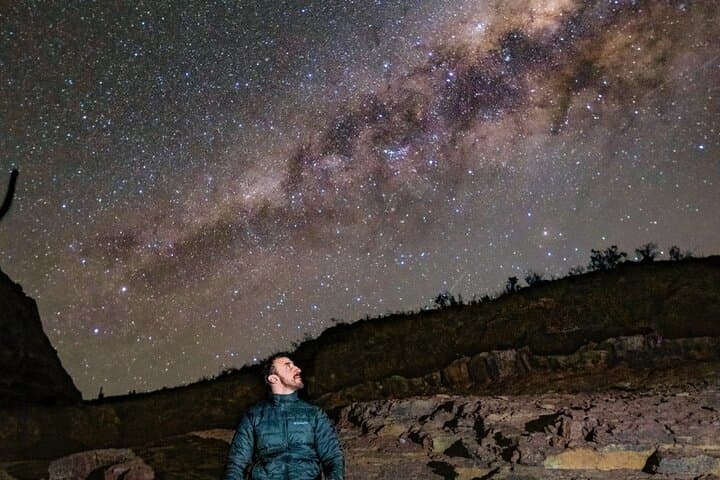
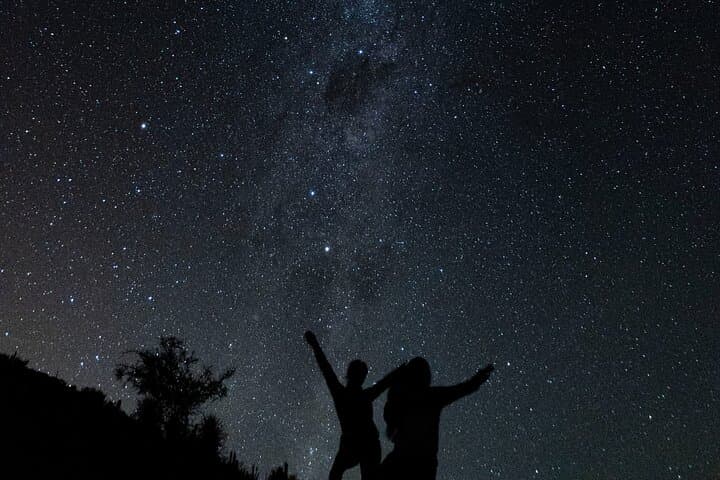
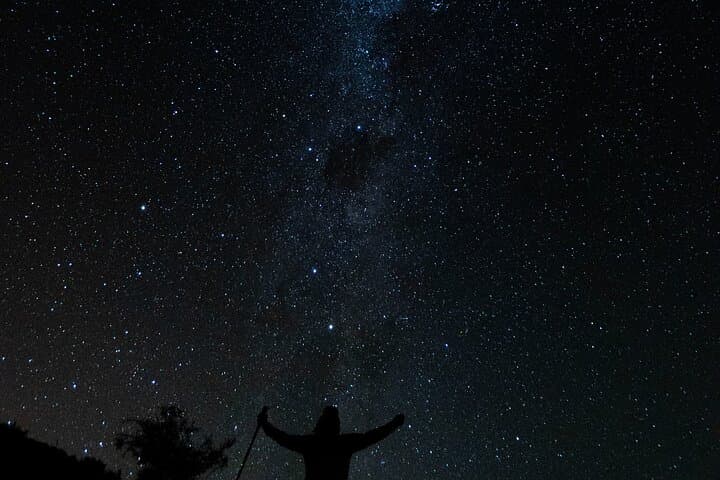
Head into Elqui Valley night to photograph one of the world's cleanest skies. A short walk above Embalse Puclaro leads to panoramic stargazing, a compact astronomy talk, and guided astro photography instruction.
Head into Elqui Valley night to photograph one of the world's cleanest skies. A short walk above Embalse Puclaro leads to panoramic stargazing, a compact astronomy talk, and guided astro photography instruction.
A stiff evening breeze carries the valley's cold like a live thing as you step off the van and into darkness.
Verified experiences and guided adventures in the surrounding area.
Operated by Cabra del valle Tours-expediciones · Vicuña, Coquimbo Region
A stiff evening breeze carries the valley's cold like a live thing as you step off the van and into darkness.
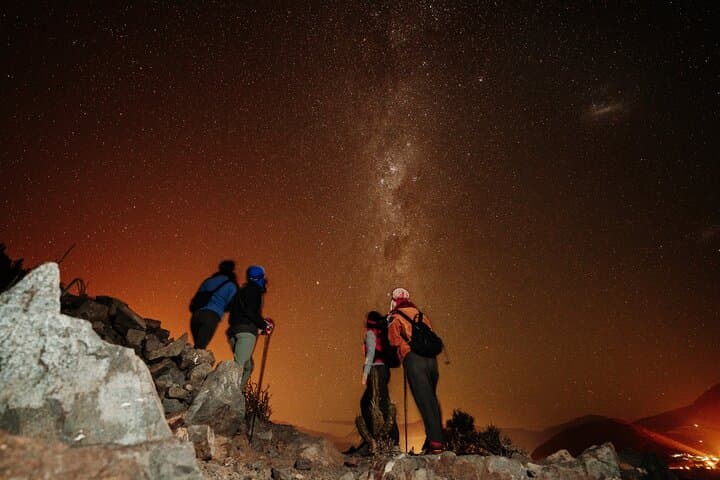
The walk begins under a bruise-black sky; the reservoir's still water dares the stars to mirror it. Guides thread headlamps through the group and lead you along low-traffic country lanes and rocky trails toward a ridge above Embalse Puclaro, where light pollution thins and the Milky Way becomes a river you can almost cross.
The Elqui Valley has been a crossroads of indigenous Diaguita culture and Spanish colonial agriculture; its north–south orientation and high desert plateau produce some of Chile's clearest skies. Geologically the valley is carved by the Elqui River, with terraces of alluvial deposits and volcanic soils that shape the reservoir’s shoreline and the walking paths.
Locals prize these nights for both astronomy and quiet—vineyards sleep below while the sky performs. Your guide gives a short astronomy talk, then helps set cameras for long exposures; you'll learn basic framing and timing to capture star trails and the Milky Way.
Practicalities: expect a mostly easy 2‑hour walk on uneven, sometimes rocky terrain with modest short climbs (plan for cool nighttime temps). Wear warm, windproof layers and sturdy shoes; bring a small headlamp, tripod-capable camera, and at least 500 ml of water. The tour runs about four hours including pickup in Vicuña and round-trip transport. Weather-dependent cancellations are common—clear skies make the show, so flexibility is part of the trip.
easy.
3–4 hours.
Able to walk up to 2 hours on uneven, gently rolling terrain; suitable for most fitness levels
Expect about 30–60 minutes each way on varied terrain; total walking time is roughly two hours within the four-hour tour.
No—guides offer basic instruction on camera settings and composition, but familiarity with your camera helps speed setup.
The tour can be canceled or rescheduled if skies are overcast or wind makes conditions unsafe; check cancellation policy and local forecasts.
Yes—the operator supplies headlamps and walking sticks, though some guests prefer to bring personal gear and batteries.
The Elqui Valley has long been an agricultural and astronomical hub—its dry climate and high-altitude clear nights attracted both early observatories and local astronomical traditions.
Stay on marked trails to protect fragile high-desert vegetation; carry out any trash and avoid using white lights that disturb wildlife and other observers.
Cabra del valle Tours-expediciones operates guided outdoor trips and adventures with an emphasis on safety, stewardship, and memorable experiences.
A stiff evening breeze carries the valley's cold like a live thing as you step off the van and into darkness.
A stiff evening breeze carries the valley's cold like a live thing as you step off the van and into darkness.
The walk begins under a bruise-black sky; the reservoir's still water dares the stars to mirror it. Guides thread headlamps through the group and lead you along low-traffic country lanes and rocky trails toward a ridge above Embalse Puclaro, where light pollution thins and the Milky Way becomes a river you can almost cross.
The Elqui Valley has been a crossroads of indigenous Diaguita culture and Spanish colonial agriculture; its north–south orientation and high desert plateau produce some of Chile's clearest skies. Geologically the valley is carved by the Elqui River, with terraces of alluvial deposits and volcanic soils that shape the reservoir’s shoreline and the walking paths.
Locals prize these nights for both astronomy and quiet—vineyards sleep below while the sky performs. Your guide gives a short astronomy talk, then helps set cameras for long exposures; you'll learn basic framing and timing to capture star trails and the Milky Way.
Practicalities: expect a mostly easy 2‑hour walk on uneven, sometimes rocky terrain with modest short climbs (plan for cool nighttime temps). Wear warm, windproof layers and sturdy shoes; bring a small headlamp, tripod-capable camera, and at least 500 ml of water. The tour runs about four hours including pickup in Vicuña and round-trip transport. Weather-dependent cancellations are common—clear skies make the show, so flexibility is part of the trip.