THE ADVENTURE COLLECTIVE® · Independent discovery and booking for outdoor travel

Join a guided night walk to watch sea turtles nest on Tortuguero’s protected beaches. This regulated, small-group experience runs July–October and requires dark clothing, closed shoes and no photography.
Join a guided night walk to watch sea turtles nest on Tortuguero’s protected beaches. This regulated, small-group experience runs July–October and requires dark clothing, closed shoes and no photography.
The moon slips behind cloud and the Caribbean surf dares the shore — you stand on warm sand as guides scan the black line where turtle shapes might appear.
Verified experiences and guided adventures in the surrounding area.
Operated by Tortuguero Adventures · Tortuguero, Limón
The moon slips behind cloud and the Caribbean surf dares the shore — you stand on warm sand as guides scan the black line where turtle shapes might appear.
Tortuguero on Costa Rica's Caribbean coast is one of the hemisphere's most important sea turtle nesting grounds. The beach itself is formed from coastal sediments carried by rivers and currents; behind it, the flat coastal plain gives way to a maze of rainforest canals that carry the scent of salt and wet wood. Conservation efforts here accelerated in the 1970s when the area gained protected status to safeguard nesting populations studied by early researchers.
Culturally, Tortuguero village is small and maritime—boat access, simple lodges and a community tied to fishing and turtle protection programs. Night patrols, strict permitting and local spotters are part of a management system that keeps human disturbance to a minimum.
Practical guidance: tours operate at night during the nesting window (mainly July–October), last about 2–3 hours, and require a 5pm check‑in at the operator’s office where you'll get your assigned slot. National Park rules are enforced: dark clothing, closed shoes and a small flashlight with red filter help you blend in. Photography and electronic devices are prohibited on the beach. The experience is mostly standing and short, careful walks on sand while guides coordinate small groups and spotters; expect occasional rain and muddy approaches.
This is a slow, focused encounter where patience and respect deliver the reward: watching a turtle labor, deposit eggs and return to the sea — a raw, regulated slice of nature that feels both intimate and fragile.
easy.
2–3 hours.
Suitable for most fitness levels — expect standing, short walks on sand at night and occasional muddy approaches.
No; National Park regulations prohibit all photography and electronic devices on the beach during nesting visits to prevent disturbance.
Most nesting here is observed from July through October, but the exact schedule for nightly visits is assigned by park authorities.
Yes — the activity is low-intensity, but participants should be able to walk short distances on sand at night; some restrictions may apply for very young children or those with mobility issues.
Tours generally run even in rain, but the operator or park may cancel or reschedule for safety; cancellation policies and refund windows apply.
Tortuguero became a focal point for sea turtle research and protection in the mid‑20th century; the national park was established in the 1970s to protect nesting habitat.
Access to nesting beaches is tightly controlled with permits, small groups and no‑flash rules to minimize disturbance; local programs combine tourism revenue with long‑term protection.
Tortuguero Adventures operates guided outdoor trips and adventures with an emphasis on safety, stewardship, and memorable experiences.
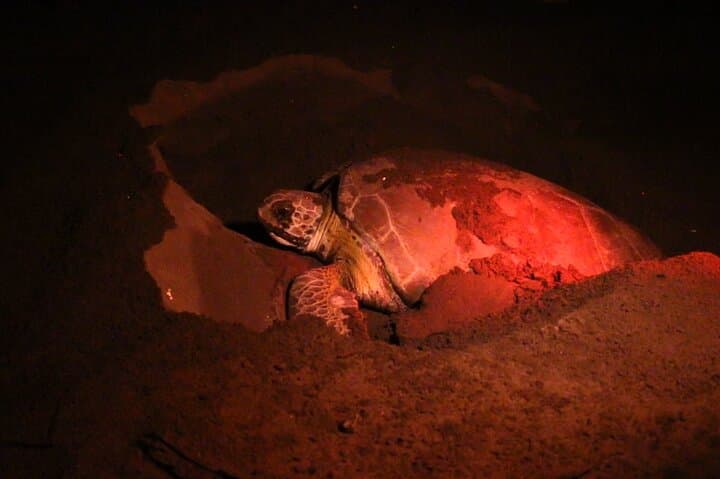
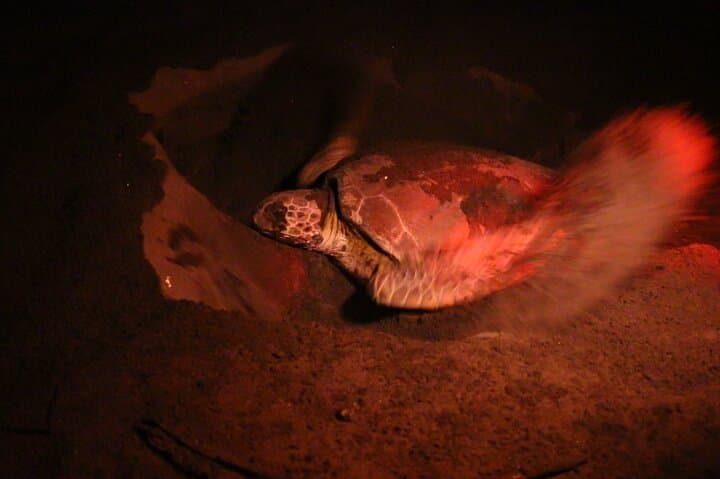
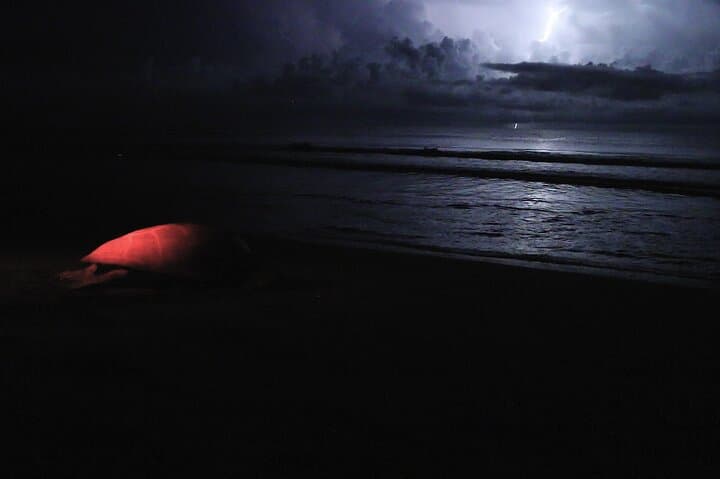
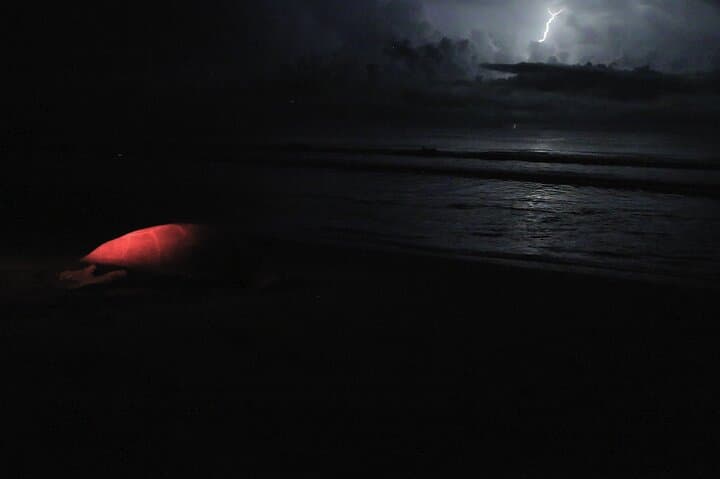
The moon slips behind cloud and the Caribbean surf dares the shore — you stand on warm sand as guides scan the black line where turtle shapes might appear.
The moon slips behind cloud and the Caribbean surf dares the shore — you stand on warm sand as guides scan the black line where turtle shapes might appear.
Tortuguero on Costa Rica's Caribbean coast is one of the hemisphere's most important sea turtle nesting grounds. The beach itself is formed from coastal sediments carried by rivers and currents; behind it, the flat coastal plain gives way to a maze of rainforest canals that carry the scent of salt and wet wood. Conservation efforts here accelerated in the 1970s when the area gained protected status to safeguard nesting populations studied by early researchers.
Culturally, Tortuguero village is small and maritime—boat access, simple lodges and a community tied to fishing and turtle protection programs. Night patrols, strict permitting and local spotters are part of a management system that keeps human disturbance to a minimum.
Practical guidance: tours operate at night during the nesting window (mainly July–October), last about 2–3 hours, and require a 5pm check‑in at the operator’s office where you'll get your assigned slot. National Park rules are enforced: dark clothing, closed shoes and a small flashlight with red filter help you blend in. Photography and electronic devices are prohibited on the beach. The experience is mostly standing and short, careful walks on sand while guides coordinate small groups and spotters; expect occasional rain and muddy approaches.
This is a slow, focused encounter where patience and respect deliver the reward: watching a turtle labor, deposit eggs and return to the sea — a raw, regulated slice of nature that feels both intimate and fragile.