THE ADVENTURE COLLECTIVE® · Independent discovery and booking for outdoor travel

Learn to photograph the Milky Way framed by the jagged Teton crest on a private, four-hour workshop from Jackson Hole. Hands-on instruction, private transport, and site selection away from light pollution let photographers of all levels get striking night-sky images.
Learn to photograph the Milky Way framed by the jagged Teton crest on a private, four-hour workshop from Jackson Hole. Hands-on instruction, private transport, and site selection away from light pollution let photographers of all levels get striking night-sky images.
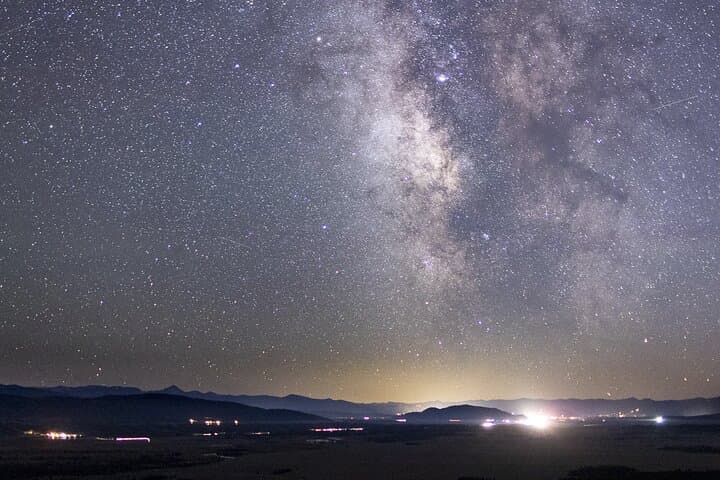
The van eases off Highway 89 and the last band of headlights falls away. You step out onto a cold, gravel pullout and the Tetons rise, black and enormous, like cutouts against the stars. A guide sets up a tripod, checks a headlamp that glows red to preserve night vision, and gestures to the Milky Way as it slashes from horizon to zenith. The air smells of sage and late-summer sagebrush; the mountains don’t compete with the sky so much as complete it.
Verified experiences and guided adventures in the surrounding area.
Operated by Free Roaming Photography · Jackson, Wyoming
The van eases off Highway 89 and the last band of headlights falls away. You step out onto a cold, gravel pullout and the Tetons rise, black and enormous, like cutouts against the stars. A guide sets up a tripod, checks a headlamp that glows red to preserve night vision, and gestures to the Milky Way as it slashes from horizon to zenith. The air smells of sage and late-summer sagebrush; the mountains don’t compete with the sky so much as complete it.
Grand Teton National Park sits on a dramatic fault scarp where the Teton Range pushed up abruptly some 9 million years ago. That abrupt uplift, plus wide valleys carved by glaciers, makes the mountains a striking foreground for astrophotography—the jagged ridgelines and glacial lakes frame the sky in a way flatter ranges rarely do. Culturally, Jackson Hole has long been a crossroads for trappers, ranchers and artists; tonight those same open valleys give you a vantage point used by generations to read the seasons and skies.
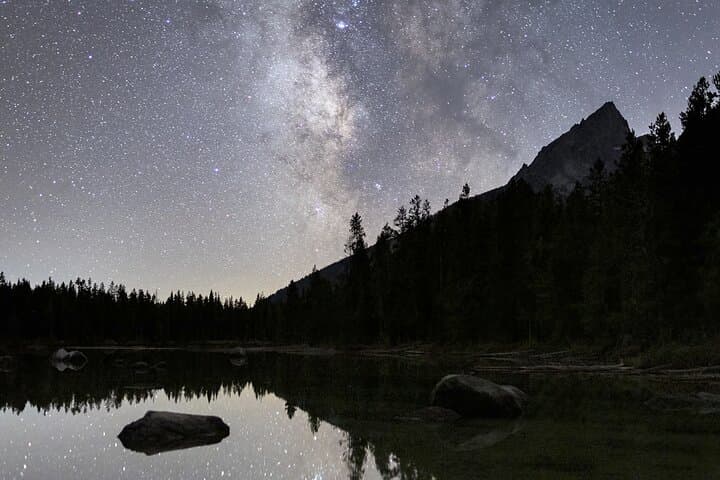
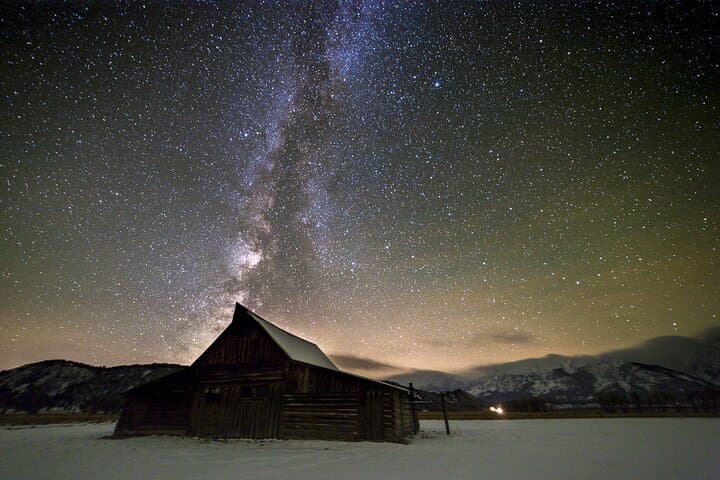
This four-hour, private workshop guides you through practical choices—lens, aperture, ISO, shutter length—while getting you to locations with minimal light pollution. Expect hands-on instruction: focus stacking for foregrounds, calibrating color balance under starlight, and basic composition geared to dramatic Teton silhouettes. The guide will scout sites suited to the moon phase and weather, from reflective lakes that mirror the stars to meadows where the Milky Way crowns the ridgeline.
Practicalities: tours include private transportation from Jackson-area hotels, bottled water and snacks. Dress in layers—temperatures drop fast after sunset. The park charges standard entrance fees and you’ll often be parking at trailheads or pullouts; the provider manages logistics and picks you up at a central meeting point if needed. Photographers of all levels are welcome; the terrain is flat to gently uneven at chosen shooting spots, but expect short, unlit walks on dirt.
For camera settings, start wide (14–35mm), open to f/2.8–f/4, and test exposures in the 10–25 second range depending on focal length; learn to focus manually on a bright star or distant light. Bring a sturdy tripod and a remote shutter release. The guide will demonstrate stacking and basic editing tips to pull noise-free detail from high-ISO files.
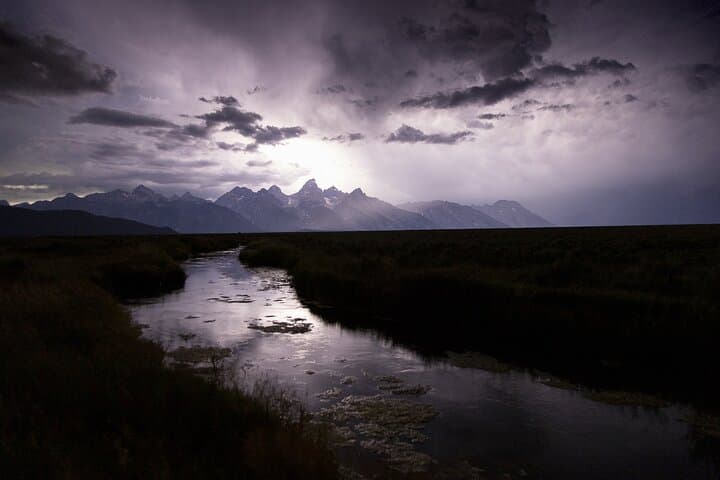
Timing is everything: choose moonless nights for dense star fields, or partly lit moons to silhouette the Tetons. Weather can change quickly; tours are cancelled for unsafe conditions. Whether you’re trying your first long exposure or refining a portfolio shot, the night here feels less like empty space and more like an active, breathing presence—one that will push you to learn technical craft and look at the landscape differently.
easy.
3–4 hours.
Light mobility required—able to walk short distances on uneven ground and stand for extended periods.
No—beginners are welcome; the instructor covers camera settings and composition, but basic familiarity with your camera speeds learning.
Yes—private transportation from Jackson-area hotels is included; confirm your pickup point when booking.
Start times vary with sunset and moon phase; expect departure after dusk—exact time provided on confirmation.
Standard Grand Teton National Park entrance fees apply; the guide typically handles entry logistics but bring your pass or be prepared to pay at the gate.
Tours are cancelled for unsafe conditions (high winds, lightning, heavy snow) and full refunds are available if cancelled at least 24 hours before departure.
Smartphones can capture stars with the right apps and tripods, but DSLRs or mirrorless cameras with manual control produce higher-quality results.
The Teton Range rose along a normal fault; the valley bottom was later shaped by glaciation and homesteading in the 19th century, creating the open, ranch-lined plains you see tonight.
Minimize light pollution by using red headlamps and avoiding unnecessary illumination; follow Leave No Trace and stay on designated pullouts to protect fragile sagebrush soils.
Free Roaming Photography operates guided outdoor trips and adventures with an emphasis on safety, stewardship, and memorable experiences.
The van eases off Highway 89 and the last band of headlights falls away. You step out onto a cold, gravel pullout and the Tetons rise, black and enormous, like cutouts against the stars. A guide sets up a tripod, checks a headlamp that glows red to preserve night vision, and gestures to the Milky Way as it slashes from horizon to zenith. The air smells of sage and late-summer sagebrush; the mountains don’t compete with the sky so much as complete it.
The van eases off Highway 89 and the last band of headlights falls away. You step out onto a cold, gravel pullout and the Tetons rise, black and enormous, like cutouts against the stars. A guide sets up a tripod, checks a headlamp that glows red to preserve night vision, and gestures to the Milky Way as it slashes from horizon to zenith. The air smells of sage and late-summer sagebrush; the mountains don’t compete with the sky so much as complete it.
Grand Teton National Park sits on a dramatic fault scarp where the Teton Range pushed up abruptly some 9 million years ago. That abrupt uplift, plus wide valleys carved by glaciers, makes the mountains a striking foreground for astrophotography—the jagged ridgelines and glacial lakes frame the sky in a way flatter ranges rarely do. Culturally, Jackson Hole has long been a crossroads for trappers, ranchers and artists; tonight those same open valleys give you a vantage point used by generations to read the seasons and skies.
This four-hour, private workshop guides you through practical choices—lens, aperture, ISO, shutter length—while getting you to locations with minimal light pollution. Expect hands-on instruction: focus stacking for foregrounds, calibrating color balance under starlight, and basic composition geared to dramatic Teton silhouettes. The guide will scout sites suited to the moon phase and weather, from reflective lakes that mirror the stars to meadows where the Milky Way crowns the ridgeline.
Practicalities: tours include private transportation from Jackson-area hotels, bottled water and snacks. Dress in layers—temperatures drop fast after sunset. The park charges standard entrance fees and you’ll often be parking at trailheads or pullouts; the provider manages logistics and picks you up at a central meeting point if needed. Photographers of all levels are welcome; the terrain is flat to gently uneven at chosen shooting spots, but expect short, unlit walks on dirt.
For camera settings, start wide (14–35mm), open to f/2.8–f/4, and test exposures in the 10–25 second range depending on focal length; learn to focus manually on a bright star or distant light. Bring a sturdy tripod and a remote shutter release. The guide will demonstrate stacking and basic editing tips to pull noise-free detail from high-ISO files.
Timing is everything: choose moonless nights for dense star fields, or partly lit moons to silhouette the Tetons. Weather can change quickly; tours are cancelled for unsafe conditions. Whether you’re trying your first long exposure or refining a portfolio shot, the night here feels less like empty space and more like an active, breathing presence—one that will push you to learn technical craft and look at the landscape differently.