THE ADVENTURE COLLECTIVE® · Independent discovery and booking for outdoor travel

Explore Marrakech after dark with a local guide: sunset views at Jemaa el‑Fna, illuminated Koutoubia, secret medina alleys, and tastings of mechoui and mint tea. This 3–4 hour walking tour pairs historical sites with hands‑on local culture.
Explore Marrakech after dark with a local guide: sunset views at Jemaa el‑Fna, illuminated Koutoubia, secret medina alleys, and tastings of mechoui and mint tea. This 3–4 hour walking tour pairs historical sites with hands‑on local culture.
The sun drops behind the ochre ramparts and Jemaa el‑Fna flips from market bustle to lantern-lit theatre—this is where Ahmed begins the walk. You move through alleys whose plastered walls still hold the warm red of the city’s clay, passing riad gates carved with cedar and metalwork that frame private courtyards like secret stages.
Verified experiences and guided adventures in the surrounding area.
Operated by Marrakchy Guides · Marrakech, Marrakesh-Safi
The sun drops behind the ochre ramparts and Jemaa el‑Fna flips from market bustle to lantern-lit theatre—this is where Ahmed begins the walk. You move through alleys whose plastered walls still hold the warm red of the city’s clay, passing riad gates carved with cedar and metalwork that frame private courtyards like secret stages.
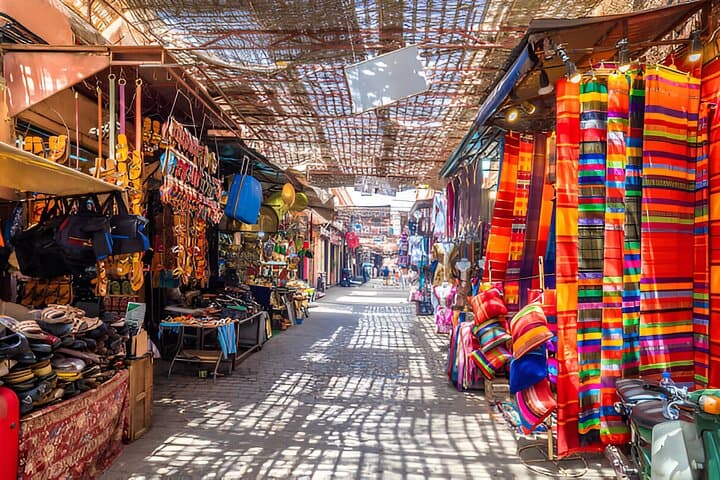
On a single 3–4 hour route the tour stitches together Marrakech’s layers: an 11th‑century residential plan that predates later dynasties, the 15th‑century Medersa Ben Youssef with its dense zellij tilework, and the early 20th‑century Basha’s Palace that hints at the city’s more recent political dramas. The Koutoubia’s illuminated minaret keeps watch while spice stalls and olive bins spill color and scent into narrow streets; a sacred mausoleum offers a quiet, reflective pause amid the market noise.
Expect hands‑on culture as much as history—tastings of mechoui and mint tea, a guided tour of souk routes, and rooftop glimpses over tile roofs and satellite dishes. The guide points out materials and techniques in traditional architecture and explains how the medina’s layout shaped social life.
Practical side: this is an easy paced, mostly flat walking tour beginning at the Grand Place by Hotel Ali. Wear closed, comfortable shoes for uneven paving, bring a reusable water bottle, and layer for cool desert nights. The route is largely accessible but some alleys are narrow; notify the operator about mobility needs when booking. Aim to start at sunset for the best light and liveliest markets.
easy.
3–4 hours.
Suitable for most fitness levels; involves continuous walking on flat to uneven city streets for several hours.
The operator lists wheelchair and stroller accessibility and many surfaces are accessible, but some alleys are narrow—contact the guide ahead of time to confirm specific route accommodations.
The listing describes an experienced local guide; language options aren’t specified on the summary—confirm the guide’s language when you book.
Yes—tasting of local specialties including mechoui and mint tea is included as part of the tour experience.
The meeting point is the Grand Place of the Hotel Ali; full refunds are available if you cancel at least 24 hours before the departure time.
Marrakech’s medina grew from 11th‑century foundations and was reshaped across Almoravid, Almohad and later eras; Basha’s Palace reflects the city’s 20th‑century social and political shifts.
Support local artisans by buying directly and avoid single‑use plastics; staying on established paths helps preserve fragile medina fabric and reduces wear on historic surfaces.
Marrakchy Guides operates guided outdoor trips and adventures with an emphasis on safety, stewardship, and memorable experiences.


The sun drops behind the ochre ramparts and Jemaa el‑Fna flips from market bustle to lantern-lit theatre—this is where Ahmed begins the walk. You move through alleys whose plastered walls still hold the warm red of the city’s clay, passing riad gates carved with cedar and metalwork that frame private courtyards like secret stages.
The sun drops behind the ochre ramparts and Jemaa el‑Fna flips from market bustle to lantern-lit theatre—this is where Ahmed begins the walk. You move through alleys whose plastered walls still hold the warm red of the city’s clay, passing riad gates carved with cedar and metalwork that frame private courtyards like secret stages.
On a single 3–4 hour route the tour stitches together Marrakech’s layers: an 11th‑century residential plan that predates later dynasties, the 15th‑century Medersa Ben Youssef with its dense zellij tilework, and the early 20th‑century Basha’s Palace that hints at the city’s more recent political dramas. The Koutoubia’s illuminated minaret keeps watch while spice stalls and olive bins spill color and scent into narrow streets; a sacred mausoleum offers a quiet, reflective pause amid the market noise.
Expect hands‑on culture as much as history—tastings of mechoui and mint tea, a guided tour of souk routes, and rooftop glimpses over tile roofs and satellite dishes. The guide points out materials and techniques in traditional architecture and explains how the medina’s layout shaped social life.
Practical side: this is an easy paced, mostly flat walking tour beginning at the Grand Place by Hotel Ali. Wear closed, comfortable shoes for uneven paving, bring a reusable water bottle, and layer for cool desert nights. The route is largely accessible but some alleys are narrow; notify the operator about mobility needs when booking. Aim to start at sunset for the best light and liveliest markets.