THE ADVENTURE COLLECTIVE® · Independent discovery and booking for outdoor travel

Move quietly into Sam Popham’s Arboretum after dusk and watch for the slow, deliberate movements of the slender loris. This guided night walk combines targeted searching with low-impact lighting protocols and local naturalist insight.
Move quietly into Sam Popham’s Arboretum after dusk and watch for the slow, deliberate movements of the slender loris. This guided night walk combines targeted searching with low-impact lighting protocols and local naturalist insight.
A humid night presses close to the canopy as your small group slips along a leaf-strewn path under the low red glow of a torch. The arboretum feels alive: leaves whisper, distant frogs punctuate the dark, and the trees themselves seem to be holding their breath, waiting to reveal a pair of reflective eyes.
Verified experiences and guided adventures in the surrounding area.
Operated by Lakpura LLC · Sigiriya, Central Province
A humid night presses close to the canopy as your small group slips along a leaf-strewn path under the low red glow of a torch. The arboretum feels alive: leaves whisper, distant frogs punctuate the dark, and the trees themselves seem to be holding their breath, waiting to reveal a pair of reflective eyes.
Sam Popham’s Arboretum began as a private collection founded by a British naval officer and expanded into a 34-acre sanctuary now managed alongside local researchers. The soils here are part of Sri Lanka’s dry-zone mosaic—well-drained loams that support a mix of native and introduced trees—and the landscape is threaded with human history, from nearby village agriculture to ancient irrigation works. Cultural rhythms in the surrounding villages—temple lights, evening cooking fires—frame the experience and remind visitors they’re in a lived landscape.
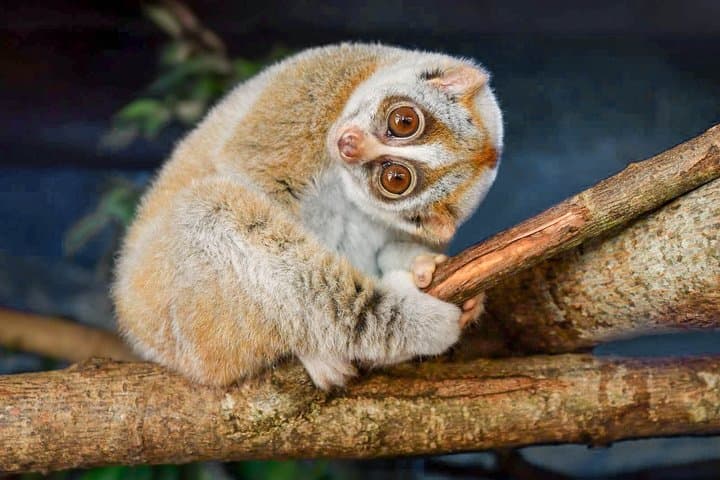
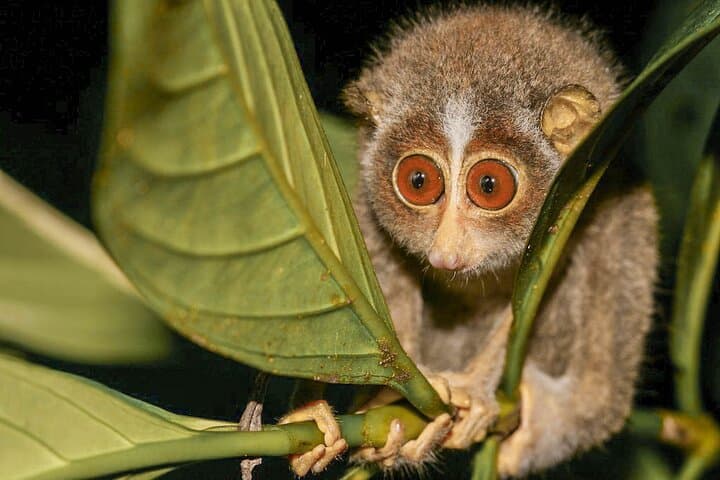
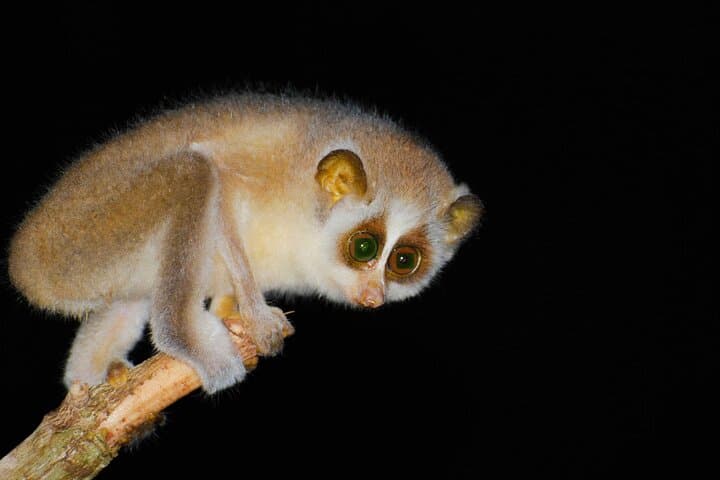
On a guided night walk you’ll learn loris behavior and identification, including how the slender loris moves deliberately through branches and uses big eyes to read the dark. Guides use red-filtered torches to reduce disturbance, switching to white light only on confirmed sightings. Expect short, cautious climbs on soft soil, intermittent stopping to scan branches, and the possibility of seeing small mammals like mouse deer or civets.
Practical tips: arrive with quiet footwear and a charged phone, follow the guide’s light protocol, carry water and a headlamp for pre/post-walk paths, and plan for mosquitos. The walk runs about three hours and is best booked through a local operator with naturalist guides.
moderate.
3 hours.
Moderate fitness: able to walk uneven ground and stand quietly for extended periods.
Sightings are common on guided walks because naturalists know habitual branches and use low-impact lights, but animals are wild and sightings cannot be guaranteed.
Older children who can stay quiet and follow instructions generally do well; check operator age limits and disclose ages when booking.
Yes, but avoid flash photography; follow the guide’s direction about when to use white light to prevent disturbing animals.
Light long sleeves and long pants to reduce insect bites, quiet shoes for the trails, and a small flashlight or headlamp with red setting are recommended.
The arboretum began as a personal tree collection by a British naval officer and expanded into a research-linked sanctuary now supporting local biodiversity.
The area prioritizes low-light protocols and guided access to minimize disturbance to nocturnal species; visitors should stick to paths and avoid flash photography to reduce stress on wildlife.
Lakpura LLC operates guided outdoor trips and adventures with an emphasis on safety, stewardship, and memorable experiences.

A humid night presses close to the canopy as your small group slips along a leaf-strewn path under the low red glow of a torch. The arboretum feels alive: leaves whisper, distant frogs punctuate the dark, and the trees themselves seem to be holding their breath, waiting to reveal a pair of reflective eyes.
A humid night presses close to the canopy as your small group slips along a leaf-strewn path under the low red glow of a torch. The arboretum feels alive: leaves whisper, distant frogs punctuate the dark, and the trees themselves seem to be holding their breath, waiting to reveal a pair of reflective eyes.
Sam Popham’s Arboretum began as a private collection founded by a British naval officer and expanded into a 34-acre sanctuary now managed alongside local researchers. The soils here are part of Sri Lanka’s dry-zone mosaic—well-drained loams that support a mix of native and introduced trees—and the landscape is threaded with human history, from nearby village agriculture to ancient irrigation works. Cultural rhythms in the surrounding villages—temple lights, evening cooking fires—frame the experience and remind visitors they’re in a lived landscape.
On a guided night walk you’ll learn loris behavior and identification, including how the slender loris moves deliberately through branches and uses big eyes to read the dark. Guides use red-filtered torches to reduce disturbance, switching to white light only on confirmed sightings. Expect short, cautious climbs on soft soil, intermittent stopping to scan branches, and the possibility of seeing small mammals like mouse deer or civets.
Practical tips: arrive with quiet footwear and a charged phone, follow the guide’s light protocol, carry water and a headlamp for pre/post-walk paths, and plan for mosquitos. The walk runs about three hours and is best booked through a local operator with naturalist guides.