THE ADVENTURE COLLECTIVE® · Independent discovery and booking for outdoor travel

Head out after dusk for a guided night walk in Sam Popham’s Arboretum near Yala to find the elusive slender loris. This intimate, three-hour naturalist-led hike emphasizes quiet observation, low-red lights, and minimal disturbance.
Head out after dusk for a guided night walk in Sam Popham’s Arboretum near Yala to find the elusive slender loris. This intimate, three-hour naturalist-led hike emphasizes quiet observation, low-red lights, and minimal disturbance.
Night settles early over the arboretum outside Yala; palms and lanky trees darken into silhouettes while guides adjust low-red torches and the forest exhales. Walking here is slow and deliberate—each step on the soft trail feels like an invitation to the canopy’s secretive residents. The slender loris, with its round, reflective eyes and cautious movements, becomes the focus of a quiet, patient search.
Verified experiences and guided adventures in the surrounding area.
Operated by Lakpura LLC · Tissamaharama, Southern Province
Night settles early over the arboretum outside Yala; palms and lanky trees darken into silhouettes while guides adjust low-red torches and the forest exhales. Walking here is slow and deliberate—each step on the soft trail feels like an invitation to the canopy’s secretive residents. The slender loris, with its round, reflective eyes and cautious movements, becomes the focus of a quiet, patient search.
The site began decades ago when a British naval officer, Sam Popham, established a small arboretum that later expanded and was gifted to the Institute of Fundamental Studies. Its soils are coastal lowland—sandy loams and pockets of laterite—supporting dry-zone trees and scrub that give the loris the branches and hollows it needs. Local culture around Yala blends rural temple life and fishing villages; guides often draw on traditional knowledge of nocturnal animals and the local names for trees that lorises favor.
Expect a guided, three-hour night hike on gentle, uneven trails. Naturalists use red-filtered lights to minimize disturbance and switch to white only to identify animals briefly; binoculars and quiet are essential. You may also see mouse deer and civets; avoid sudden flashes and keep voices low. Physically, the walk requires steady footing and a willingness to move slowly—pacing is deliberate, not rushed.
Practical tips: wear sturdy closed shoes, bring insect repellent and a headlamp with a red filter, and hydrate before the walk. Respect the animals’ space—no touching or loud noises—and follow your guide’s instructions to keep this fragile encounter possible for future visitors.
moderate.
3 hours.
Moderate fitness: able to walk slowly on uneven ground for a few hours and stand quietly for extended periods.
Walks begin after dusk; exact start times vary by season but are scheduled to coincide with loris activity and darkness.
Sightings are common at this arboretum because of targeted searches by experienced guides, but animals are wild and sightings cannot be guaranteed.
Children are usually allowed if they can remain quiet and follow guide instructions; check age restrictions when booking.
No flash photography; guides may permit brief use of white light for identification but discourage flash to protect the animals.
Sam Popham founded the original arboretum decades ago and later donated it to the Institute of Fundamental Studies, expanding its footprint and conservation value.
The slender loris is sensitive to disturbance; low-light protocols and guide-managed viewing reduce stress and help protect habitat for nocturnal species.
Lakpura LLC operates guided outdoor trips and adventures with an emphasis on safety, stewardship, and memorable experiences.
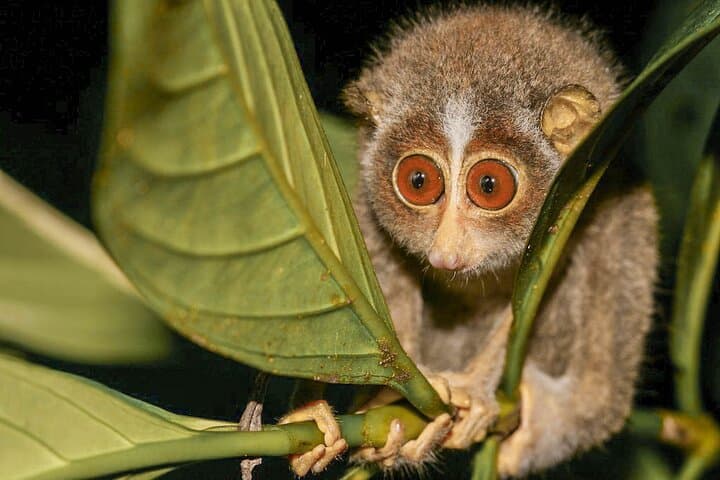
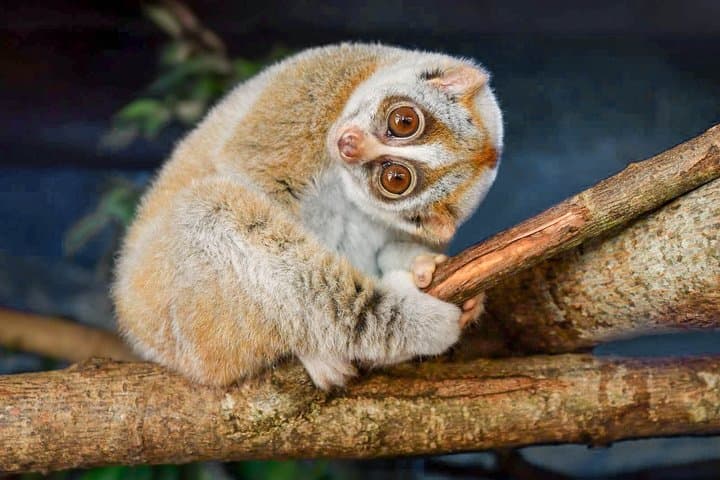
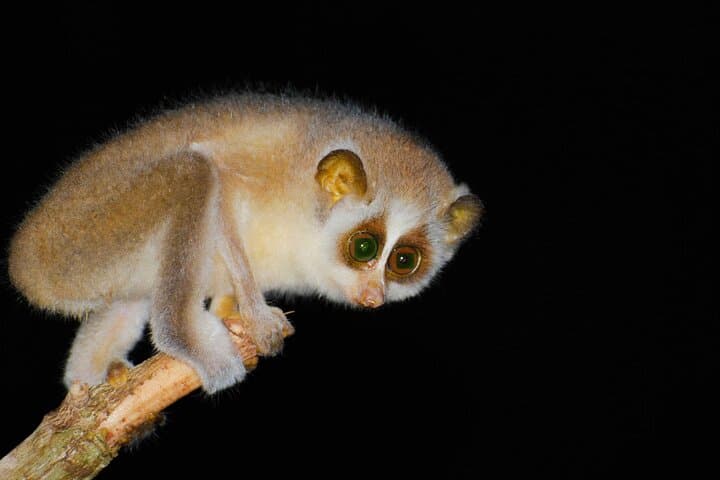

Night settles early over the arboretum outside Yala; palms and lanky trees darken into silhouettes while guides adjust low-red torches and the forest exhales. Walking here is slow and deliberate—each step on the soft trail feels like an invitation to the canopy’s secretive residents. The slender loris, with its round, reflective eyes and cautious movements, becomes the focus of a quiet, patient search.
Night settles early over the arboretum outside Yala; palms and lanky trees darken into silhouettes while guides adjust low-red torches and the forest exhales. Walking here is slow and deliberate—each step on the soft trail feels like an invitation to the canopy’s secretive residents. The slender loris, with its round, reflective eyes and cautious movements, becomes the focus of a quiet, patient search.
The site began decades ago when a British naval officer, Sam Popham, established a small arboretum that later expanded and was gifted to the Institute of Fundamental Studies. Its soils are coastal lowland—sandy loams and pockets of laterite—supporting dry-zone trees and scrub that give the loris the branches and hollows it needs. Local culture around Yala blends rural temple life and fishing villages; guides often draw on traditional knowledge of nocturnal animals and the local names for trees that lorises favor.
Expect a guided, three-hour night hike on gentle, uneven trails. Naturalists use red-filtered lights to minimize disturbance and switch to white only to identify animals briefly; binoculars and quiet are essential. You may also see mouse deer and civets; avoid sudden flashes and keep voices low. Physically, the walk requires steady footing and a willingness to move slowly—pacing is deliberate, not rushed.
Practical tips: wear sturdy closed shoes, bring insect repellent and a headlamp with a red filter, and hydrate before the walk. Respect the animals’ space—no touching or loud noises—and follow your guide’s instructions to keep this fragile encounter possible for future visitors.