THE ADVENTURE COLLECTIVE® · Independent discovery and booking for outdoor travel

Leave Khiva for an overnight yurt camp beside Ayaz-Kala and visit seven ancient fortresses across the Kyzylkum Desert. Expect short walks, close-up archaeology, camel encounters, and a star-filled desert night.
Leave Khiva for an overnight yurt camp beside Ayaz-Kala and visit seven ancient fortresses across the Kyzylkum Desert. Expect short walks, close-up archaeology, camel encounters, and a star-filled desert night.
A late-afternoon convoy slips out of Khiva and the city’s mud-brick silhouettes fall behind while the Kyzylkum opens like an ochre sea. Wind pulls across low dunes and the driver points toward a chain of ruined ramparts—Ayaz-Kala rises on a clay ridge, pale and angular against a wide sky. By dusk the group is at the yurt camp; a small circle of warm light, steaming tea, and camels grazing just beyond make the desert feel deliberate and alive.
Verified experiences and guided adventures in the surrounding area.
Operated by Oxus Travel · Khiva, Xorazm Region
A late-afternoon convoy slips out of Khiva and the city’s mud-brick silhouettes fall behind while the Kyzylkum opens like an ochre sea. Wind pulls across low dunes and the driver points toward a chain of ruined ramparts—Ayaz-Kala rises on a clay ridge, pale and angular against a wide sky. By dusk the group is at the yurt camp; a small circle of warm light, steaming tea, and camels grazing just beyond make the desert feel deliberate and alive.
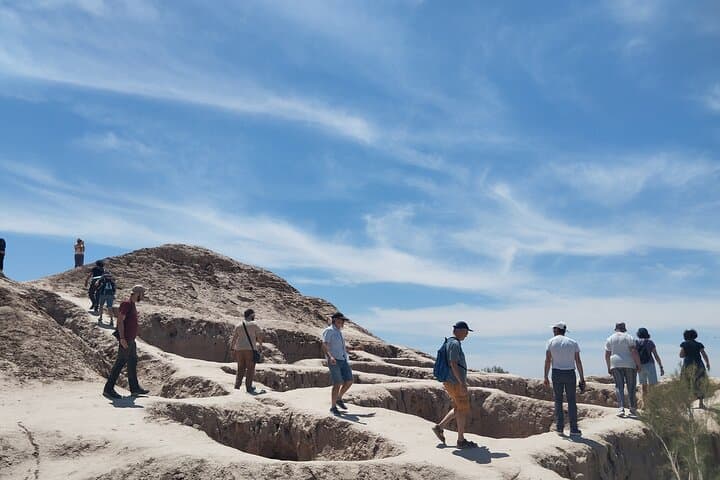
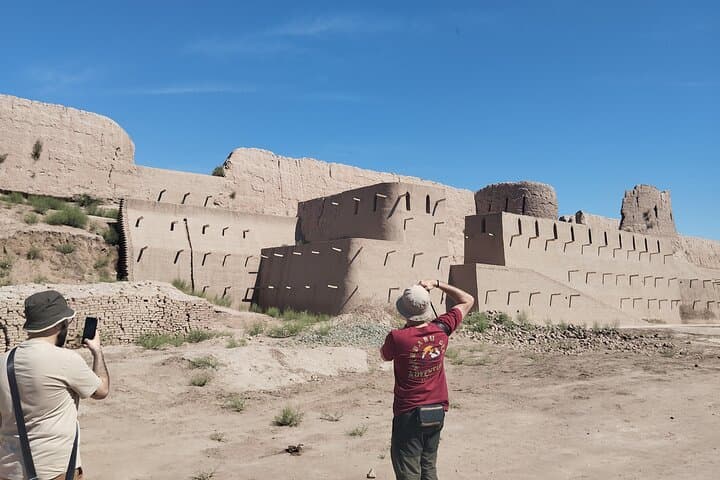
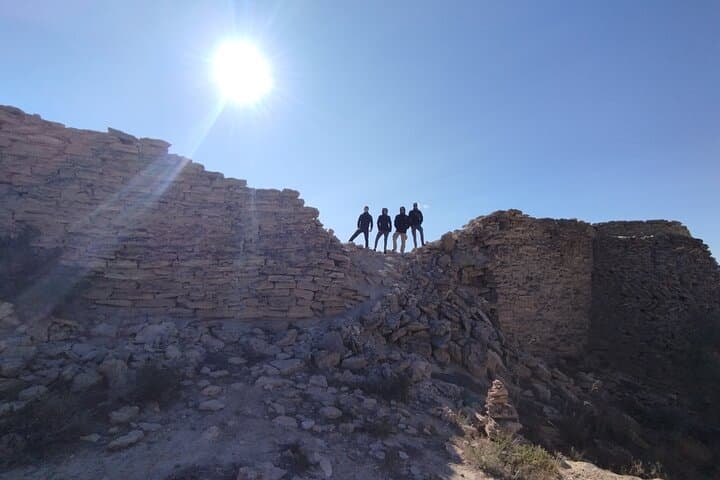
The route threads through the Khorezm frontier: seven fortresses that mark a defensive line dating back to the Kushan and early Khorezmian states. These adobe citadels—Toprak-Kala, Koy-Krylgan-kala, Janbas-Kala and others—reveal masonry methods adapted to aridity: sun-baked bricks, narrow embrasures, and gateways positioned to funnel attackers. The geology is simple and spare—loess and compacted sands with occasional gypsum crusts—so structures preserve differently depending on windblown deposition. Local Karakalpak families maintain pastoral traditions here; camel herding and fermented mare’s milk are still part of daily life.
Practically, expect easy-paced walks of 20–60 minutes at each site, short drives across unpaved desert tracks, and an overnight in a furnished yurt with basic meals. Nights are cold and stars unfiltered; wear layers, bring a headlamp, and carry at least 2–3 liters of water per person. Photography is best at golden hour when adobe turns warm; avoid trampling fragile walls and follow guides’ routes.
This trip suits travelers who want cultural context with light exploration—an archaeological road trip that ends under a sky that refuses to be ignored.
easy.
2 days (approx. 48 hours).
Light fitness; able to walk short, uneven trails and step over ruins.
The camp is reached by a roughly 1.5–2 hour drive over unpaved desert tracks from Khiva; private transfers are usually provided.
Yes, a traditional dinner and breakfast are typically included with the overnight yurt stay at Ayaz-Kala.
Operators usually accept children 10 years and older; check with the provider about specific accommodations for younger travelers.
Electric access is limited; bring a power bank for charging phones and cameras—check with your operator about available facilities.
The fortresses are part of a Khorezm defensive network with origins in the 1st–3rd centuries CE and were reused through medieval Khorezmian eras.
Adobe structures are highly vulnerable to erosion and human impact; follow guides, avoid touching walls, and support local conservation initiatives when possible.
Oxus Travel operates guided outdoor trips and adventures with an emphasis on safety, stewardship, and memorable experiences.
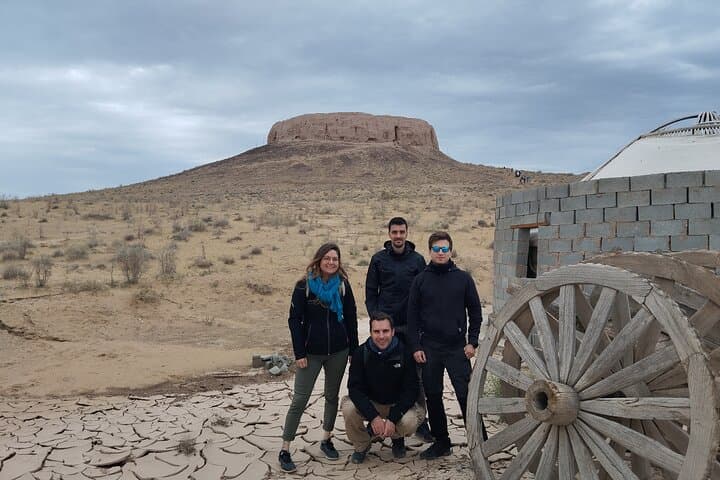
A late-afternoon convoy slips out of Khiva and the city’s mud-brick silhouettes fall behind while the Kyzylkum opens like an ochre sea. Wind pulls across low dunes and the driver points toward a chain of ruined ramparts—Ayaz-Kala rises on a clay ridge, pale and angular against a wide sky. By dusk the group is at the yurt camp; a small circle of warm light, steaming tea, and camels grazing just beyond make the desert feel deliberate and alive.
A late-afternoon convoy slips out of Khiva and the city’s mud-brick silhouettes fall behind while the Kyzylkum opens like an ochre sea. Wind pulls across low dunes and the driver points toward a chain of ruined ramparts—Ayaz-Kala rises on a clay ridge, pale and angular against a wide sky. By dusk the group is at the yurt camp; a small circle of warm light, steaming tea, and camels grazing just beyond make the desert feel deliberate and alive.
The route threads through the Khorezm frontier: seven fortresses that mark a defensive line dating back to the Kushan and early Khorezmian states. These adobe citadels—Toprak-Kala, Koy-Krylgan-kala, Janbas-Kala and others—reveal masonry methods adapted to aridity: sun-baked bricks, narrow embrasures, and gateways positioned to funnel attackers. The geology is simple and spare—loess and compacted sands with occasional gypsum crusts—so structures preserve differently depending on windblown deposition. Local Karakalpak families maintain pastoral traditions here; camel herding and fermented mare’s milk are still part of daily life.
Practically, expect easy-paced walks of 20–60 minutes at each site, short drives across unpaved desert tracks, and an overnight in a furnished yurt with basic meals. Nights are cold and stars unfiltered; wear layers, bring a headlamp, and carry at least 2–3 liters of water per person. Photography is best at golden hour when adobe turns warm; avoid trampling fragile walls and follow guides’ routes.
This trip suits travelers who want cultural context with light exploration—an archaeological road trip that ends under a sky that refuses to be ignored.