THE ADVENTURE COLLECTIVE® · Independent discovery and booking for outdoor travel

Climb thousands of mossy steps through rain-wet forest to reach the summit of Adam’s Peak by sunrise. This nocturnal pilgrimage mixes steep terrain, spiritual history and expansive highland views—plan for slippery stairs, a long day and a rewarding dawn.
Climb thousands of mossy steps through rain-wet forest to reach the summit of Adam’s Peak by sunrise. This nocturnal pilgrimage mixes steep terrain, spiritual history and expansive highland views—plan for slippery stairs, a long day and a rewarding dawn.
A headlamp beam cuts through damp jungle air as a small group threads a stair-stepped route toward the dark silhouette of Adam’s Peak. The stairs climb relentlessly; occasional waterfalls whisper nearby and the forest exhales wet, earthy scent. By the time the horizon lightens, the summit opens to a cold, wide sky and the first colors of dawn stretching over tea estates and mist-choked valleys.
Verified experiences and guided adventures in the surrounding area.
Operated by Lakpura LLC · Nallathanniya, Central Province
A headlamp beam cuts through damp jungle air as a small group threads a stair-stepped route toward the dark silhouette of Adam’s Peak. The stairs climb relentlessly; occasional waterfalls whisper nearby and the forest exhales wet, earthy scent. By the time the horizon lightens, the summit opens to a cold, wide sky and the first colors of dawn stretching over tea estates and mist-choked valleys.
Adam’s Peak (Sri Pada) rises to about 2,243 m in Sri Lanka’s central highlands and sits within the Peak Wilderness Sanctuary, a protected remnant of montane forest. The mountain is geologically part of the island’s eroded central massif—steep ridges, granite outcrops and stair-cut paths formed by centuries of pilgrim traffic. Culturally it’s shared ground: Buddhists, Hindus, Muslims and Christians all revere the summit’s footprint-shaped rock and travel here for pilgrimage during the dry season.
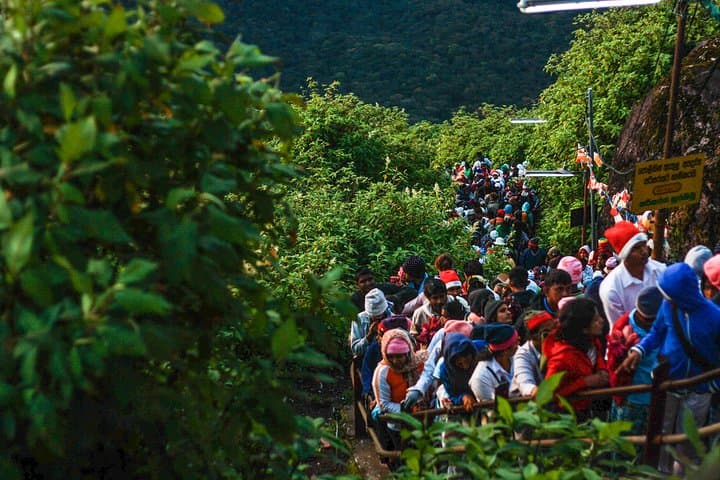
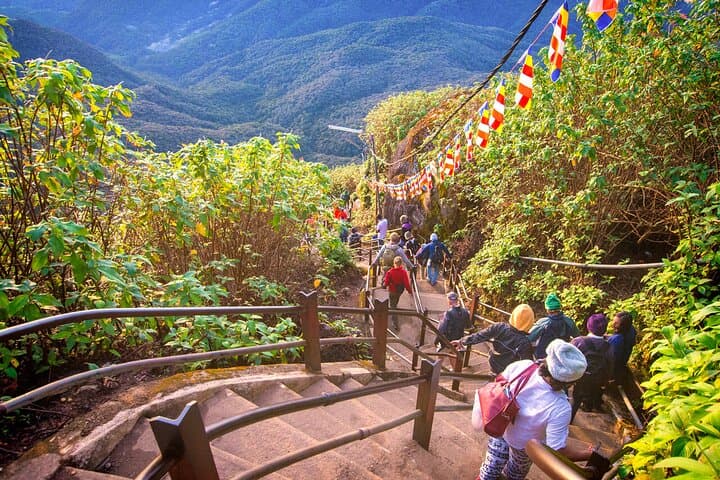
Practical guidance: expect thousands of carved steps, slippery moss and sudden rain. Organized night hikes commonly start after dark to reach the summit for sunrise; the full experience, including transfers, can stretch into a long day. Hike with an experienced local guide, carry a bright headlamp, waterproof layers and steady footwear with good traction. Pace conservatively on the descent—knees take the brunt on decades-old stone steps. Water is sometimes provided on tours, but bring extras and small snacks. Respect shrine spaces and local customs at the summit, and stay on marked paths to reduce erosion. With careful planning, a night ascent of Adam’s Peak is both a physically demanding climb and a memorable way to meet Sri Lanka’s highland light and long-standing traditions.
challenging.
12–14 hours.
Good aerobic fitness and stair-climbing endurance; comfortable with long, continuous uphill efforts
Organized trips commonly run 12–14 hours including transfers; the ascent and descent alone may take 5–8 hours depending on pace and conditions.
With a guide, proper lighting and suitable footwear it is generally safe, but slippery steps and fatigue increase risk—prepare accordingly.
The main dry pilgrimage window is December–April; outside that period expect more rain and slick conditions.
Some tour operators supply water and a light snack, and small stalls appear near the base and at points on the trail, but bring personal supplies just in case.
The summit features a rock ‘footprint’ venerated by multiple faiths; pilgrims have climbed the peak for centuries as part of seasonal religious observances.
The Peak Wilderness Sanctuary is protected, but heavy foot traffic causes erosion—stick to marked steps, avoid litter and use local guides to support sustainable visitation.
Lakpura LLC operates guided outdoor trips and adventures with an emphasis on safety, stewardship, and memorable experiences.
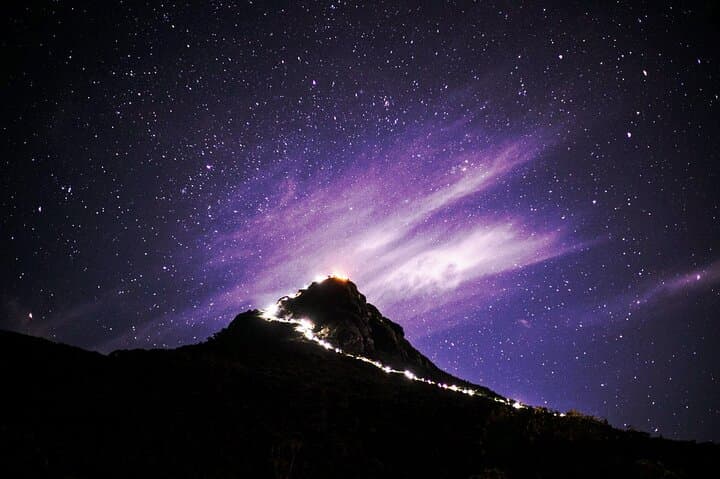
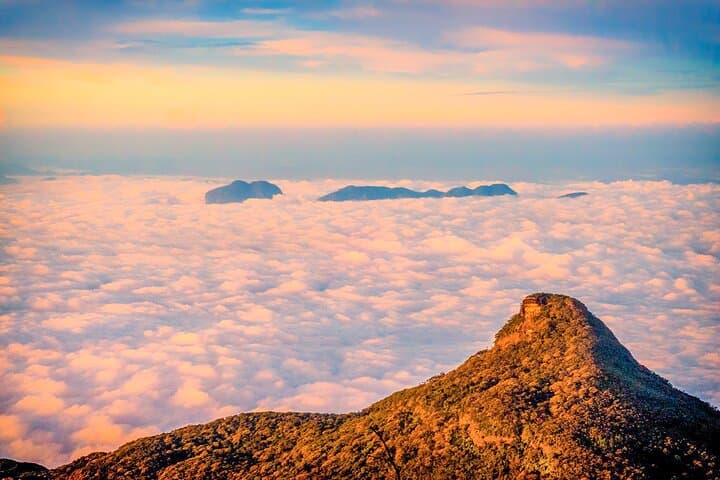
A headlamp beam cuts through damp jungle air as a small group threads a stair-stepped route toward the dark silhouette of Adam’s Peak. The stairs climb relentlessly; occasional waterfalls whisper nearby and the forest exhales wet, earthy scent. By the time the horizon lightens, the summit opens to a cold, wide sky and the first colors of dawn stretching over tea estates and mist-choked valleys.
A headlamp beam cuts through damp jungle air as a small group threads a stair-stepped route toward the dark silhouette of Adam’s Peak. The stairs climb relentlessly; occasional waterfalls whisper nearby and the forest exhales wet, earthy scent. By the time the horizon lightens, the summit opens to a cold, wide sky and the first colors of dawn stretching over tea estates and mist-choked valleys.
Adam’s Peak (Sri Pada) rises to about 2,243 m in Sri Lanka’s central highlands and sits within the Peak Wilderness Sanctuary, a protected remnant of montane forest. The mountain is geologically part of the island’s eroded central massif—steep ridges, granite outcrops and stair-cut paths formed by centuries of pilgrim traffic. Culturally it’s shared ground: Buddhists, Hindus, Muslims and Christians all revere the summit’s footprint-shaped rock and travel here for pilgrimage during the dry season.
Practical guidance: expect thousands of carved steps, slippery moss and sudden rain. Organized night hikes commonly start after dark to reach the summit for sunrise; the full experience, including transfers, can stretch into a long day. Hike with an experienced local guide, carry a bright headlamp, waterproof layers and steady footwear with good traction. Pace conservatively on the descent—knees take the brunt on decades-old stone steps. Water is sometimes provided on tours, but bring extras and small snacks. Respect shrine spaces and local customs at the summit, and stay on marked paths to reduce erosion. With careful planning, a night ascent of Adam’s Peak is both a physically demanding climb and a memorable way to meet Sri Lanka’s highland light and long-standing traditions.