THE ADVENTURE COLLECTIVE® · Independent discovery and booking for outdoor travel

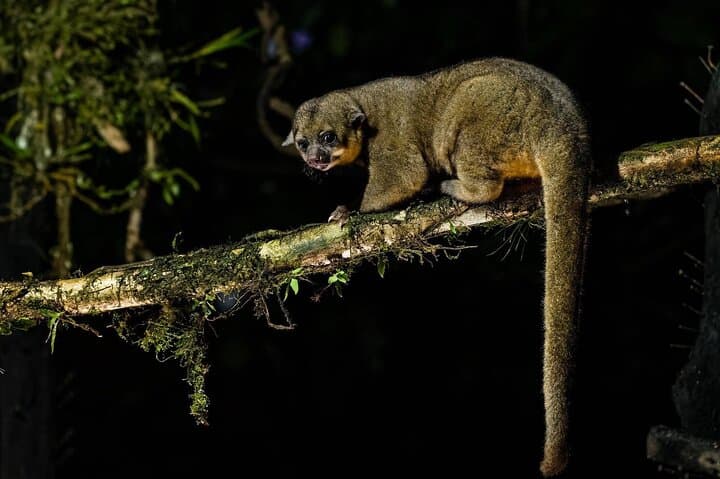
A guided night hike into Belize’s Cockscomb Basin Wildlife Sanctuary puts you eye‑to‑eye with the rainforest after dark—expect owls, kinkajous, coatis, and the rare chance of big-cat sign amid starlit trees. Learn what to expect and how to prepare for this 3–5 hour nocturnal adventure.
A guided night hike into Belize’s Cockscomb Basin Wildlife Sanctuary puts you eye‑to‑eye with the rainforest after dark—expect owls, kinkajous, coatis, and the rare chance of big-cat sign amid starlit trees. Learn what to expect and how to prepare for this 3–5 hour nocturnal adventure.
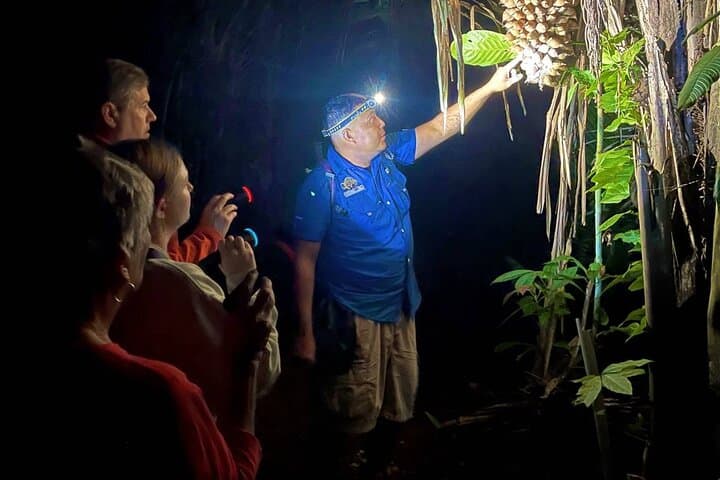
The trail opens into shadow and the rainforest answers—branches creak like breath, a distant howler monkey booms, and low red light sketches trunks into columns. You move in a small group, guided by a naturalist who reads the dark: the soft scratch of a coatimundi, fluttering moths that seem to orbit the lamp, and the occasional silence that feels like a held breath.
Verified experiences and guided adventures in the surrounding area.
Operated by UNTAME BELIZE · Maya Centre, Stann Creek District
The trail opens into shadow and the rainforest answers—branches creak like breath, a distant howler monkey booms, and low red light sketches trunks into columns. You move in a small group, guided by a naturalist who reads the dark: the soft scratch of a coatimundi, fluttering moths that seem to orbit the lamp, and the occasional silence that feels like a held breath.
Cockscomb Basin was set aside in the 1980s as a safeguard for jaguars and the larger ecosystem of the Maya Mountains' eastern slopes. Geologically the basin lies in folded sandstone and granite foothills that channel fast, rocky streams; the soil and climate favor broadleaf rainforest and dense understory that comes alive after dusk. Local Maya and Creole communities have long used these ridges and waterways for hunting and seasonal travel, and guides often weave cultural notes—traditional uses of plants or river lore—into the hike.
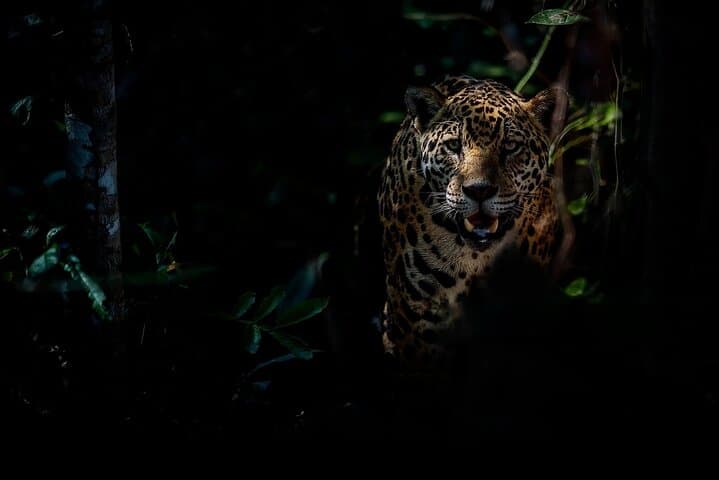
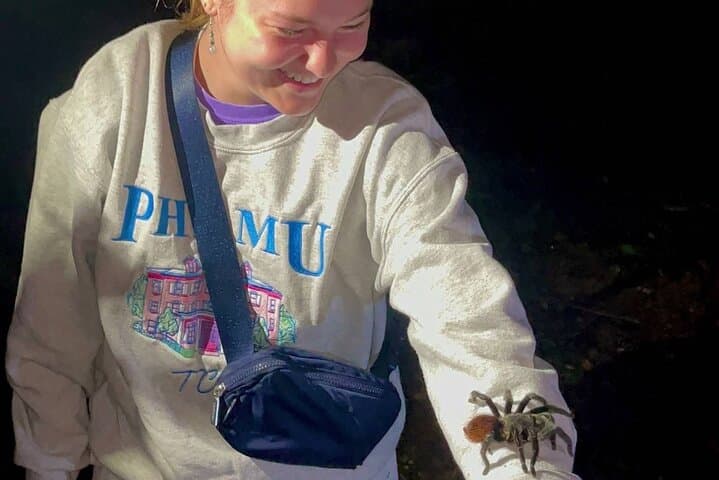
Practical guidance is simple: this is a managed night walk on well-used trails, typically 3–5 hours from pickup. Expect muddy, rooty sections and limited visibility—your guide will use low-impact red lights to avoid startling wildlife. Jaguar sightings are extremely rare; the real payoff is the parade of nocturnal species, the chorus of frogs, the flash of reflective eyes overhead, and the clarity of the Milky Way between canopy gaps.
Bring a headlamp with red filter, waterproof footwear, insect protection, and layered clothing for cool nights. Move quietly, follow your guide’s instructions, and leave no trace—the night here rewards patience and respect.
moderate.
3–5 hours.
Expect uneven, root-covered trails and humid conditions; basic cardiovascular fitness and steady footing required
Jaguar sightings are very rare; the preserve protects habitat and you may find signs such as tracks or scratch marks, but most visitors encounter smaller nocturnal species.
Trails are generally well-maintained and the tour is marketed for most fitness levels, but uneven terrain and night conditions mean older children and anyone with mobility limits should assess carefully.
Wear quick-dry clothing, long sleeves and pants for insect protection, sturdy waterproof shoes, and bring a lightweight rain jacket and headlamp with a red filter.
Yes—guides are trained naturalists familiar with nocturnal behavior and safety protocols; follow their directions to minimize risk and disturbance.
Established in the 1980s, Cockscomb Basin became the world’s first jaguar reserve, protecting a mosaic of rainforest habitat and indigenous cultural sites.
Visitor impact is managed through guided access and low-light policies; stick to trails, pack out waste, and avoid flash photography to reduce disturbance.
UNTAME BELIZE operates guided outdoor trips and adventures with an emphasis on safety, stewardship, and memorable experiences.
The trail opens into shadow and the rainforest answers—branches creak like breath, a distant howler monkey booms, and low red light sketches trunks into columns. You move in a small group, guided by a naturalist who reads the dark: the soft scratch of a coatimundi, fluttering moths that seem to orbit the lamp, and the occasional silence that feels like a held breath.
The trail opens into shadow and the rainforest answers—branches creak like breath, a distant howler monkey booms, and low red light sketches trunks into columns. You move in a small group, guided by a naturalist who reads the dark: the soft scratch of a coatimundi, fluttering moths that seem to orbit the lamp, and the occasional silence that feels like a held breath.
Cockscomb Basin was set aside in the 1980s as a safeguard for jaguars and the larger ecosystem of the Maya Mountains' eastern slopes. Geologically the basin lies in folded sandstone and granite foothills that channel fast, rocky streams; the soil and climate favor broadleaf rainforest and dense understory that comes alive after dusk. Local Maya and Creole communities have long used these ridges and waterways for hunting and seasonal travel, and guides often weave cultural notes—traditional uses of plants or river lore—into the hike.
Practical guidance is simple: this is a managed night walk on well-used trails, typically 3–5 hours from pickup. Expect muddy, rooty sections and limited visibility—your guide will use low-impact red lights to avoid startling wildlife. Jaguar sightings are extremely rare; the real payoff is the parade of nocturnal species, the chorus of frogs, the flash of reflective eyes overhead, and the clarity of the Milky Way between canopy gaps.
Bring a headlamp with red filter, waterproof footwear, insect protection, and layered clothing for cool nights. Move quietly, follow your guide’s instructions, and leave no trace—the night here rewards patience and respect.