THE ADVENTURE COLLECTIVE® · Independent discovery and booking for outdoor travel

Ride an eBike down Beijing's historic central axis at night, passing the Forbidden City, Drum and Bell Towers, Qianhai and the National Centre for the Performing Arts. This 2.5-hour guided route pairs imperial history with quiet hutong moments and practical urban cycling.
Ride an eBike down Beijing's historic central axis at night, passing the Forbidden City, Drum and Bell Towers, Qianhai and the National Centre for the Performing Arts. This 2.5-hour guided route pairs imperial history with quiet hutong moments and practical urban cycling.
Night settles over Beijing like a slow curtain and the city's central spine begins to glow. Headlights and lanterns pick out stone pavements and lacquered roofs as you pedal an eBike down a route first laid out for emperors. The rhythm is urban: bell towers tolling in memory, the hush of the Forbidden City's courtyards, the glass sweep of the National Centre for the Performing Arts — “the Egg” — reflecting neon.
Verified experiences and guided adventures in the surrounding area.
Operated by Our Beijing · Beijing, Beijing
Night settles over Beijing like a slow curtain and the city's central spine begins to glow. Headlights and lanterns pick out stone pavements and lacquered roofs as you pedal an eBike down a route first laid out for emperors. The rhythm is urban: bell towers tolling in memory, the hush of the Forbidden City's courtyards, the glass sweep of the National Centre for the Performing Arts — “the Egg” — reflecting neon.
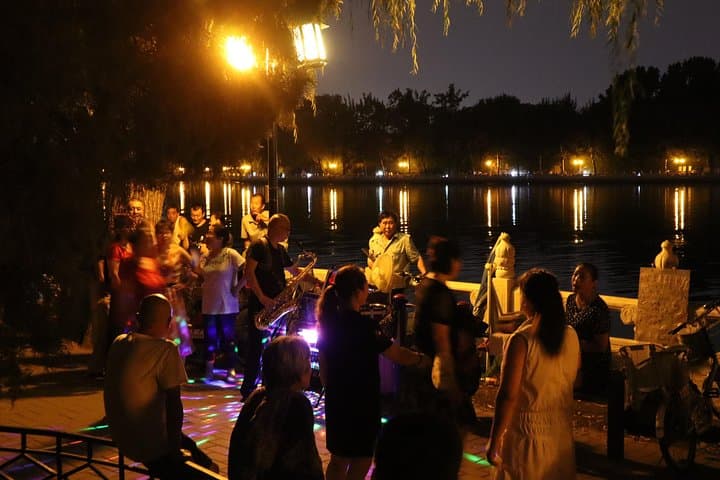
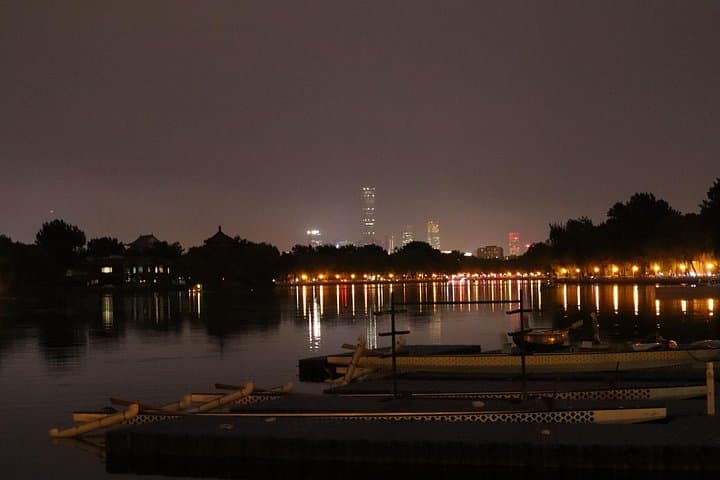
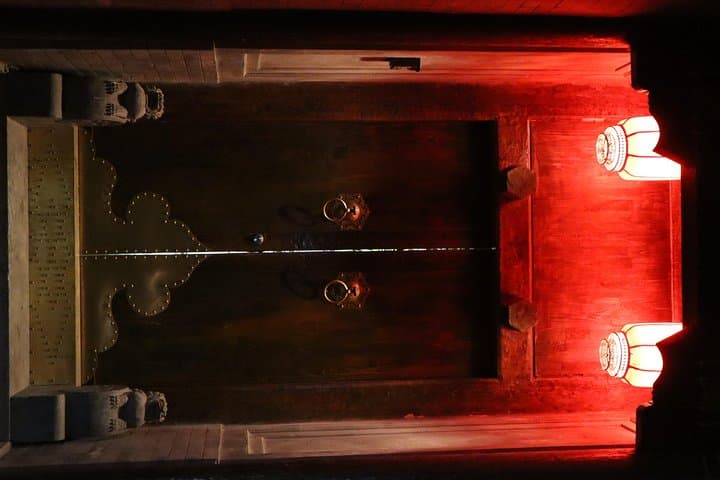
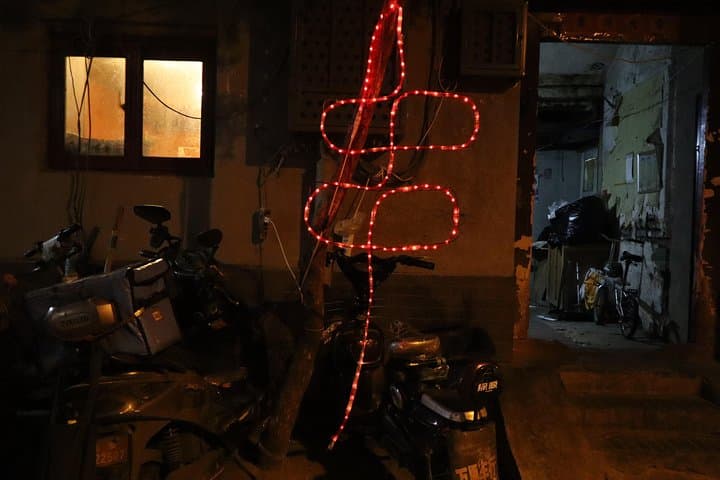
The central axis is the north–south backbone of Beijing's imperial plan, shaped in the Ming and Qing eras. On this short ride you pass Drum and Bell Towers (medieval timekeepers), fire temples and the Ming city wall remnants, with Qianhai's sheltered waters offering a quieter counterpoint to the main avenues. Architecture, courtyard life and modern interventions collide; hutongs open into lanes of teahouses and late-night snack stalls.
Practically speaking: expect mostly paved streets, short cobbled hutong stretches and minimal elevation — the route covers roughly 6–8 km at a relaxed pace with multiple 5–10 minute stops. Evening lighting makes the city dramatic but also creates contrasty shadows; bring a charged phone and ride defensively. Helmets and basic bike handling are required; guides handle navigation and permissions for special-access spots like the Forbidden City entry when available.
For travelers who want history without heavy exertion, this ride delivers concentrated urban character and a clear sense of Beijing's layered past — best enjoyed with sensible shoes, warm layers and curiosity for the small alleys that punctuate the imperial axis.
easy.
2–3 hours.
Suitable for anyone comfortable on a bicycle for short, mostly flat urban rides; basic balance and endurance for 6–8 km required.
No expert skills are needed; basic balance and comfort riding an eBike in traffic are sufficient—guides keep the group together.
On select nights operators have permissions for special-access entry; this tour notes that special access is included when available, but always confirm with your operator for specific dates.
Most operators supply helmets; if you prefer your own, bring it for a better fit and hygiene.
Tours may be canceled or rerouted for heavy rain, snow or unsafe conditions—check cancellation terms and rescheduling options when booking.
Beijing's central axis was formalized under Ming dynasty city planning; key monuments like the Forbidden City and the Drum and Bell Towers mark imperial ceremonial and timekeeping functions.
Follow local rules about lighting and noise at historic sites, avoid littering in hutongs and use marked bike lanes to reduce wear on fragile pedestrian areas.
Our Beijing operates guided outdoor trips and adventures with an emphasis on safety, stewardship, and memorable experiences.
Night settles over Beijing like a slow curtain and the city's central spine begins to glow. Headlights and lanterns pick out stone pavements and lacquered roofs as you pedal an eBike down a route first laid out for emperors. The rhythm is urban: bell towers tolling in memory, the hush of the Forbidden City's courtyards, the glass sweep of the National Centre for the Performing Arts — “the Egg” — reflecting neon.
Night settles over Beijing like a slow curtain and the city's central spine begins to glow. Headlights and lanterns pick out stone pavements and lacquered roofs as you pedal an eBike down a route first laid out for emperors. The rhythm is urban: bell towers tolling in memory, the hush of the Forbidden City's courtyards, the glass sweep of the National Centre for the Performing Arts — “the Egg” — reflecting neon.
The central axis is the north–south backbone of Beijing's imperial plan, shaped in the Ming and Qing eras. On this short ride you pass Drum and Bell Towers (medieval timekeepers), fire temples and the Ming city wall remnants, with Qianhai's sheltered waters offering a quieter counterpoint to the main avenues. Architecture, courtyard life and modern interventions collide; hutongs open into lanes of teahouses and late-night snack stalls.
Practically speaking: expect mostly paved streets, short cobbled hutong stretches and minimal elevation — the route covers roughly 6–8 km at a relaxed pace with multiple 5–10 minute stops. Evening lighting makes the city dramatic but also creates contrasty shadows; bring a charged phone and ride defensively. Helmets and basic bike handling are required; guides handle navigation and permissions for special-access spots like the Forbidden City entry when available.
For travelers who want history without heavy exertion, this ride delivers concentrated urban character and a clear sense of Beijing's layered past — best enjoyed with sensible shoes, warm layers and curiosity for the small alleys that punctuate the imperial axis.