THE ADVENTURE COLLECTIVE® · Independent discovery and booking for outdoor travel

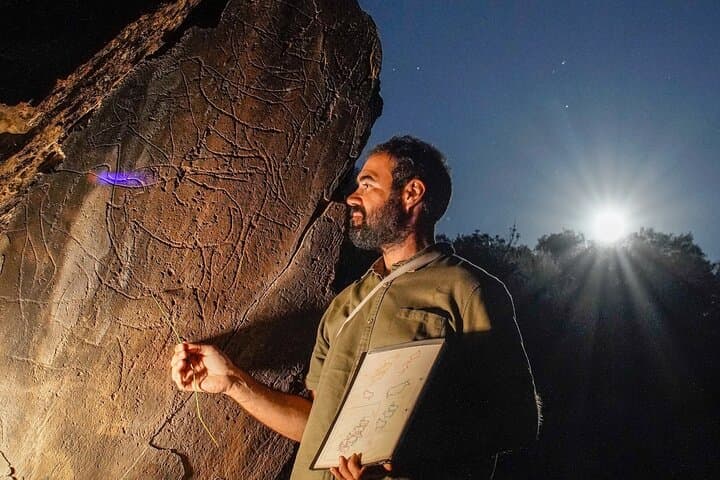
Drive down to the Côa Valley at sunset and watch ancient rock engravings emerge under powerful lights. This short 4x4 night tour pairs dramatic landscapes with 30,000-year-old petroglyphs for a tactile, intimate archaeology experience.
Drive down to the Côa Valley at sunset and watch ancient rock engravings emerge under powerful lights. This short 4x4 night tour pairs dramatic landscapes with 30,000-year-old petroglyphs for a tactile, intimate archaeology experience.
Sunset slides behind terraces of the Douro as your 4x4 rumbles toward the Côa Valley, the river daring you to lean closer. The descent from Castelo Melhor is short—about 6 km of dry tracks between stone walls, olive and almond groves—yet it feels like stepping through a door in time.
Verified experiences and guided adventures in the surrounding area.
Operated by Ambieduca · Castelo Melhor, Guarda
Sunset slides behind terraces of the Douro as your 4x4 rumbles toward the Côa Valley, the river daring you to lean closer. The descent from Castelo Melhor is short—about 6 km of dry tracks between stone walls, olive and almond groves—yet it feels like stepping through a door in time.
The guides switch on powerful beams beside the riverbank and, in the cold wash of light, the engraved figures appear: horses, bovines and hunters scratched into schist and granite during the Upper Paleolithic, some estimates dating back 20,000–30,000 years. The site is part of the Côa Valley Archaeological Park and its landscapes tell two stories at once—the living Douro vineyards and a human presence stretching to prehistory.
Castelo Melhor itself carries medieval layers; its 13th-century fortifications mark the medieval frontier with Castile. Geologically, the valley exposes old river terraces and steep schist outcrops that hold the petroglyphs. Cultural context is immediate: these are in-situ engravings, not museum pieces, and night visits heighten contrast and detail without touching the stone.
Practical notes: the tour lasts 90–120 minutes, includes a short 300 m walk on uneven ground to multiple rock panels, and runs in small groups in an air-conditioned 4x4. Wear sturdy shoes, carry a warm layer, and bring water. Respect site rules: follow the guide, avoid touching rock art, and use only the lights provided. This is an accessible, sensory-rich way to meet one of Iberia’s oldest public galleries.
easy.
90–120 minutes.
Suitable for most fitness levels; includes a brief 300 m uneven walk that may challenge users with mobility limitations.
Expect about a 300 m walk on uneven rock and dirt; it typically takes 5–10 minutes each way at a steady pace.
Yes—guides use powerful lights to reveal the petroglyphs’ contours; night lighting enhances contrast without touching the panels.
Infants may ride in strollers for the 4x4 transfer but the riverside walk is rocky; infants are required to sit on an adult’s lap at the stop.
Photography is allowed under guidance but avoid flash and follow the guide’s directions to protect the art.
The Côa engravings are in-situ Upper Paleolithic rock art (tens of thousands of years old); Castelo Melhor’s fortress dates to the early 13th century on the historic Riba-Côa frontier.
The Archaeological Park is protected and visits are regulated; remain on paths, avoid touch or flash photography, and follow guide instructions to minimize impact.
Ambieduca operates guided outdoor trips and adventures with an emphasis on safety, stewardship, and memorable experiences.


Sunset slides behind terraces of the Douro as your 4x4 rumbles toward the Côa Valley, the river daring you to lean closer. The descent from Castelo Melhor is short—about 6 km of dry tracks between stone walls, olive and almond groves—yet it feels like stepping through a door in time.
Sunset slides behind terraces of the Douro as your 4x4 rumbles toward the Côa Valley, the river daring you to lean closer. The descent from Castelo Melhor is short—about 6 km of dry tracks between stone walls, olive and almond groves—yet it feels like stepping through a door in time.
The guides switch on powerful beams beside the riverbank and, in the cold wash of light, the engraved figures appear: horses, bovines and hunters scratched into schist and granite during the Upper Paleolithic, some estimates dating back 20,000–30,000 years. The site is part of the Côa Valley Archaeological Park and its landscapes tell two stories at once—the living Douro vineyards and a human presence stretching to prehistory.
Castelo Melhor itself carries medieval layers; its 13th-century fortifications mark the medieval frontier with Castile. Geologically, the valley exposes old river terraces and steep schist outcrops that hold the petroglyphs. Cultural context is immediate: these are in-situ engravings, not museum pieces, and night visits heighten contrast and detail without touching the stone.
Practical notes: the tour lasts 90–120 minutes, includes a short 300 m walk on uneven ground to multiple rock panels, and runs in small groups in an air-conditioned 4x4. Wear sturdy shoes, carry a warm layer, and bring water. Respect site rules: follow the guide, avoid touching rock art, and use only the lights provided. This is an accessible, sensory-rich way to meet one of Iberia’s oldest public galleries.