THE ADVENTURE COLLECTIVE® · Independent discovery and booking for outdoor travel

Paddle three miles on Nickajack Lake to witness up to 100,000 endangered gray bats erupt from their cave at dusk. This guided evening tour mixes wildlife viewing, local river history, and practical instruction for first-time paddlers.
Paddle three miles on Nickajack Lake to witness up to 100,000 endangered gray bats erupt from their cave at dusk. This guided evening tour mixes wildlife viewing, local river history, and practical instruction for first-time paddlers.
Dusk falls along Nickajack Lake and the river eases into a long, low hum; the water dares you forward as the limestone bluffs darken and the cave mouth becomes a black slit on the shore. Paddling three miles from the Macedonia Boat Ramp, the group moves in single file—oars whispering—while osprey wheel overhead and cliff swallows stitch the cliff faces with motion.
Verified experiences and guided adventures in the surrounding area.
Operated by Chattanooga Guided Adventures · South Pittsburg, Tennessee
Dusk falls along Nickajack Lake and the river eases into a long, low hum; the water dares you forward as the limestone bluffs darken and the cave mouth becomes a black slit on the shore. Paddling three miles from the Macedonia Boat Ramp, the group moves in single file—oars whispering—while osprey wheel overhead and cliff swallows stitch the cliff faces with motion.
Nickajack Cave sits on the Tennessee River, a product of TVA-era impoundment that turned a wild river valley into a managed lake. The cave is a summer roost for endangered gray bats; as many as 100,000 can pour out at sunset to hunt insect swarms. Geologically, the area is classic Cumberland Plateau karst—steep limestone bluffs, collapsed sink features upstream, and cave passages that have hosted wildlife and local lore for generations. Guides weave natural history with regional context: how the dam reshaped fish habitat, how white-nose syndrome challenges bat populations, and why shoreline conservation matters.
Practically: this is an easy-to-moderate guided paddle of roughly three miles round-trip, timed for evening bat emergence (late April–early October). Guides supply kayaks and PFDs; bring binoculars, a waterproof light tucked away for safety (avoid shining on the bats), insect protection, and layered clothing for cooling evenings. Expect calm lake water with occasional river chop; listen for the first flutters and watch the sky fill with tiny wings. Respect wildlife—no flash photography, maintain a quiet approach, and follow your guide’s lead. The payoff is elemental: a living curtain of bats cutting the dusk, a clear demonstration of how a single species threads into a broader river ecosystem.
moderate.
2 hours.
Suitable for most reasonably fit people; ability to paddle for up to three miles and re-enter a sit-on-top kayak if needed is helpful.
Tours run during the bat season (late April–early October) and sightings are very likely, but emergence size varies with weather and insect availability; guides time departures to maximize chances.
Yes—this trip is rated easy to moderate and is suitable for beginners and older children; the guide provides basic paddling instruction and stable sit-on-top kayaks.
Guides position kayaks at a respectful distance from the cave entrance so you can see emergence without disturbing the bats; exact distance depends on safety and wildlife guidelines.
Do not use flash photography, bright lights, or loud noises; keep phones on silent and follow guide instructions to minimize stress to the bats.
Nickajack Lake formed after TVA damming of the Tennessee River mid-20th century; the cave has long been an important summer roost for gray bats and a focus of regional conservation efforts.
White-nose syndrome and habitat changes threaten bat populations; tours operate with low-light and distance practices to minimize disturbance and promote education and advocacy.
Chattanooga Guided Adventures operates guided outdoor trips and adventures with an emphasis on safety, stewardship, and memorable experiences.
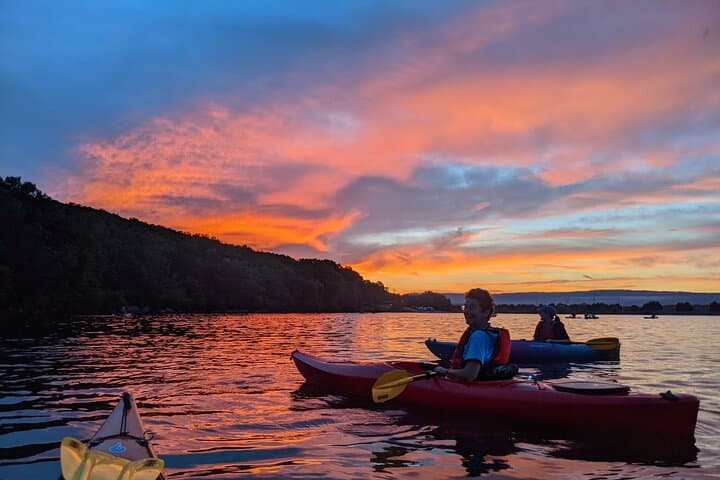
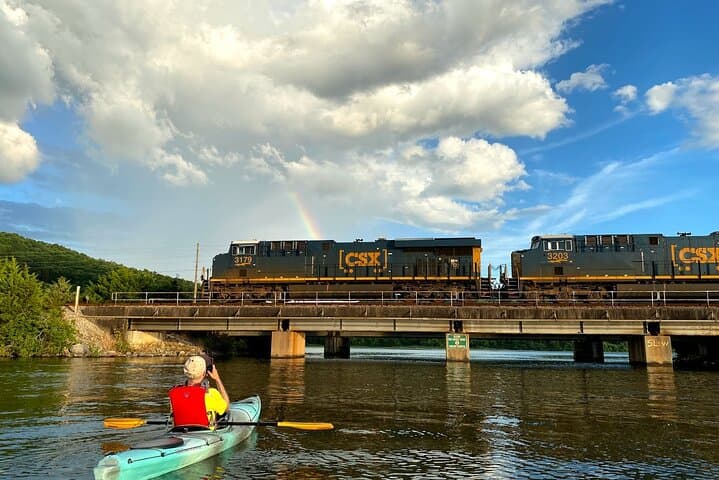
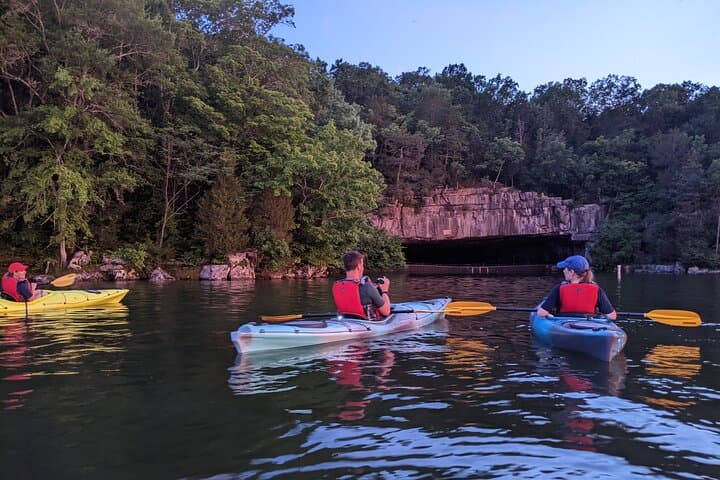
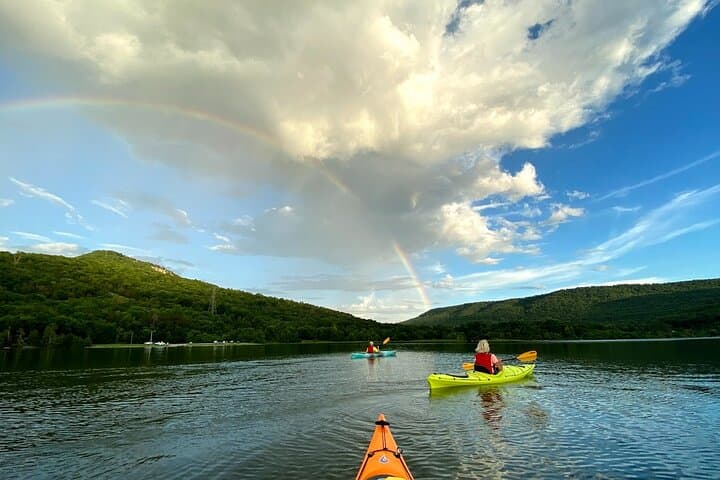
Dusk falls along Nickajack Lake and the river eases into a long, low hum; the water dares you forward as the limestone bluffs darken and the cave mouth becomes a black slit on the shore. Paddling three miles from the Macedonia Boat Ramp, the group moves in single file—oars whispering—while osprey wheel overhead and cliff swallows stitch the cliff faces with motion.
Dusk falls along Nickajack Lake and the river eases into a long, low hum; the water dares you forward as the limestone bluffs darken and the cave mouth becomes a black slit on the shore. Paddling three miles from the Macedonia Boat Ramp, the group moves in single file—oars whispering—while osprey wheel overhead and cliff swallows stitch the cliff faces with motion.
Nickajack Cave sits on the Tennessee River, a product of TVA-era impoundment that turned a wild river valley into a managed lake. The cave is a summer roost for endangered gray bats; as many as 100,000 can pour out at sunset to hunt insect swarms. Geologically, the area is classic Cumberland Plateau karst—steep limestone bluffs, collapsed sink features upstream, and cave passages that have hosted wildlife and local lore for generations. Guides weave natural history with regional context: how the dam reshaped fish habitat, how white-nose syndrome challenges bat populations, and why shoreline conservation matters.
Practically: this is an easy-to-moderate guided paddle of roughly three miles round-trip, timed for evening bat emergence (late April–early October). Guides supply kayaks and PFDs; bring binoculars, a waterproof light tucked away for safety (avoid shining on the bats), insect protection, and layered clothing for cooling evenings. Expect calm lake water with occasional river chop; listen for the first flutters and watch the sky fill with tiny wings. Respect wildlife—no flash photography, maintain a quiet approach, and follow your guide’s lead. The payoff is elemental: a living curtain of bats cutting the dusk, a clear demonstration of how a single species threads into a broader river ecosystem.