THE ADVENTURE COLLECTIVE® · Independent discovery and booking for outdoor travel

Discover Nice at your own pace with an audio guide that unlocks hidden histories, architectural stories, and secret viewpoints. Follow a curated playlist and interactive map to explore Vieux Nice, the Promenade des Anglais, and lesser-known corners on a flexible 3–9 hour route.
Discover Nice at your own pace with an audio guide that unlocks hidden histories, architectural stories, and secret viewpoints. Follow a curated playlist and interactive map to explore Vieux Nice, the Promenade des Anglais, and lesser-known corners on a flexible 3–9 hour route.
You step onto the Promenade des Anglais with a pair of headphones on and the sea scoring a slow, salt-licked rhythm against the shore. The audio voice settles into your ear like a local companion—clear, observant—pointing you toward a clock tower, a baroque dome, a market stall that smells of citrus and frying socca. The city opens in chapters: a 19th-century railway that invited aristocrats, a Russian cathedral whose domes glint like foreign suns, and alleyways where Italian façades lean close to one another.
Verified experiences and guided adventures in the surrounding area.
Operated by Uvamai Niche Tourism · Nice, Provence-Alpes-Côte d'Azur
You step onto the Promenade des Anglais with a pair of headphones on and the sea scoring a slow, salt-licked rhythm against the shore. The audio voice settles into your ear like a local companion—clear, observant—pointing you toward a clock tower, a baroque dome, a market stall that smells of citrus and frying socca. The city opens in chapters: a 19th-century railway that invited aristocrats, a Russian cathedral whose domes glint like foreign suns, and alleyways where Italian façades lean close to one another.
Nice occupies a shelf between the Alps and the Mediterranean. Geology here is coastal limestone and weathered terraces; the Baie des Anges curves like a natural harbor that shaped settlement and trade. Culturally, Nice carries Franco-Italian layers: French administration since 1860, long Italian influence, and a Belle Époque boom that built grand hotels facing the sea. Local life still pivots around the flower and food market, the small squares where conversation is measured in coffee cups.
Practically, this self-guided audio package hands you two links: a SoundCloud playlist and a Google My Maps itinerary. Use headphones and a charged phone; the tour is flexible—complete sections in one go or spread across days within the six-day access window. Expect 3–9 hours depending on stops; most visitors plan a full day with breaks. Start early to avoid heat, follow suggested order for a coherent narrative, but don’t be afraid to wander. Wear supportive shoes for cobbles, carry water, and leave time to sit on a blue chair and listen as the guide folds history into the present.
easy.
3–9 hours.
Basic urban fitness: ability to walk several hours with breaks; not technically demanding but requires stamina for long days on feet.
On your booked date you’ll receive two private links: one opens a SoundCloud playlist with ordered audio tracks, the other opens a Google My Maps itinerary (web browser). Both remain valid until your tour is complete (up to 6 days).
Many central areas and major attractions are accessible, but historic alleyways and some viewpoints have steps or uneven surfaces—check specific spots in the interactive map before visiting.
Yes—this self-guided experience lets you pause, repeat, or skip tracks and split the itinerary across multiple days within the access window.
No; the audio provides historical context and directions, but entrance fees to museums or private sites are not included and must be purchased separately.
Nice evolved from Greek and Roman settlement to a 19th-century resort driven by railway and aristocratic tourism, blending Italian and French influences in its architecture and urban plan.
Urban projects like the restored Paillon linear park demonstrate efforts to balance green space with city life; visitors are encouraged to respect local bins and avoid disturbing plantings.
Uvamai Niche Tourism operates guided outdoor trips and adventures with an emphasis on safety, stewardship, and memorable experiences.
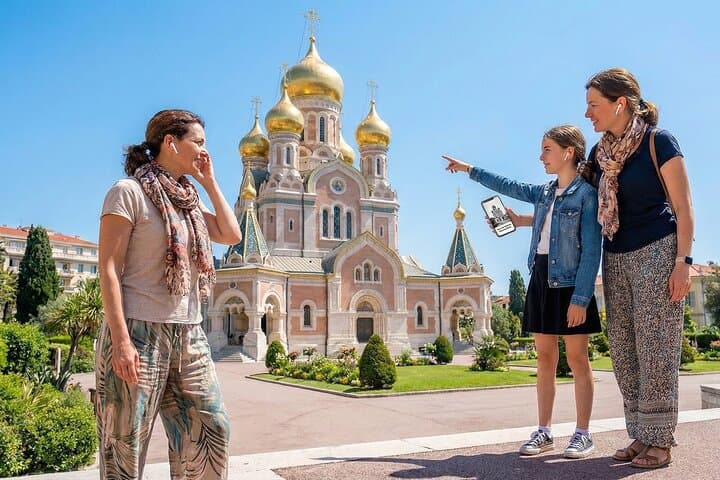
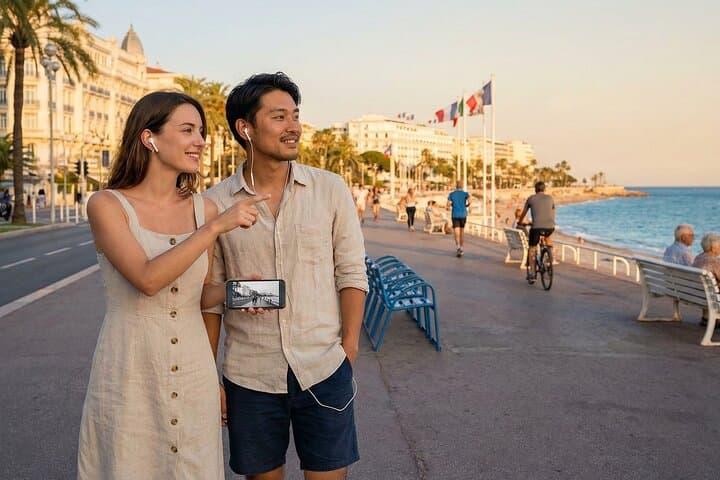
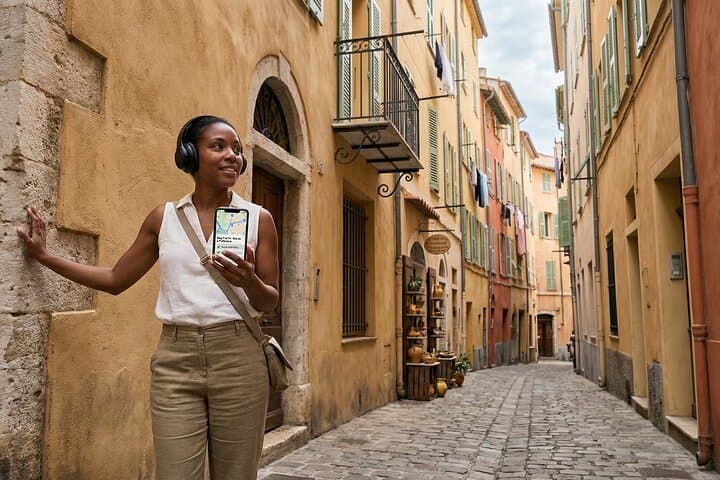
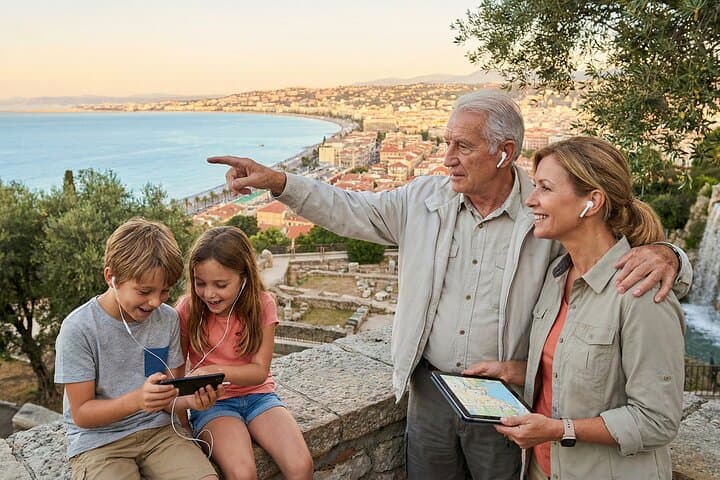
You step onto the Promenade des Anglais with a pair of headphones on and the sea scoring a slow, salt-licked rhythm against the shore. The audio voice settles into your ear like a local companion—clear, observant—pointing you toward a clock tower, a baroque dome, a market stall that smells of citrus and frying socca. The city opens in chapters: a 19th-century railway that invited aristocrats, a Russian cathedral whose domes glint like foreign suns, and alleyways where Italian façades lean close to one another.
You step onto the Promenade des Anglais with a pair of headphones on and the sea scoring a slow, salt-licked rhythm against the shore. The audio voice settles into your ear like a local companion—clear, observant—pointing you toward a clock tower, a baroque dome, a market stall that smells of citrus and frying socca. The city opens in chapters: a 19th-century railway that invited aristocrats, a Russian cathedral whose domes glint like foreign suns, and alleyways where Italian façades lean close to one another.
Nice occupies a shelf between the Alps and the Mediterranean. Geology here is coastal limestone and weathered terraces; the Baie des Anges curves like a natural harbor that shaped settlement and trade. Culturally, Nice carries Franco-Italian layers: French administration since 1860, long Italian influence, and a Belle Époque boom that built grand hotels facing the sea. Local life still pivots around the flower and food market, the small squares where conversation is measured in coffee cups.
Practically, this self-guided audio package hands you two links: a SoundCloud playlist and a Google My Maps itinerary. Use headphones and a charged phone; the tour is flexible—complete sections in one go or spread across days within the six-day access window. Expect 3–9 hours depending on stops; most visitors plan a full day with breaks. Start early to avoid heat, follow suggested order for a coherent narrative, but don’t be afraid to wander. Wear supportive shoes for cobbles, carry water, and leave time to sit on a blue chair and listen as the guide folds history into the present.