THE ADVENTURE COLLECTIVE® · Independent discovery and booking for outdoor travel

In four hours you can move from a museum filled with 20,000 marine specimens to wind-carved coastal rocks and a pre-8th-century Cham temple. This half-day Nha Trang tour pairs natural drama with cultural landmarks—ideal for cruise passengers or travelers short on time.
In four hours you can move from a museum filled with 20,000 marine specimens to wind-carved coastal rocks and a pre-8th-century Cham temple. This half-day Nha Trang tour pairs natural drama with cultural landmarks—ideal for cruise passengers or travelers short on time.
You step off the van into a wash of warm sea air and the city’s pulse—motorbikes weaving, vendors calling, ocean just beyond the palm-lined boulevard. This four-hour loop through Nha Trang moves at a brisk, human pace: a research museum that smells faintly of salt and resin, a Gothic church bell tower that slices the skyline, wind-sculpted rock formations daring the surf, and a hill of ancient Cham brickwork that remembers tides of trade and faith.
Verified experiences and guided adventures in the surrounding area.
Operated by Vietnam Fantastic · Nha Trang, Khanh Hoa
You step off the van into a wash of warm sea air and the city’s pulse—motorbikes weaving, vendors calling, ocean just beyond the palm-lined boulevard. This four-hour loop through Nha Trang moves at a brisk, human pace: a research museum that smells faintly of salt and resin, a Gothic church bell tower that slices the skyline, wind-sculpted rock formations daring the surf, and a hill of ancient Cham brickwork that remembers tides of trade and faith.
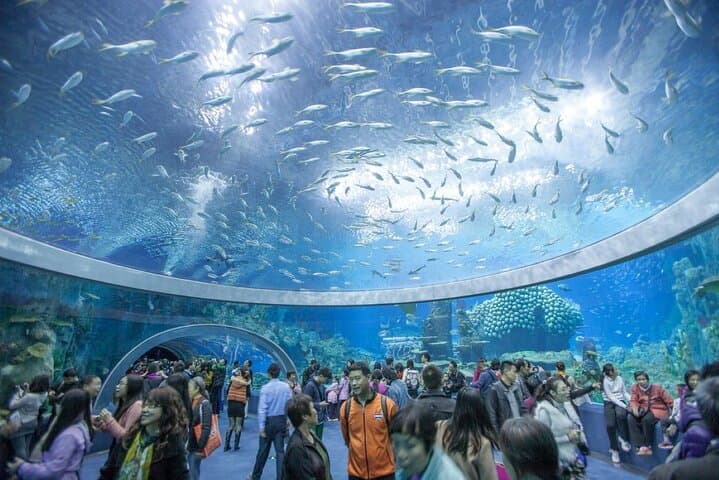
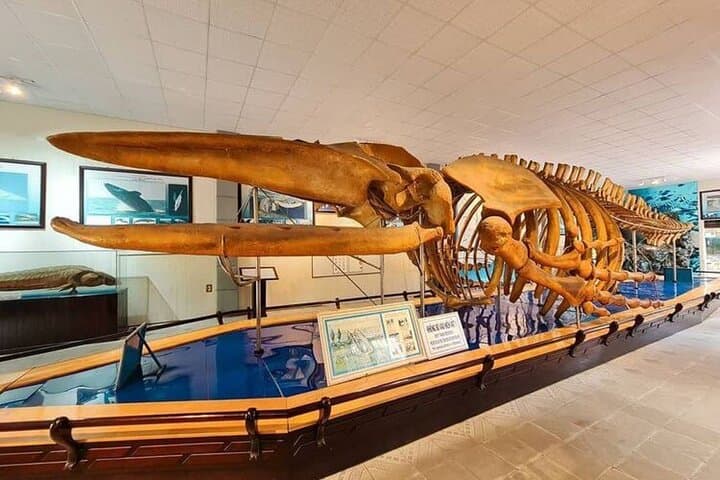
The National Oceanographic Museum of Vietnam opens like a map of the South China Sea—display cases packed with glassy shells, coral skeletons, and an 18-meter whale skeleton hung in the atrium that forces you to look up. The museum is both cabinet of curiosities and working research institute; it catalogs species and tracks changes along Vietnam’s coastline.
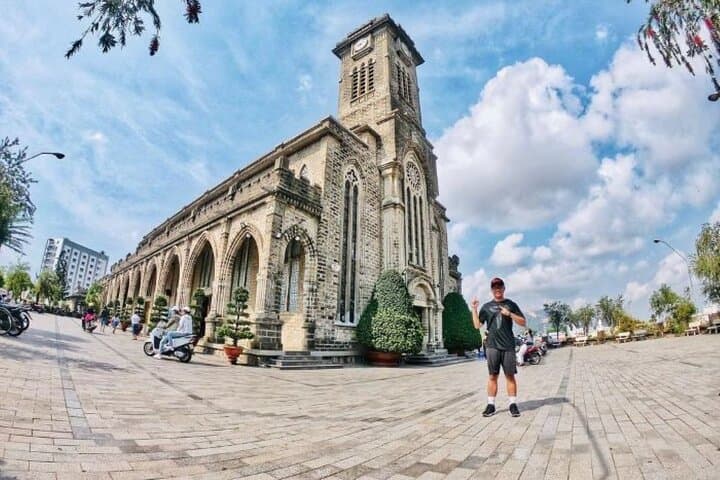
From there the tour moves to Nha Trang Stone Church, a concrete-and-rock Gothic structure with a bell tower rising about 38 meters. It feels unexpectedly austere against the tropical light—an architectural echo of the Catholic missions that spread along the coast.
Hon Chong Promontory is where geology takes over. Two clusters of rock—Hon Chong (the “husband”) and Hon Vo (the “wife”)—sit like ancient hands on the shore. Waves test their balance; gulls scout the edges. The stones are not just scenic; they tell a story of uplifted seabeds, fractured granite, and centuries of wave erosion that smoothed crevices into walkable ledges.
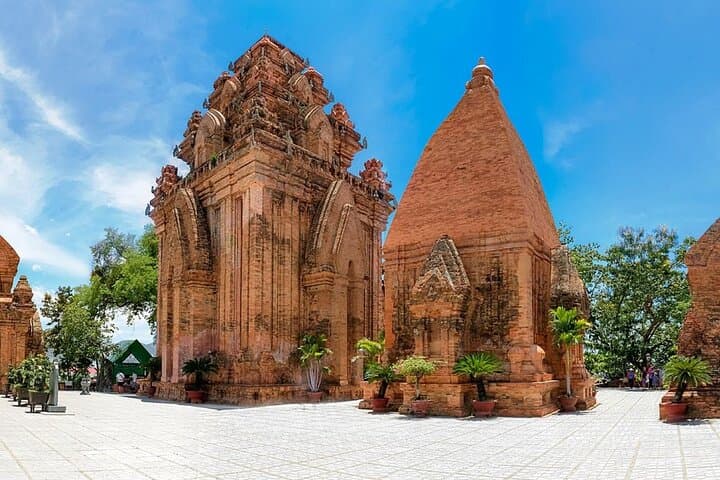
The final stop is Po Nagar Cham Towers, a compact complex built before 781 A.D. in classic Cham style—stepped terraces, sculpted lintels, and guardian figures. Locals come to pray beneath ornate roofs; the site offers a short climb and a wide view over the river toward the bay.
Practical edge: the itinerary is light on hiking but heavy on stairs and short walks over uneven rock at Hon Chong and steps at Po Nagar. The operator includes pickup (within town or from the port), entrance fees, bottled water, lunch and shuttle back to your hotel—so you only need day clothes, sun protection and curiosity.
Plan for mid-morning heat; aim for the early departure window if you want softer light in the museum and cooler air on the promontory. Respect temple etiquette—cover shoulders and remove hats when entering sacred spaces. Photographers will find dramatic close-ups at the museum’s whale, sweeping shorelines at Hon Chong, and intricate bas-relief at Po Nagar. For travelers who want a compact primer on Nha Trang’s marine history, colonial architecture, and Cham heritage, this half-day tour is an efficient, readable introduction with plenty of photo stops and local flavor.
easy.
4 hours.
Suitable for most fitness levels; expect short walks, stair climbs and some uneven terrain at coastal rocks and temple steps.
Yes—this tour includes entrance fees to listed sites as well as bottled water and lunch.
Yes—pick-up from Nha Trang port for cruise passengers is available; confirm meeting point at booking.
The tour notes stroller access for infants, but Hon Chong and Po Nagar have uneven surfaces and steps that limit wheelchair access.
Modest clothing that covers shoulders and knees is recommended; bring a scarf you can drape if needed.
Lunch is included—inform the operator of dietary needs at booking so they can accommodate common restrictions.
Expect short walks between stops (roughly 1–2 km cumulatively) and stair climbs at the church and Po Nagar; overall activity is light.
Po Nagar Cham Towers date to before 781 A.D. and reflect the engineering and religious art of the Cham Kingdom, while the Oceanographic Museum documents Vietnam’s maritime research legacy.
Coastal erosion and coral decline are active concerns—respect restricted areas, avoid touching coral, and the museum supports local marine research and education.
Vietnam Fantastic operates guided outdoor trips and adventures with an emphasis on safety, stewardship, and memorable experiences.
You step off the van into a wash of warm sea air and the city’s pulse—motorbikes weaving, vendors calling, ocean just beyond the palm-lined boulevard. This four-hour loop through Nha Trang moves at a brisk, human pace: a research museum that smells faintly of salt and resin, a Gothic church bell tower that slices the skyline, wind-sculpted rock formations daring the surf, and a hill of ancient Cham brickwork that remembers tides of trade and faith.
You step off the van into a wash of warm sea air and the city’s pulse—motorbikes weaving, vendors calling, ocean just beyond the palm-lined boulevard. This four-hour loop through Nha Trang moves at a brisk, human pace: a research museum that smells faintly of salt and resin, a Gothic church bell tower that slices the skyline, wind-sculpted rock formations daring the surf, and a hill of ancient Cham brickwork that remembers tides of trade and faith.
The National Oceanographic Museum of Vietnam opens like a map of the South China Sea—display cases packed with glassy shells, coral skeletons, and an 18-meter whale skeleton hung in the atrium that forces you to look up. The museum is both cabinet of curiosities and working research institute; it catalogs species and tracks changes along Vietnam’s coastline.
From there the tour moves to Nha Trang Stone Church, a concrete-and-rock Gothic structure with a bell tower rising about 38 meters. It feels unexpectedly austere against the tropical light—an architectural echo of the Catholic missions that spread along the coast.
Hon Chong Promontory is where geology takes over. Two clusters of rock—Hon Chong (the “husband”) and Hon Vo (the “wife”)—sit like ancient hands on the shore. Waves test their balance; gulls scout the edges. The stones are not just scenic; they tell a story of uplifted seabeds, fractured granite, and centuries of wave erosion that smoothed crevices into walkable ledges.
The final stop is Po Nagar Cham Towers, a compact complex built before 781 A.D. in classic Cham style—stepped terraces, sculpted lintels, and guardian figures. Locals come to pray beneath ornate roofs; the site offers a short climb and a wide view over the river toward the bay.
Practical edge: the itinerary is light on hiking but heavy on stairs and short walks over uneven rock at Hon Chong and steps at Po Nagar. The operator includes pickup (within town or from the port), entrance fees, bottled water, lunch and shuttle back to your hotel—so you only need day clothes, sun protection and curiosity.
Plan for mid-morning heat; aim for the early departure window if you want softer light in the museum and cooler air on the promontory. Respect temple etiquette—cover shoulders and remove hats when entering sacred spaces. Photographers will find dramatic close-ups at the museum’s whale, sweeping shorelines at Hon Chong, and intricate bas-relief at Po Nagar. For travelers who want a compact primer on Nha Trang’s marine history, colonial architecture, and Cham heritage, this half-day tour is an efficient, readable introduction with plenty of photo stops and local flavor.