THE ADVENTURE COLLECTIVE® · Independent discovery and booking for outdoor travel

Descend into one of the world’s largest volcanic calderas on a full-day safari from Arusha. Expect long drives, abundant wildlife and a picnic on the crater floor with a high chance of spotting the Big Five.
Descend into one of the world’s largest volcanic calderas on a full-day safari from Arusha. Expect long drives, abundant wildlife and a picnic on the crater floor with a high chance of spotting the Big Five.
A pre-dawn Land Cruiser slips out of Arusha and the road unfolds like a promise — red dust giving way to the crater rim silhouetted against a rising sun.
Verified experiences and guided adventures in the surrounding area.
Operated by Matta African Luxury Safari · Ngorongoro Conservation Area, Arusha Region
A pre-dawn Land Cruiser slips out of Arusha and the road unfolds like a promise — red dust giving way to the crater rim silhouetted against a rising sun.
By the time you peer through the vehicle’s open roof, the crater floor lies below: a vast bowl of grassland, forest pockets and a soda lake where flamingos sometimes gather. The descent feels geological as much as scenic — you are entering a collapsed volcano formed hundreds of thousands of years ago, its rim rising roughly 600 meters above the floor and enclosing nearly 20 kilometres of wildlife habitat.
Ngorongoro is more than scenery. The Conservation Area is a working landscape where Maasai graze cattle beside wildlife corridors; park entry fees fund protection and local programs. Expect cultural traces at the rim and a sense of layered history — human and natural — written into the crater’s slopes.
Practically, a full-day tour runs 7–10 hours from Arusha with about 4 hours’ drive each way and roughly six hours of game driving inside the crater. Drives follow unpaved tracks; wildlife sightings are abundant but never guaranteed — guides read spoor and behavior to find lions, elephants, buffalo, rhino and the occasional leopard.
Pack binoculars, sun protection, layered clothing and a camera with a long lens. Lunch is usually a picnic on the crater floor; toilets are basic. Mobility access and infant seats are often available but confirm at booking. Aim for an early start to maximize cool light and animal activity, and keep a respectful distance from wildlife — here, the land and its animals dictate the rhythm.
moderate.
7–10 hours.
Suitable for people with average fitness; involves long periods in a vehicle and short, uneven walks at viewpoints
Expect about 3–4 hours each way depending on traffic and stops; most tours leave pre-dawn to maximize time inside the crater.
There’s a high possibility of encountering lions, elephants, buffalo and rhino; leopards are rarer but possible — wildlife sightings aren’t guaranteed and depend on chance and animal movement.
Lunch is typically a packed picnic at a designated site on the crater floor; restroom facilities are basic so plan accordingly.
Check travel-health advisories for Tanzania; some visitors use antimalarial medication and should confirm required immunizations (e.g., yellow fever rules) with a clinic.
Ngorongoro is a volcanic caldera formed by a massive eruption and collapse; Maasai pastoralists have used the area for generations, and the Conservation Area balances pastoral use with wildlife protection.
Entry fees and the Ngorongoro Conservation Area Authority fund anti-poaching and community programs; visitors should stick to tracks, avoid littering and follow guide instructions to minimize impact.
Matta African Luxury Safari operates guided outdoor trips and adventures with an emphasis on safety, stewardship, and memorable experiences.


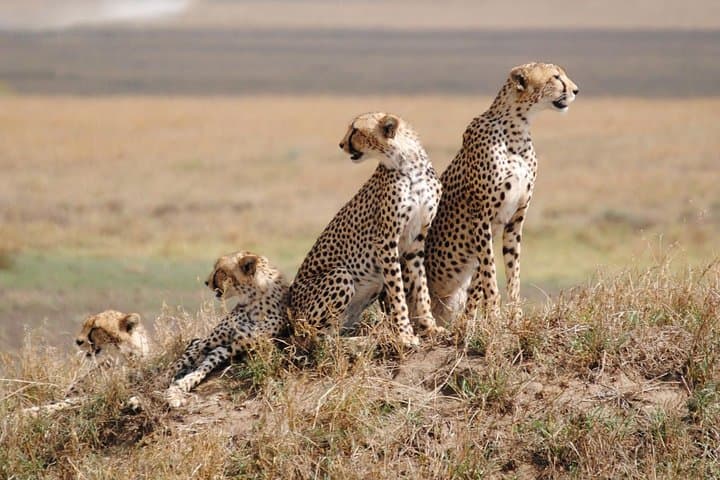
A pre-dawn Land Cruiser slips out of Arusha and the road unfolds like a promise — red dust giving way to the crater rim silhouetted against a rising sun.
A pre-dawn Land Cruiser slips out of Arusha and the road unfolds like a promise — red dust giving way to the crater rim silhouetted against a rising sun.
By the time you peer through the vehicle’s open roof, the crater floor lies below: a vast bowl of grassland, forest pockets and a soda lake where flamingos sometimes gather. The descent feels geological as much as scenic — you are entering a collapsed volcano formed hundreds of thousands of years ago, its rim rising roughly 600 meters above the floor and enclosing nearly 20 kilometres of wildlife habitat.
Ngorongoro is more than scenery. The Conservation Area is a working landscape where Maasai graze cattle beside wildlife corridors; park entry fees fund protection and local programs. Expect cultural traces at the rim and a sense of layered history — human and natural — written into the crater’s slopes.
Practically, a full-day tour runs 7–10 hours from Arusha with about 4 hours’ drive each way and roughly six hours of game driving inside the crater. Drives follow unpaved tracks; wildlife sightings are abundant but never guaranteed — guides read spoor and behavior to find lions, elephants, buffalo, rhino and the occasional leopard.
Pack binoculars, sun protection, layered clothing and a camera with a long lens. Lunch is usually a picnic on the crater floor; toilets are basic. Mobility access and infant seats are often available but confirm at booking. Aim for an early start to maximize cool light and animal activity, and keep a respectful distance from wildlife — here, the land and its animals dictate the rhythm.