
Ngorongoro Crater Best Safari: 5-Day Wildlife Adventure from Arusha
Five days from Arusha take you into Ngorongoro’s unmatched caldera, where one of the densest concentrations of African wildlife gathers. Expect early starts, long drives, and up-close encounters with lions, rhino, and sweeping migration country.
An Adventure In Arusha.
Five days from Arusha take you into Ngorongoro’s unmatched caldera, where one of the densest concentrations of African wildlife gathers. Expect early starts, long drives, and up-close encounters with lions, rhino, and sweeping migration country.
Read the full experience
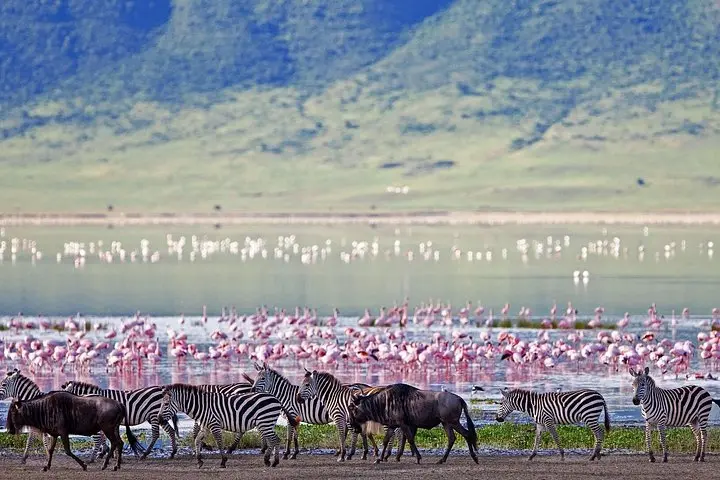
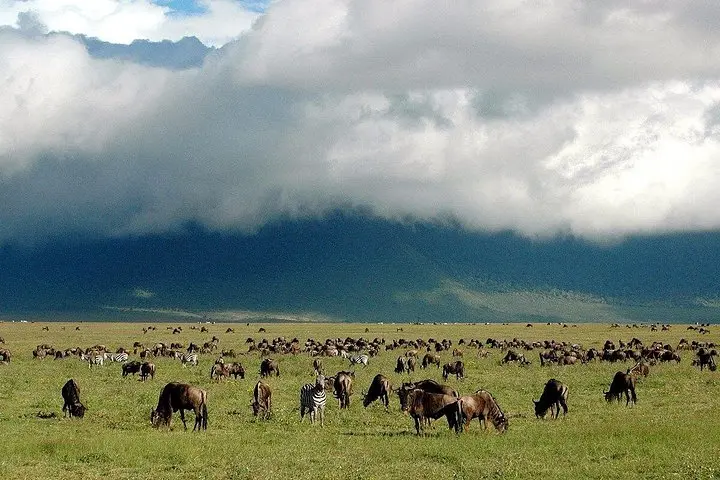
Dawn carves a rim of gold across the Ngorongoro caldera and the land below wakes in a slow, deliberate way—hippos huffing in the marsh, lions stretching like shadows, and grasses bending under the hooves of thousands of grazers.
Dawn carves a rim of gold across the Ngorongoro caldera and the land below wakes in a slow, deliberate way—hippos huffing in the marsh, lions stretching like shadows, and grasses bending under the hooves of thousands of grazers.
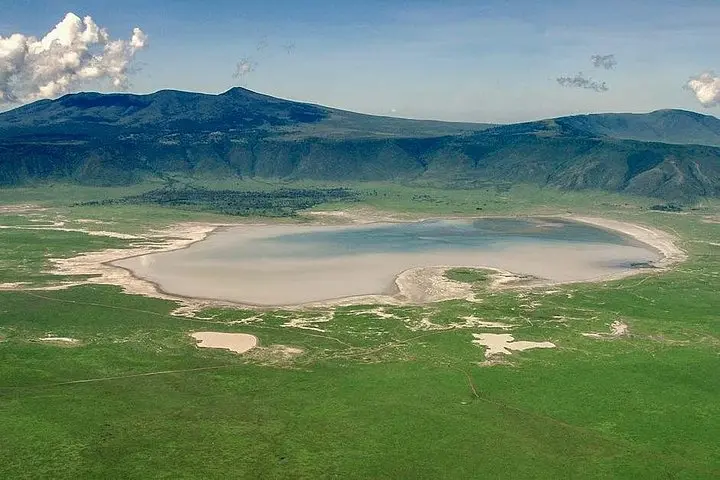
This five-day safari routes from Arusha through Lake Manyara and into the world-famous Ngorongoro Crater before tracing the plains of the Serengeti. Geologically the crater is an enormous unbroken caldera—about 19.2 km across and roughly 610 m deep—its basin holding one of the densest concentrations of wildlife on earth (the itinerary cites a protected floor of approximately 304 sq km). The wider region is archaeologically rich: nearby Olduvai Gorge produced early hominid remains that reframed human origins. Culturally the rim is Maasai country; pastoralists still move stock in and out of the conservation area and their presence shapes how the landscape is used.
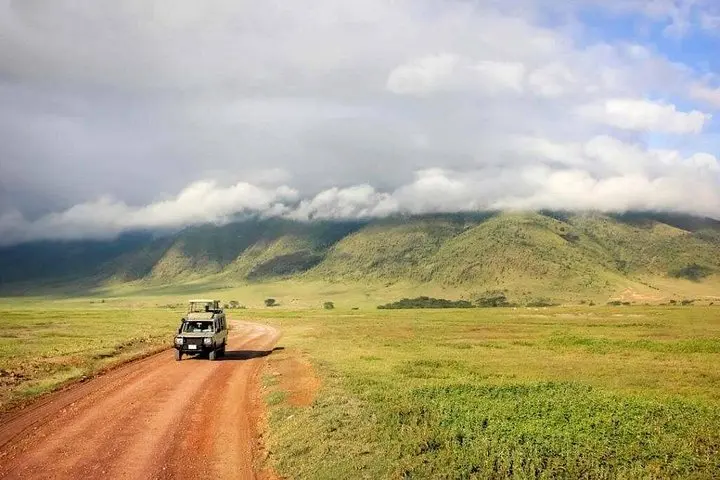
Practically, expect long but rewarding drives, pre-dawn departures for prime predator activity, and picnic lunches on the crater floor. Game drives favor elevated vehicles with open roofs for visibility and photography. Pack layered clothing for cool mornings and hot midday sun, plus plenty of water and a good pair of binoculars. Visitors should respect park rules—stay in vehicles except at designated sites—and factor in park permits and timed gate procedures. The rhythm here alternates quiet observation with sudden bursts of action: a lion stand, a rhino sighting, a river daring a herd to cross. For planners, combine Ngorongoro with a Serengeti segment to experience both the crater’s concentrated ecology and the sweep of migratory plains.
Frequently asked questions
Most itineraries include a transfer by 4x4; drive time is roughly 3–4 hours to the conservation area gate depending on route and stops.
Park fees vary by operator—confirm whether conservation and crater entry fees are included in your booking or paid at the gate.
The crater floor is accessible by vehicle and the route is suitable for many ages; check vehicle access and mobility accommodations with the operator.
Migration timing shifts by corridor: northern crossings occur around July–September, while southern calving often occurs December–March; pair Ngorongoro with Serengeti timing for migration viewing.
About This Experience
Guide Private operates guided outdoor trips and adventures with an emphasis on safety, stewardship, and memorable experiences.
Adventure tips
Recommended gear
- Binoculars (8x–10x): Bring steady optics to pick out distant prides and skulking rhinos on the crater floor.
- Lightweight layers and windbreaker: Mornings can be cold and winds strong on ridgelines; layers adjust for changing temps.
- Sun hat and sunscreen: High-altitude sun is intense—protect skin and eyes during midday stops.
- Camera with telephoto lens: A 200–400mm range captures wildlife behavior without needing to leave the vehicle.
Photos of the experience
Related adventures & guides
Read the full experience
Dawn carves a rim of gold across the Ngorongoro caldera and the land below wakes in a slow, deliberate way—hippos huffing in the marsh, lions stretching like shadows, and grasses bending under the hooves of thousands of grazers.
Dawn carves a rim of gold across the Ngorongoro caldera and the land below wakes in a slow, deliberate way—hippos huffing in the marsh, lions stretching like shadows, and grasses bending under the hooves of thousands of grazers.
This five-day safari routes from Arusha through Lake Manyara and into the world-famous Ngorongoro Crater before tracing the plains of the Serengeti. Geologically the crater is an enormous unbroken caldera—about 19.2 km across and roughly 610 m deep—its basin holding one of the densest concentrations of wildlife on earth (the itinerary cites a protected floor of approximately 304 sq km). The wider region is archaeologically rich: nearby Olduvai Gorge produced early hominid remains that reframed human origins. Culturally the rim is Maasai country; pastoralists still move stock in and out of the conservation area and their presence shapes how the landscape is used.
Practically, expect long but rewarding drives, pre-dawn departures for prime predator activity, and picnic lunches on the crater floor. Game drives favor elevated vehicles with open roofs for visibility and photography. Pack layered clothing for cool mornings and hot midday sun, plus plenty of water and a good pair of binoculars. Visitors should respect park rules—stay in vehicles except at designated sites—and factor in park permits and timed gate procedures. The rhythm here alternates quiet observation with sudden bursts of action: a lion stand, a rhino sighting, a river daring a herd to cross. For planners, combine Ngorongoro with a Serengeti segment to experience both the crater’s concentrated ecology and the sweep of migratory plains.
Make a day of it nearby.
Verified experiences and guided adventures in the surrounding area.