THE ADVENTURE COLLECTIVE® · Independent discovery and booking for outdoor travel

Ride the Ngong Ping Cable Car to a mountain-top giant, taste monastery-style vegetarian lunch, and glide past Tai O’s stilt houses on a traditional boat. This accessible day tour blends panoramic views, cultural sites, and a chance to spot coastal wildlife.
Ride the Ngong Ping Cable Car to a mountain-top giant, taste monastery-style vegetarian lunch, and glide past Tai O’s stilt houses on a traditional boat. This accessible day tour blends panoramic views, cultural sites, and a chance to spot coastal wildlife.
You step into a ribbon of sky as the Ngong Ping Cable Car lifts from Tung Chung — the sea opens beneath you, the airport runways shrink, and Lantau’s forested ridgelines push toward the horizon. The carriage rocks gently, the island’s low hills and shipping channels come into focus, and the Big Buddha grows taller with every click of the cable.
Verified experiences and guided adventures in the surrounding area.
Operated by Century Holiday · Tung Chung, Hong Kong
You step into a ribbon of sky as the Ngong Ping Cable Car lifts from Tung Chung — the sea opens beneath you, the airport runways shrink, and Lantau’s forested ridgelines push toward the horizon. The carriage rocks gently, the island’s low hills and shipping channels come into focus, and the Big Buddha grows taller with every click of the cable.
Lantau is Hong Kong’s largest island, shaped by coastal erosion and rugged hills that once supported fishing communities and monasteries. Po Lin Monastery, founded in 1906, remains a center for vegetarian Buddhist cuisine and ritual; nearby Tai O preserves an older maritime economy where timber-frame houses perch on stilts over tidal creek channels. From the cable car you can see the bridge to Macau on clear days, evidence of modern engineering cutting across ancient seaways.
Expect an accessible day: a round-trip cable car ride (about 25–30 minutes each way on the 5.7 km stretch), a shuffle bus to the 34 m seated bronze Buddha, and a 20–40 minute boat tour around Tai O’s stilt houses. The climb to the Buddha’s base is optional — 268 steps — but you can also ride the shuttle.
Practical notes: wear grippy shoes for uneven village walkways, bring a lightweight rain layer and sun protection, and carry small change for market stalls. Check weather and Ngong Ping 360 maintenance schedules; the cable car can close in typhoon conditions and an alternate coach route is used. Leave early to avoid afternoon crowds and to maximize light for photos of the coast and, in summer, the occasional pink dolphin sighting.
easy.
8 hours.
Suitable for most fitness levels; requires short walks on uneven surfaces and optional stair climb to the Buddha.
The Ngong Ping Cable Car crosses roughly 5.7 km; expect about 25–30 minutes each way depending on loading and weather.
Yes — a shuttle bus and pathways serve the base area, so climbing the steps is optional and your guide can advise alternatives.
Pink dolphins are sometimes seen in summer, but sightings are not guaranteed; summer offers the highest chance.
If the cable car is suspended for maintenance or severe weather, the operator provides coach transfer between Tung Chung and Ngong Ping with no price reduction.
Po Lin Monastery began as a small retreat in 1906 and grew into a major Buddhist center after the construction of the Tian Tan Buddha in the late 20th century.
Lantau’s coastal habitats are sensitive; avoid feeding wildlife, keep to designated paths, and use local operators that follow marine-wildlife viewing guidelines.
Century Holiday operates guided outdoor trips and adventures with an emphasis on safety, stewardship, and memorable experiences.


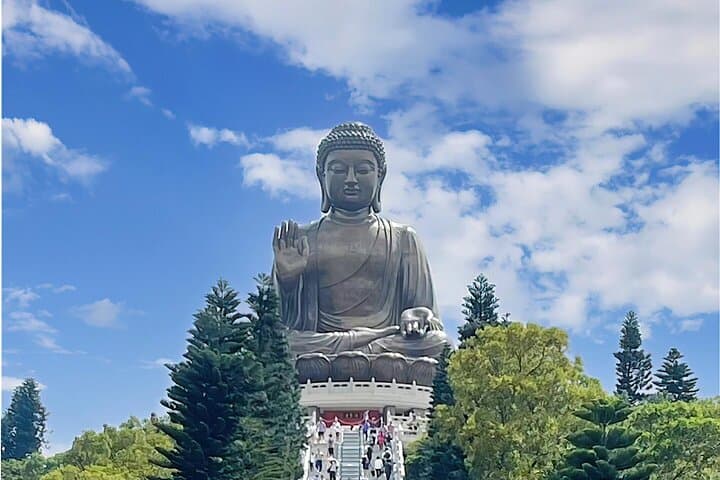
You step into a ribbon of sky as the Ngong Ping Cable Car lifts from Tung Chung — the sea opens beneath you, the airport runways shrink, and Lantau’s forested ridgelines push toward the horizon. The carriage rocks gently, the island’s low hills and shipping channels come into focus, and the Big Buddha grows taller with every click of the cable.
You step into a ribbon of sky as the Ngong Ping Cable Car lifts from Tung Chung — the sea opens beneath you, the airport runways shrink, and Lantau’s forested ridgelines push toward the horizon. The carriage rocks gently, the island’s low hills and shipping channels come into focus, and the Big Buddha grows taller with every click of the cable.
Lantau is Hong Kong’s largest island, shaped by coastal erosion and rugged hills that once supported fishing communities and monasteries. Po Lin Monastery, founded in 1906, remains a center for vegetarian Buddhist cuisine and ritual; nearby Tai O preserves an older maritime economy where timber-frame houses perch on stilts over tidal creek channels. From the cable car you can see the bridge to Macau on clear days, evidence of modern engineering cutting across ancient seaways.
Expect an accessible day: a round-trip cable car ride (about 25–30 minutes each way on the 5.7 km stretch), a shuffle bus to the 34 m seated bronze Buddha, and a 20–40 minute boat tour around Tai O’s stilt houses. The climb to the Buddha’s base is optional — 268 steps — but you can also ride the shuttle.
Practical notes: wear grippy shoes for uneven village walkways, bring a lightweight rain layer and sun protection, and carry small change for market stalls. Check weather and Ngong Ping 360 maintenance schedules; the cable car can close in typhoon conditions and an alternate coach route is used. Leave early to avoid afternoon crowds and to maximize light for photos of the coast and, in summer, the occasional pink dolphin sighting.