THE ADVENTURE COLLECTIVE® · Independent discovery and booking for outdoor travel

Fight the Atlantic for position, leap into sea caves and wild swim between rock shelves on a guided Newquay coasteering session. Two hours of jumps, swims and coastal scrambling reveal a coastline shaped by tides and smuggling lore.
Fight the Atlantic for position, leap into sea caves and wild swim between rock shelves on a guided Newquay coasteering session. Two hours of jumps, swims and coastal scrambling reveal a coastline shaped by tides and smuggling lore.
The cliff throws up a cove and the Atlantic pushes through a narrow throat — you step from rock into open water and the ocean answers, cold and immediate. On a typical Newquay coasteering session you move between ledges, gullies and caves, scramble easy rock faces, and take deep‑water jumps into tidal pools as guides call lines and set safe routes.
Verified experiences and guided adventures in the surrounding area.
Operated by Cornish Wave Surf & Adventure · Newquay, Cornwall
The cliff throws up a cove and the Atlantic pushes through a narrow throat — you step from rock into open water and the ocean answers, cold and immediate. On a typical Newquay coasteering session you move between ledges, gullies and caves, scramble easy rock faces, and take deep‑water jumps into tidal pools as guides call lines and set safe routes.
Cornwall's north coast is carved from Devonian and Carboniferous sandstones and shales; tidal scour and fractured cliffs create the inlets and caves that made the area useful to 18th and 19th century smugglers and coastal industries. Newquay grew in the 19th century as a fishing and export point and later as a surf town — you'll hear local stories and geology woven into the route as you go.
Expect wetsuits, buoyancy aids and helmets supplied by operators, and guidance that places safety before bravado. Swim sections of roughly 25 metres through open water and be prepared for sudden surges in currents and splashy landings. Guides will show you foot placements, low‑risk jump options, and how to read the tide line before attempting bigger moves.
Practical notes: check tide times and book a mid‑tide session for the best balance of features and safety; bring sturdy water shoes and a towel and warm layers for after the water. If you have shoulder or back issues, discuss limits with the operator; pregnant travelers and those with serious heart conditions should not participate. Coasteering here is accessible with moderate fitness and confidence in open‑water swimming, and it delivers a short, concentrated adrenaline hit while revealing coastline few hikers see.
moderate.
2 hours.
Moderate — comfortable with repeated 25m swims, able to scramble on uneven rock, and handle short bursts of exertion.
You need to be able to swim at least 25 metres in open water and be comfortable in waves and currents; guides provide buoyancy aids but expect active swimming between sections.
Minimum ages vary by operator; most sessions require children to be competent swimmers and usually enforce a lower age limit — check the operator's policy before booking.
No — guides offer graded jump options and you can choose lower alternatives or walk around certain sections if you prefer.
Operators monitor conditions and will cancel or reschedule for high winds, large swell or unsafe tides; most offer a full refund if cancelled 24 hours ahead.
The north Cornish coast was used for coastal trade and smuggling from the 18th century; the cliffs and caves once concealed contraband and small landing parties.
Operators follow a leave‑no‑trace approach; stay on established routes, avoid disturbing wildlife and dispose of any litter ashore to protect sensitive coastal habitats.
Cornish Wave Surf & Adventure operates guided outdoor trips and adventures with an emphasis on safety, stewardship, and memorable experiences.
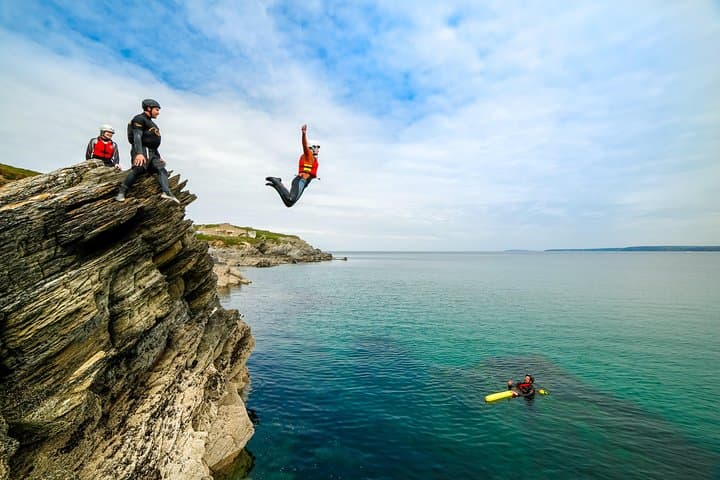
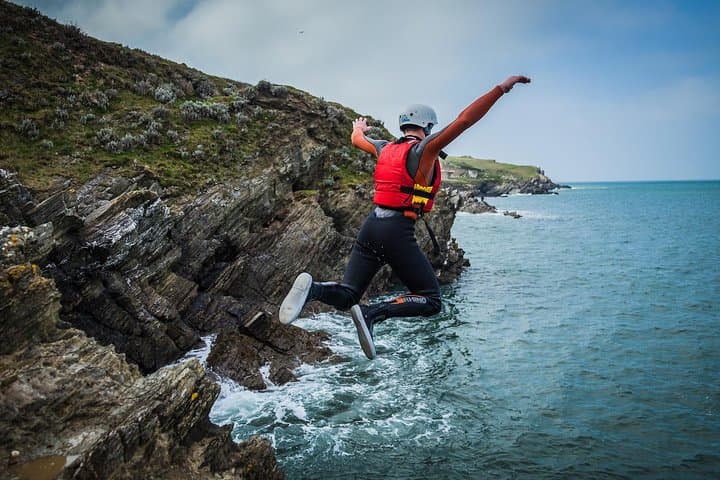
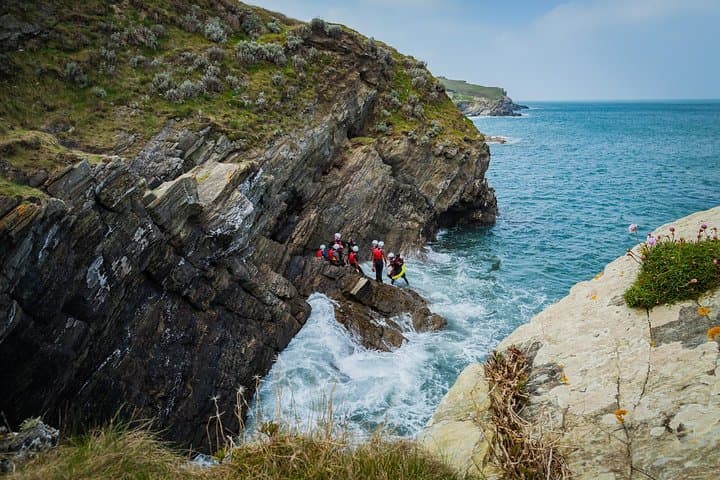
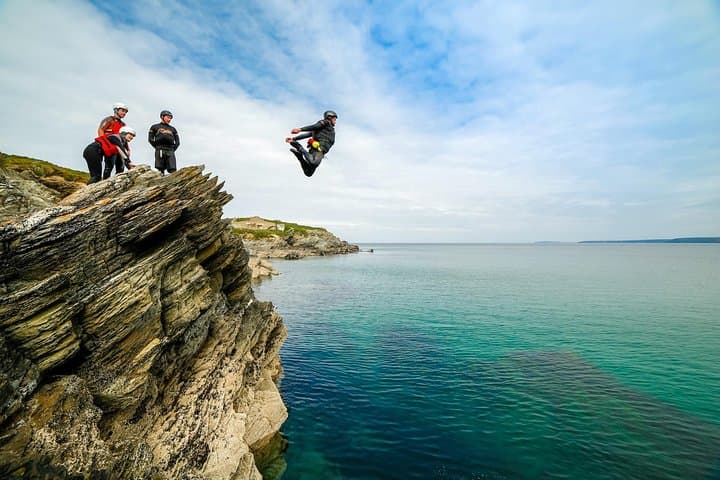
The cliff throws up a cove and the Atlantic pushes through a narrow throat — you step from rock into open water and the ocean answers, cold and immediate. On a typical Newquay coasteering session you move between ledges, gullies and caves, scramble easy rock faces, and take deep‑water jumps into tidal pools as guides call lines and set safe routes.
The cliff throws up a cove and the Atlantic pushes through a narrow throat — you step from rock into open water and the ocean answers, cold and immediate. On a typical Newquay coasteering session you move between ledges, gullies and caves, scramble easy rock faces, and take deep‑water jumps into tidal pools as guides call lines and set safe routes.
Cornwall's north coast is carved from Devonian and Carboniferous sandstones and shales; tidal scour and fractured cliffs create the inlets and caves that made the area useful to 18th and 19th century smugglers and coastal industries. Newquay grew in the 19th century as a fishing and export point and later as a surf town — you'll hear local stories and geology woven into the route as you go.
Expect wetsuits, buoyancy aids and helmets supplied by operators, and guidance that places safety before bravado. Swim sections of roughly 25 metres through open water and be prepared for sudden surges in currents and splashy landings. Guides will show you foot placements, low‑risk jump options, and how to read the tide line before attempting bigger moves.
Practical notes: check tide times and book a mid‑tide session for the best balance of features and safety; bring sturdy water shoes and a towel and warm layers for after the water. If you have shoulder or back issues, discuss limits with the operator; pregnant travelers and those with serious heart conditions should not participate. Coasteering here is accessible with moderate fitness and confidence in open‑water swimming, and it delivers a short, concentrated adrenaline hit while revealing coastline few hikers see.