THE ADVENTURE COLLECTIVE® · Independent discovery and booking for outdoor travel

Rev through the Barataria marsh on a small-group airboat departing Marrero, just outside New Orleans. Expect high-speed fan thrust, close alligator encounters in spring–fall, and a compact, interpretive look at Louisiana’s working wetlands.
Rev through the Barataria marsh on a small-group airboat departing Marrero, just outside New Orleans. Expect high-speed fan thrust, close alligator encounters in spring–fall, and a compact, interpretive look at Louisiana’s working wetlands.
The fan behind the hull roars to life and the cypress swamp tilts into motion — air and water trading places as you slice through a green, low-lying world 35 minutes from downtown New Orleans. On this small-group airboat tour from Marrero you ride high above marsh channels, the prop blast pushing reeds and mosquito hawks aside while the boat’s wake sketches a temporary map on the water.
Verified experiences and guided adventures in the surrounding area.
Operated by Louisiana Tour company · Marrero, Louisiana
The fan behind the hull roars to life and the cypress swamp tilts into motion — air and water trading places as you slice through a green, low-lying world 35 minutes from downtown New Orleans. On this small-group airboat tour from Marrero you ride high above marsh channels, the prop blast pushing reeds and mosquito hawks aside while the boat’s wake sketches a temporary map on the water.
The Barataria-Terrebonne basin is sculpted by the Mississippi’s sediment, shaped over centuries into braided bayous and choked marshes that supported Indigenous peoples, French and Spanish settlers, and later Cajun and fishing communities. Geologically it’s delta plain: slow-moving water, peat soils, and a coastline in quiet retreat — which is why these wetlands feel both alive and fragile.
Culture here has always been tied to the water — trap lines, shrimp boats, and creole kitchens that reinvent the day’s catch. Guides on these tours mix natural history with local stories, pointing out levee breaches, ghost channels, and the slow work of marsh restoration.
Practical side: expect a fast, loud ride (engines can push the fan over 200 mph). Tours last about 100 minutes round-trip from the Barataria Blvd departure point; arrive 20 minutes early and be ready to step on and off without assistance. Wear ear protection, sun protection, and closed-toe shoes; bring binoculars and a camera with a strap. Wildlife sightings — especially alligators and wading birds — are common outside winter, but never guaranteed. Be aware of safety restrictions: not suitable for pregnant travelers or those with serious back or heart issues. This trip is an up-close, wheeling encounter with a living delta — thrilling, informative, and rawly tied to the fate of Gulf Coast wetlands.
easy.
1.5–2 hours.
Suitable for most fitness levels; participants must be able to board and disembark without mechanical assistance.
The excursion lasts about 100 minutes and departs from 9706 Barataria Blvd in Marrero, roughly a 35-minute drive from downtown New Orleans.
No — alligators are common in spring through fall but sightings aren’t guaranteed; they are less active in winter due to lower temperatures.
Yes — not recommended for pregnant travelers, people with serious heart conditions or spinal injuries; there is also a minimum height requirement of 48 inches.
Service animals are permitted but not recommended due to loud engine noise and wildlife; emotional support animals are not allowed.
This section of the Mississippi River delta has supported fishing, trapping, and coastal communities for centuries; French colonial and Cajun influences shape regional foodways and place names.
The Barataria marshes are experiencing erosion and subsidence; responsible tours avoid disturbing wildlife and many guides discuss ongoing restoration and saltwater intrusion challenges.
Louisiana Tour company operates guided outdoor trips and adventures with an emphasis on safety, stewardship, and memorable experiences.


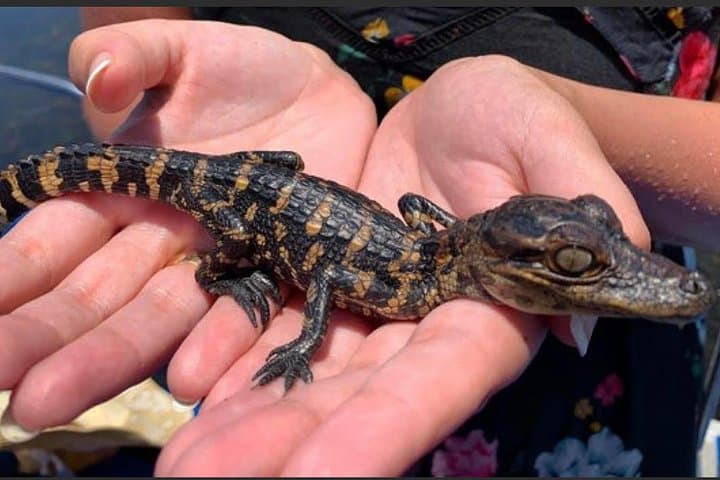

The fan behind the hull roars to life and the cypress swamp tilts into motion — air and water trading places as you slice through a green, low-lying world 35 minutes from downtown New Orleans. On this small-group airboat tour from Marrero you ride high above marsh channels, the prop blast pushing reeds and mosquito hawks aside while the boat’s wake sketches a temporary map on the water.
The fan behind the hull roars to life and the cypress swamp tilts into motion — air and water trading places as you slice through a green, low-lying world 35 minutes from downtown New Orleans. On this small-group airboat tour from Marrero you ride high above marsh channels, the prop blast pushing reeds and mosquito hawks aside while the boat’s wake sketches a temporary map on the water.
The Barataria-Terrebonne basin is sculpted by the Mississippi’s sediment, shaped over centuries into braided bayous and choked marshes that supported Indigenous peoples, French and Spanish settlers, and later Cajun and fishing communities. Geologically it’s delta plain: slow-moving water, peat soils, and a coastline in quiet retreat — which is why these wetlands feel both alive and fragile.
Culture here has always been tied to the water — trap lines, shrimp boats, and creole kitchens that reinvent the day’s catch. Guides on these tours mix natural history with local stories, pointing out levee breaches, ghost channels, and the slow work of marsh restoration.
Practical side: expect a fast, loud ride (engines can push the fan over 200 mph). Tours last about 100 minutes round-trip from the Barataria Blvd departure point; arrive 20 minutes early and be ready to step on and off without assistance. Wear ear protection, sun protection, and closed-toe shoes; bring binoculars and a camera with a strap. Wildlife sightings — especially alligators and wading birds — are common outside winter, but never guaranteed. Be aware of safety restrictions: not suitable for pregnant travelers or those with serious back or heart issues. This trip is an up-close, wheeling encounter with a living delta — thrilling, informative, and rawly tied to the fate of Gulf Coast wetlands.