THE ADVENTURE COLLECTIVE® · Independent discovery and booking for outdoor travel

Walk from Preservation Hall through Storyville and Congo Square on a two-hour guided tour that traces the birth of jazz. Expect cemetery visits, street performances, and insider stories about the city’s recording legacy.
Walk from Preservation Hall through Storyville and Congo Square on a two-hour guided tour that traces the birth of jazz. Expect cemetery visits, street performances, and insider stories about the city’s recording legacy.
Streetlamps flicker as the brass starts—this walking tour threads the French Quarter to Treme with the low, human pulse of New Orleans music as its map.
Verified experiences and guided adventures in the surrounding area.
Operated by Historic New Orleans Tours · New Orleans, Louisiana
Streetlamps flicker as the brass starts—this walking tour threads the French Quarter to Treme with the low, human pulse of New Orleans music as its map.
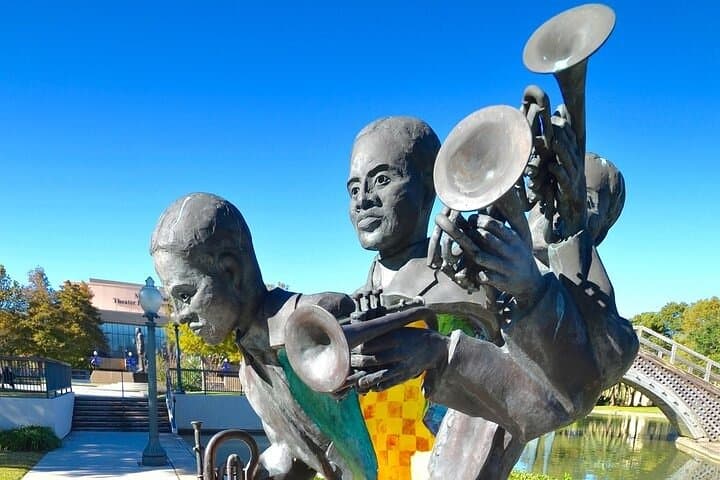
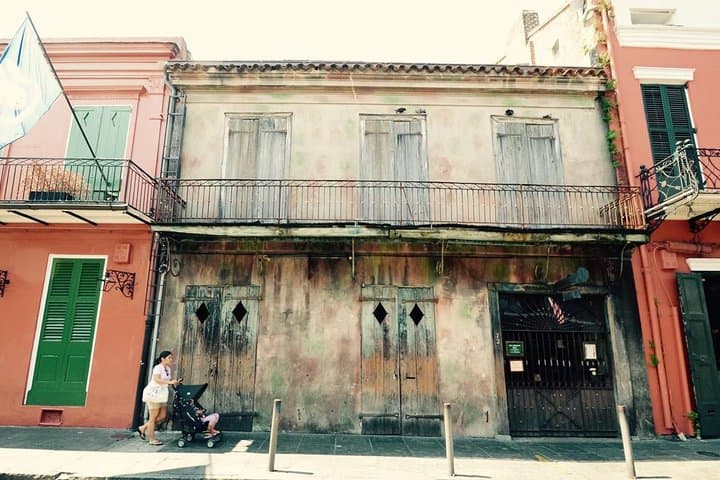
Guides lead groups past Preservation Hall’s weathered façade into stories of early jazz, then down the Tango Belt to St. Louis Cemetery No.1 where the Musicians’ Tomb marks a living lineage. From the cemetery the route traces Storyville’s lost blocks—where Buddy Bolden and Jelly Roll Morton once played in rooms that no longer stand—and finishes in Louis Armstrong Park and Congo Square, where African rhythms met American soil and grafted a national sound.
Geology here is subtle: the city rises on former river marshes, layered with reclaimed soil and a mood shaped by the Mississippi’s proximity. Culturally, expect an oral history—family names, parlor tales, and the civic memory of recording studios like J&M that created the New Orleans sound.
Practically, this is a two-hour, easy-paced urban walk across mostly flat pavement with occasional uneven gravestones and narrow sidewalks. Wear sturdy shoes, carry water, and bring ID if you plan to enter gated cemetery plots. The tour is suitable for most fitness levels and moves in small groups—listen closely; much of the value is in the guide’s anecdotes and the street musicians you’ll meet.
Plan for sun or sudden rain, tip street performers, and allow extra time after the tour to explore Basin Street or catch live music at a nearby club. This is a walking primer on how place, people, and sound make a city sing.
easy.
2 hours.
Suitable for most fitness levels; requires standing and walking on flat to uneven city surfaces for about two hours.
This walking tour describes Preservation Hall and its history but does not include entry to ticketed performances unless specified; check the operator for add-on options.
Visits to St. Louis Cemetery No.1 are included where permitted; gated areas may require ID and adherence to cemetery rules enforced by the city or private caretakers.
Yes—this tour is family-friendly, but young children should be supervised in cemetery areas and during street crossings.
Groups are kept relatively small (around 15 participants) to preserve the quality of narration and allow street-level interaction.
Congo Square served as a rare public space where enslaved and free Black residents gathered to preserve West African music and ritual; Storyville was the early 20th-century district where jazz legends developed their craft.
Tours emphasize respectful behavior in cemeteries and historic sites; support local musicians by tipping and reduce impact by using public transit or walking between stops.
Historic New Orleans Tours operates guided outdoor trips and adventures with an emphasis on safety, stewardship, and memorable experiences.
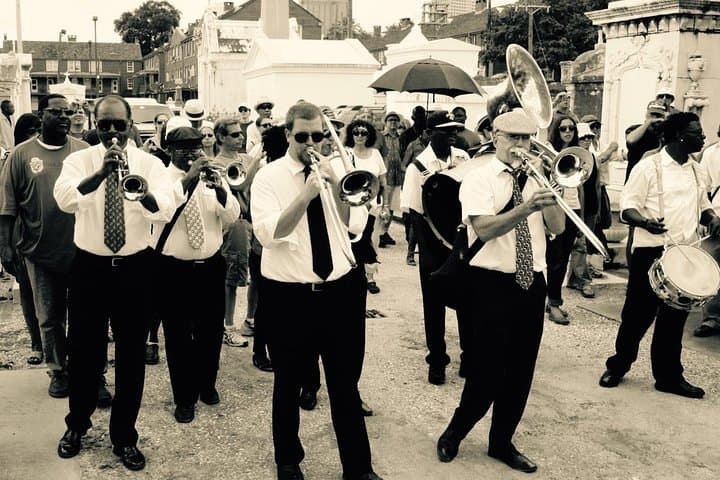

Streetlamps flicker as the brass starts—this walking tour threads the French Quarter to Treme with the low, human pulse of New Orleans music as its map.
Streetlamps flicker as the brass starts—this walking tour threads the French Quarter to Treme with the low, human pulse of New Orleans music as its map.
Guides lead groups past Preservation Hall’s weathered façade into stories of early jazz, then down the Tango Belt to St. Louis Cemetery No.1 where the Musicians’ Tomb marks a living lineage. From the cemetery the route traces Storyville’s lost blocks—where Buddy Bolden and Jelly Roll Morton once played in rooms that no longer stand—and finishes in Louis Armstrong Park and Congo Square, where African rhythms met American soil and grafted a national sound.
Geology here is subtle: the city rises on former river marshes, layered with reclaimed soil and a mood shaped by the Mississippi’s proximity. Culturally, expect an oral history—family names, parlor tales, and the civic memory of recording studios like J&M that created the New Orleans sound.
Practically, this is a two-hour, easy-paced urban walk across mostly flat pavement with occasional uneven gravestones and narrow sidewalks. Wear sturdy shoes, carry water, and bring ID if you plan to enter gated cemetery plots. The tour is suitable for most fitness levels and moves in small groups—listen closely; much of the value is in the guide’s anecdotes and the street musicians you’ll meet.
Plan for sun or sudden rain, tip street performers, and allow extra time after the tour to explore Basin Street or catch live music at a nearby club. This is a walking primer on how place, people, and sound make a city sing.