THE ADVENTURE COLLECTIVE® · Independent discovery and booking for outdoor travel

Walk the French Quarter’s oldest blocks as guides recount historically documented crimes—unsolved deaths, kidnappings, and notorious murders—sourced from police records and archives. This two-hour, wheelchair-accessible tour is graphic and recommended for ages 13+. Read on for practical tips and what to expect.
Walk the French Quarter’s oldest blocks as guides recount historically documented crimes—unsolved deaths, kidnappings, and notorious murders—sourced from police records and archives. This two-hour, wheelchair-accessible tour is graphic and recommended for ages 13+. Read on for practical tips and what to expect.
You step off St. Peter Street and the French Quarter seems to lean in—cobblestones aligning like pages in an old case file, streetlamps throwing long shadows into narrow alleys. For two hours, a guide moves you through the Quarter’s oldest blocks, pausing at doorways, plaques, and intersections while recounting crimes documented in police reports, newspaper archives, and court records.
Verified experiences and guided adventures in the surrounding area.
Operated by Haunted History Tours · New Orleans, Louisiana
You step off St. Peter Street and the French Quarter seems to lean in—cobblestones aligning like pages in an old case file, streetlamps throwing long shadows into narrow alleys. For two hours, a guide moves you through the Quarter’s oldest blocks, pausing at doorways, plaques, and intersections while recounting crimes documented in police reports, newspaper archives, and court records.
The French Quarter (Vieux Carré) is one of the oldest continuously settled neighborhoods in the U.S., its streets shaped by colonial trade, maritime law, and waves of migrants. Buildings of brick and iron recall 18th- and 19th-century architecture; the neighborhood’s layout and proximity to the Mississippi River made it a hub for commerce and, inevitably, crime. This tour focuses on the gritty legal history—unsolved deaths, kidnappings, and headline murders—presented without sanitizing details.
Culturally the walk sits between touristic spectacle and serious archival research: guides reference court dockets and period newspapers to anchor stories in fact. The route is flat and fully accessible; expect urban terrain—sidewalks, occasional cobbles, and narrow passages.
Practical guidance: the two-hour route departs from 725 St. Peter St (between Bourbon and Royal), is suitable for most fitness levels, and is wheelchair accessible. Wear supportive shoes, bring water, and plan for sun or rain—New Orleans weather can turn quickly. The tour contains graphic content and is recommended for ages 13 and up. Arrive early to check in, and carry photo ID for bookings. If you want context after the walk, nearby St. Louis Cathedral and local archives provide deeper historical records.
easy.
2 hours.
Suitable for people in average physical condition able to stand and walk for two hours; wheelchair accessible routes are available.
The tour runs about two hours and departs from 725 St. Peter St (between Bourbon and Royal) in the French Quarter.
Because the material is graphic and unedited, the tour is recommended for ages 13 and up and is not suggested for young children.
Yes—surfaces and transportation options are wheelchair accessible; contact the operator ahead of time to confirm accommodations.
Standard tours are conducted in English; check the booking page for any special-language departures.
The French Quarter dates to the early 1700s as New Orleans’ original settlement; its streets reflect colonial, French, Spanish, and American legal and social histories that produced many of the stories told on this route.
High pedestrian traffic and historic buildings require respectful behavior—avoid touching fragile facades and carry out trash; minimizing single-use plastics helps protect the urban environment.
Haunted History Tours operates guided outdoor trips and adventures with an emphasis on safety, stewardship, and memorable experiences.
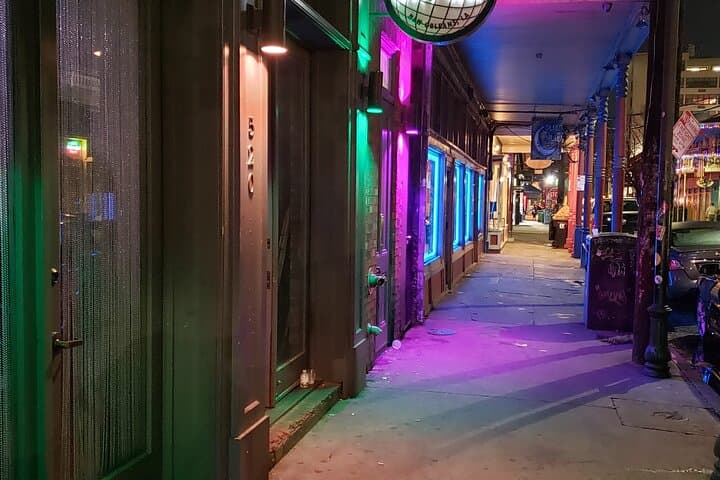
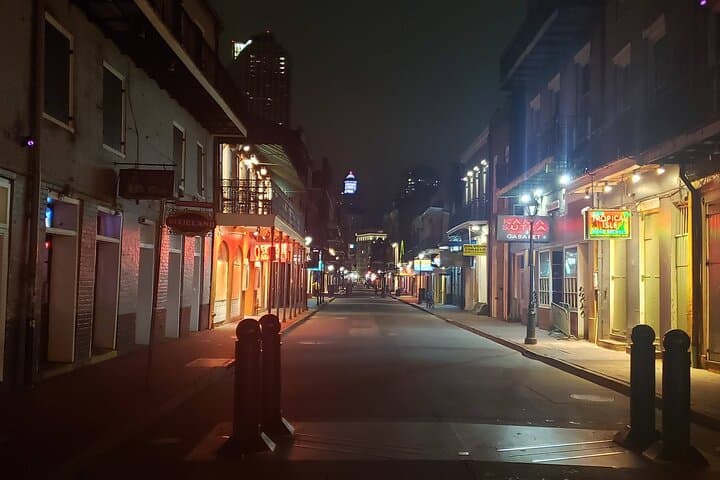


You step off St. Peter Street and the French Quarter seems to lean in—cobblestones aligning like pages in an old case file, streetlamps throwing long shadows into narrow alleys. For two hours, a guide moves you through the Quarter’s oldest blocks, pausing at doorways, plaques, and intersections while recounting crimes documented in police reports, newspaper archives, and court records.
You step off St. Peter Street and the French Quarter seems to lean in—cobblestones aligning like pages in an old case file, streetlamps throwing long shadows into narrow alleys. For two hours, a guide moves you through the Quarter’s oldest blocks, pausing at doorways, plaques, and intersections while recounting crimes documented in police reports, newspaper archives, and court records.
The French Quarter (Vieux Carré) is one of the oldest continuously settled neighborhoods in the U.S., its streets shaped by colonial trade, maritime law, and waves of migrants. Buildings of brick and iron recall 18th- and 19th-century architecture; the neighborhood’s layout and proximity to the Mississippi River made it a hub for commerce and, inevitably, crime. This tour focuses on the gritty legal history—unsolved deaths, kidnappings, and headline murders—presented without sanitizing details.
Culturally the walk sits between touristic spectacle and serious archival research: guides reference court dockets and period newspapers to anchor stories in fact. The route is flat and fully accessible; expect urban terrain—sidewalks, occasional cobbles, and narrow passages.
Practical guidance: the two-hour route departs from 725 St. Peter St (between Bourbon and Royal), is suitable for most fitness levels, and is wheelchair accessible. Wear supportive shoes, bring water, and plan for sun or rain—New Orleans weather can turn quickly. The tour contains graphic content and is recommended for ages 13 and up. Arrive early to check in, and carry photo ID for bookings. If you want context after the walk, nearby St. Louis Cathedral and local archives provide deeper historical records.