THE ADVENTURE COLLECTIVE® · Independent discovery and booking for outdoor travel

Skip the taxi line and step into a monitored, chauffeur-driven transfer from Louis Armstrong New Orleans Airport. This private airport-to-hotel service combines flight tracking, curbside pickup, and local knowledge—ideal for travelers who want a calm, efficient first impression of the city.
Skip the taxi line and step into a monitored, chauffeur-driven transfer from Louis Armstrong New Orleans Airport. This private airport-to-hotel service combines flight tracking, curbside pickup, and local knowledge—ideal for travelers who want a calm, efficient first impression of the city.
You step out into New Orleans air at Door #3, luggage wheels punctuating the curbside rhythm. A professionally uniformed chauffeur waits—phone in hand, eyes on the arrivals board—so you can step into an air-conditioned car and watch the Crescent City scroll past: spare oaks, ironwork balconies, and the Mississippi pushing its slow current like an old companion daring you to explore.
Verified experiences and guided adventures in the surrounding area.
Operated by Burton Transit · New Orleans, Louisiana
You step out into New Orleans air at Door #3, luggage wheels punctuating the curbside rhythm. A professionally uniformed chauffeur waits—phone in hand, eyes on the arrivals board—so you can step into an air-conditioned car and watch the Crescent City scroll past: spare oaks, ironwork balconies, and the Mississippi pushing its slow current like an old companion daring you to explore.
The route from Louis Armstrong New Orleans International Airport threads through a city forged by trade and tide. French, Spanish and Creole influence show in the city’s streets and names; low-lying geology—part of the Mississippi Delta—explains levees, canals and the constant battle with subsidence and storm surge. This transfer is local infrastructure meeting hospitality: it’s practical travel made elegant, a common first impression for jazz-bound travelers and cruise passengers alike.
Expect a calm, quick ride where the driver handles navigation, flight tracking and curbside logistics. Practical notes: confirm Door #3 pick-up and keep your phone on for SMS or a call; domestic flights include a 45-minute wait window, internationals 60 minutes. Bring a charged phone for coordination, verify vehicle capacity for oversized luggage, and request infant seats ahead of time if needed.
Timing matters—rush hour can add 20–40 minutes to downtown runs, and summer humidity makes an air-conditioned car welcome. Tip for service (15–20% customary) rewards attentiveness. Use the transfer as your first local briefing: ask drivers about quieter neighborhoods, best late-night eateries, or where to catch live music—their route knowledge often points you to the city’s real-time character.
easy.
30 minutes (typical city run).
Suitable for all physical levels; requires minimal mobility for curbside loading.
For domestic flights the standard wait is up to 45 minutes from arrival; international flights allow up to 60 minutes—drivers monitor flights but notify if limits are exceeded.
Same-day changes may be accepted when possible, but last-minute re-routing is subject to availability and may not be guaranteed.
Yes—specialized infant seats are available but should be requested during booking so the chauffeur can prepare accordingly.
Tipping is not included; a 15–20% tip is customary for attentive service and assistance with luggage.
New Orleans grew as a port city at the mouth of the Mississippi, shaped by French and Spanish colonial rule and a long history of trade and cultural exchange.
Coastal erosion and subsidence are major issues; support local providers who minimize idling, reduce emissions, and respect floodplain restoration efforts.
Burton Transit operates guided outdoor trips and adventures with an emphasis on safety, stewardship, and memorable experiences.
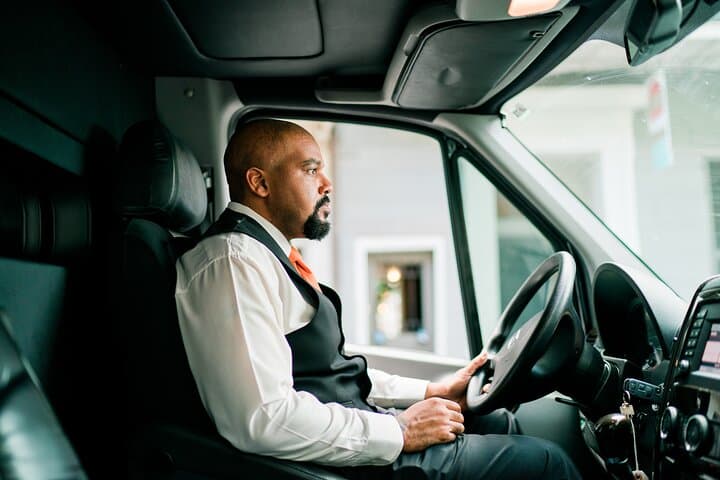



You step out into New Orleans air at Door #3, luggage wheels punctuating the curbside rhythm. A professionally uniformed chauffeur waits—phone in hand, eyes on the arrivals board—so you can step into an air-conditioned car and watch the Crescent City scroll past: spare oaks, ironwork balconies, and the Mississippi pushing its slow current like an old companion daring you to explore.
You step out into New Orleans air at Door #3, luggage wheels punctuating the curbside rhythm. A professionally uniformed chauffeur waits—phone in hand, eyes on the arrivals board—so you can step into an air-conditioned car and watch the Crescent City scroll past: spare oaks, ironwork balconies, and the Mississippi pushing its slow current like an old companion daring you to explore.
The route from Louis Armstrong New Orleans International Airport threads through a city forged by trade and tide. French, Spanish and Creole influence show in the city’s streets and names; low-lying geology—part of the Mississippi Delta—explains levees, canals and the constant battle with subsidence and storm surge. This transfer is local infrastructure meeting hospitality: it’s practical travel made elegant, a common first impression for jazz-bound travelers and cruise passengers alike.
Expect a calm, quick ride where the driver handles navigation, flight tracking and curbside logistics. Practical notes: confirm Door #3 pick-up and keep your phone on for SMS or a call; domestic flights include a 45-minute wait window, internationals 60 minutes. Bring a charged phone for coordination, verify vehicle capacity for oversized luggage, and request infant seats ahead of time if needed.
Timing matters—rush hour can add 20–40 minutes to downtown runs, and summer humidity makes an air-conditioned car welcome. Tip for service (15–20% customary) rewards attentiveness. Use the transfer as your first local briefing: ask drivers about quieter neighborhoods, best late-night eateries, or where to catch live music—their route knowledge often points you to the city’s real-time character.