THE ADVENTURE COLLECTIVE® · Independent discovery and booking for outdoor travel

Hear the New England Symphonic Ensemble in Carnegie Hall’s Stern Auditorium—two hours of classical repertoire in one of the world’s premier concert spaces. Read on for history, arrival tips, and what to expect before the first note.
Hear the New England Symphonic Ensemble in Carnegie Hall’s Stern Auditorium—two hours of classical repertoire in one of the world’s premier concert spaces. Read on for history, arrival tips, and what to expect before the first note.
Step into Stern Auditorium and the city quiets: velvet seats inhale the chatter, a timbered stage waits and the lights narrow into a single focus. The New England Symphonic Ensemble fills Carnegie Hall with works from Mozart to Mendelssohn—strings that lean forward, brass that punctures the hush, and a reverent room that returns every phrase with crystalline clarity.
Verified experiences and guided adventures in the surrounding area.
Operated by MidAmerica Productions · New York, NY
Step into Stern Auditorium and the city quiets: velvet seats inhale the chatter, a timbered stage waits and the lights narrow into a single focus. The New England Symphonic Ensemble fills Carnegie Hall with works from Mozart to Mendelssohn—strings that lean forward, brass that punctures the hush, and a reverent room that returns every phrase with crystalline clarity.
Carnegie Hall opened in 1891, funded by Andrew Carnegie and designed by William Burnet Tuthill. The hall sits atop Manhattan schist; the solid bedrock beneath Midtown contributes to the stable acoustics that generations of performers have relied on. Culturally, a Carnegie program is part concert, part civic ritual: attending connects you to a long thread of music history in New York.
Expect a two-hour program with an intermission, formal but relaxed audience behavior, and strict no-photography rules while music is playing. The venue is wheelchair accessible and has a box office at Seventh Avenue and 57th Street for will-call; plan to pick up physical tickets with ID as noted by the presenter. Public transit is the most practical arrival option—subway stations are within a short walk—and nearby cafes offer a quiet pre-concert meal.
Practical tips: arrive 30–45 minutes early to pass security and find your seats, dress in smart-casual layers (the hall can be cool), and leave large bags at your hotel or check coat/complimentary storage where available. For sound-sensitive listeners, consider discreet ear protection; for everyone, let the room do the listening: Carnegie rewards attention.
easy.
2 hours.
No special fitness required; mobility for stairs may be needed for certain seats
This performance runs about two hours and typically includes one intermission.
Yes—will-call is available at Carnegie Hall’s box office at Seventh Avenue and 57th Street; bring ID.
Yes, the venue and Stern Auditorium have wheelchair-accessible seating and routes; contact the box office for specific accommodations.
No—photography and recording are generally prohibited while music is playing; you can use phones during intermission.
Carnegie Hall opened in 1891, financed by Andrew Carnegie and designed by William Burnet Tuthill; it has hosted generations of major performers and orchestras.
Carnegie Hall runs preservation and archival efforts to maintain historic architecture and acoustics; using public transit to attend reduces event-related emissions.
MidAmerica Productions operates guided outdoor trips and adventures with an emphasis on safety, stewardship, and memorable experiences.
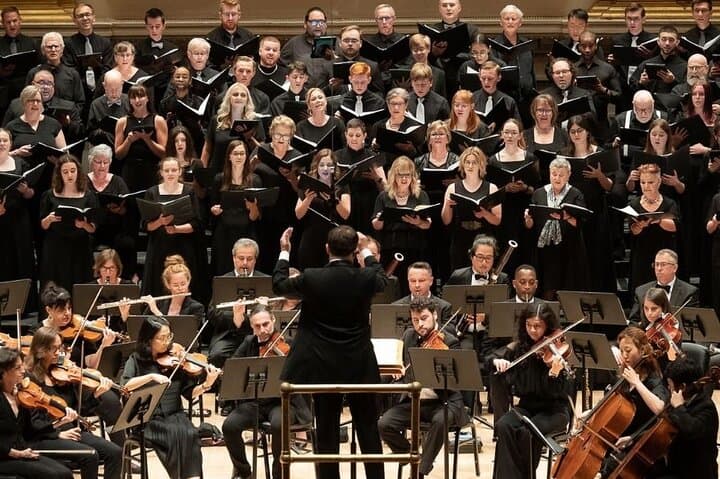
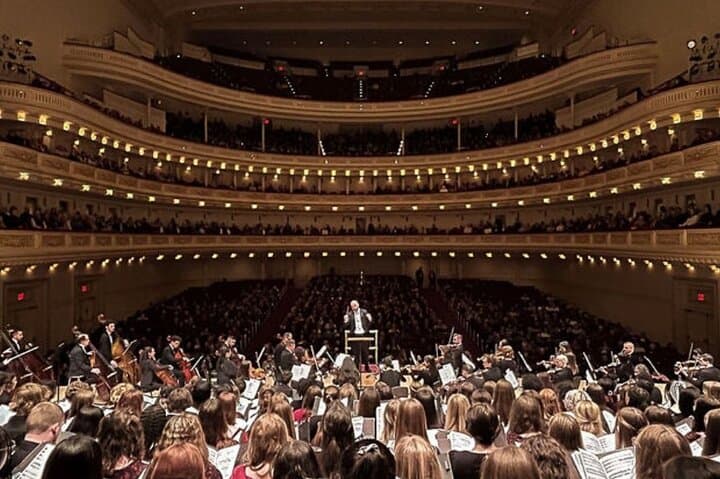
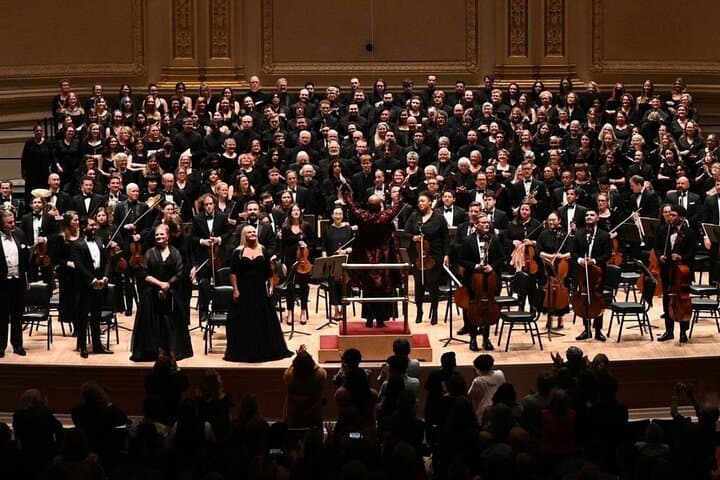
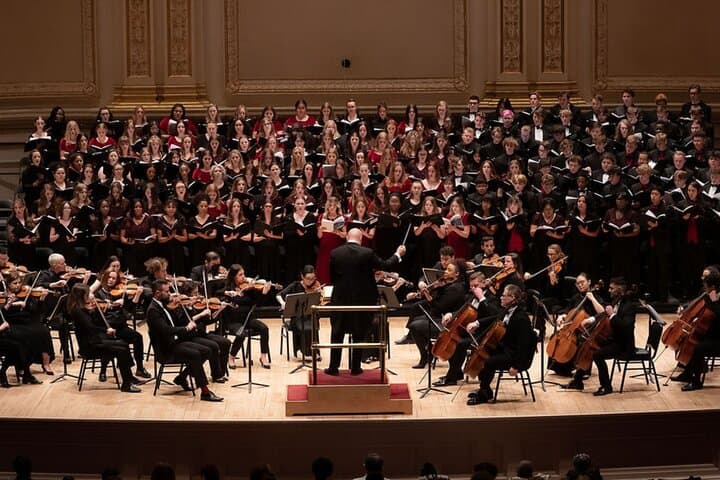
Step into Stern Auditorium and the city quiets: velvet seats inhale the chatter, a timbered stage waits and the lights narrow into a single focus. The New England Symphonic Ensemble fills Carnegie Hall with works from Mozart to Mendelssohn—strings that lean forward, brass that punctures the hush, and a reverent room that returns every phrase with crystalline clarity.
Step into Stern Auditorium and the city quiets: velvet seats inhale the chatter, a timbered stage waits and the lights narrow into a single focus. The New England Symphonic Ensemble fills Carnegie Hall with works from Mozart to Mendelssohn—strings that lean forward, brass that punctures the hush, and a reverent room that returns every phrase with crystalline clarity.
Carnegie Hall opened in 1891, funded by Andrew Carnegie and designed by William Burnet Tuthill. The hall sits atop Manhattan schist; the solid bedrock beneath Midtown contributes to the stable acoustics that generations of performers have relied on. Culturally, a Carnegie program is part concert, part civic ritual: attending connects you to a long thread of music history in New York.
Expect a two-hour program with an intermission, formal but relaxed audience behavior, and strict no-photography rules while music is playing. The venue is wheelchair accessible and has a box office at Seventh Avenue and 57th Street for will-call; plan to pick up physical tickets with ID as noted by the presenter. Public transit is the most practical arrival option—subway stations are within a short walk—and nearby cafes offer a quiet pre-concert meal.
Practical tips: arrive 30–45 minutes early to pass security and find your seats, dress in smart-casual layers (the hall can be cool), and leave large bags at your hotel or check coat/complimentary storage where available. For sound-sensitive listeners, consider discreet ear protection; for everyone, let the room do the listening: Carnegie rewards attention.