THE ADVENTURE COLLECTIVE® · Independent discovery and booking for outdoor travel

Leave Munich for a full‑day private tour that pairs Neuschwanstein’s fairytale turrets with the vertiginous Highline 179 and the Olympic heritage of Garmisch. Expect sweeping views, timed castle entry, and a mix of easy walks and exposed bridge crossings.
Leave Munich for a full‑day private tour that pairs Neuschwanstein’s fairytale turrets with the vertiginous Highline 179 and the Olympic heritage of Garmisch. Expect sweeping views, timed castle entry, and a mix of easy walks and exposed bridge crossings.
You step out of Munich's city pulse and watch the Bavarian foothills grow taller, forests thickening like curtains around the road. A shuttle deposits you at Hohenschwangau; mist lifts from the valley and Mary’s Bridge frames Neuschwanstein’s limestone towers like a scene still in progress.
Verified experiences and guided adventures in the surrounding area.
Operated by A-Travel · Schwangau, Bavaria
You step out of Munich's city pulse and watch the Bavarian foothills grow taller, forests thickening like curtains around the road. A shuttle deposits you at Hohenschwangau; mist lifts from the valley and Mary’s Bridge frames Neuschwanstein’s limestone towers like a scene still in progress.
Neuschwanstein was built by King Ludwig II between 1869 and 1886 as an idealized medieval retreat; its rooms reflect 19th‑century romanticism more than defensive architecture. Geologically the castle perches on dolomite and limestone outcrops carved by ancient glaciers, which left steep ravines and the dramatic drop beneath Marienbrücke. Cross-border Highline 179, by contrast, is modern engineering — a suspension footbridge that spans a broad gorge near Reutte, Austria, 114 meters above the valley floor, where wind and light rewrite the view by the minute.
Garmisch-Partenkirchen adds Olympic history and painted Bavarian facades to the day: Ludwigstrasse’s frescoed houses and the Olympic Stadium offer a quieter, civic counterpoint to the romantic castle and adrenaline of the bridge.
Practical guidance: allow a full day (9–10 hours) including transfers and timed entry to the castle. Expect several short steep walks — Mary’s Bridge approach is cobbled and can be slippery when wet; the Highline involves exposed walking and wind. Dress in layers, bring sturdy shoes, photo ID and your castle ticket on your phone. Winter can close the bridge; summer brings crowds—early departures minimize both. Hydrate between stops and budget time for the carriage return or a 30–40 minute uphill walk from Hohenschwangau. With skip‑the‑line access and a private guide, the route trades logistics for uninterrupted views and history.
moderate.
9–10 hours.
Moderate fitness recommended: able to walk on uneven ground, climb short steep sections, and stand during guided tours.
The tour runs about 9–10 hours from Munich and includes hotel pickup/drop‑off, private guide/driver, skip‑the‑line Neuschwanstein tickets, and Highline 179 admission.
The bridge is secure but exposed; visitors with severe acrophobia may find it uncomfortable—consider skipping or checking comfort levels beforehand.
The tour runs year‑round but Marienbrücke may close in winter for safety and the Highline can be affected by snow and wind; dress accordingly and confirm conditions.
Infants and small children may use strollers for some sections, but some approaches include stairs and uneven surfaces; infant seats are available in the vehicle.
Neuschwanstein was commissioned by King Ludwig II as a private retreat and artistic homage to medieval legend; Garmisch and Partenkirchen were combined in 1935 to host the 1936 Winter Olympics.
Stick to marked paths—fragile alpine vegetation and karst limestone outcrops recover slowly; local operators encourage staying on trails and carrying out waste.
A-Travel operates guided outdoor trips and adventures with an emphasis on safety, stewardship, and memorable experiences.
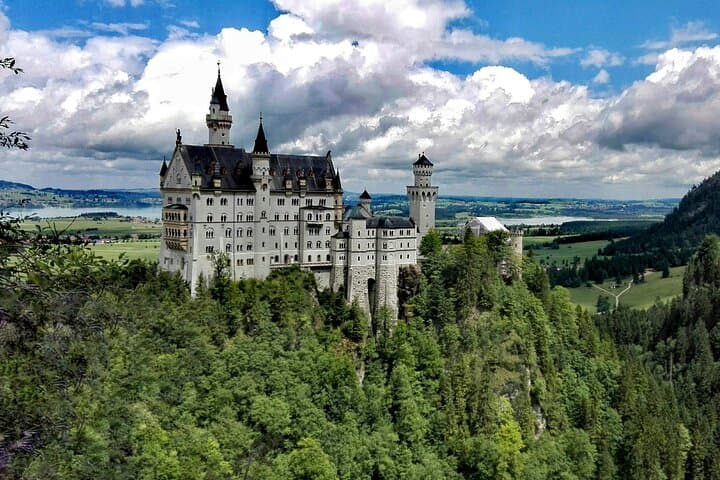
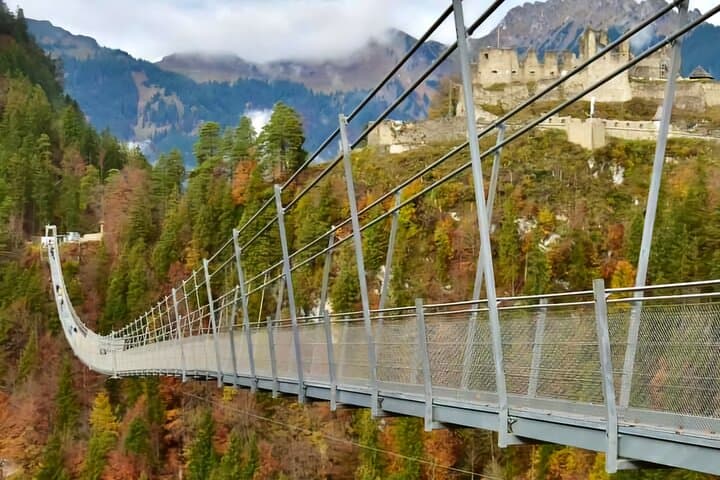
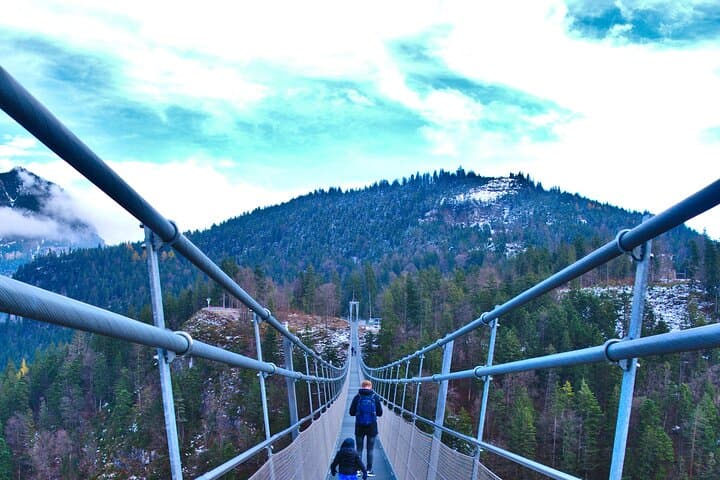
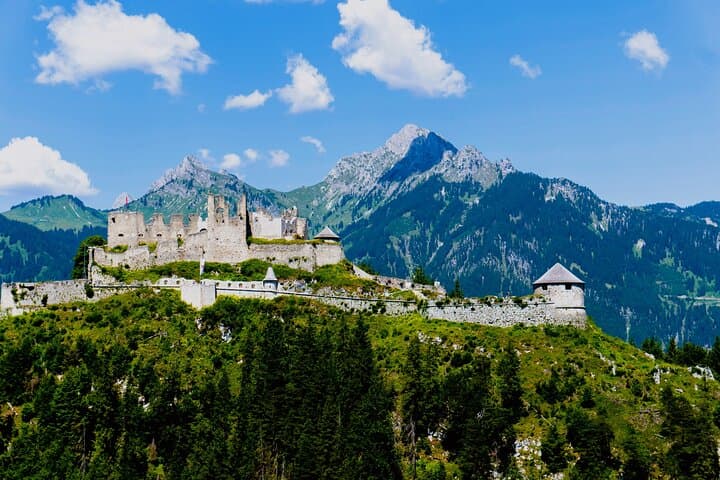
You step out of Munich's city pulse and watch the Bavarian foothills grow taller, forests thickening like curtains around the road. A shuttle deposits you at Hohenschwangau; mist lifts from the valley and Mary’s Bridge frames Neuschwanstein’s limestone towers like a scene still in progress.
You step out of Munich's city pulse and watch the Bavarian foothills grow taller, forests thickening like curtains around the road. A shuttle deposits you at Hohenschwangau; mist lifts from the valley and Mary’s Bridge frames Neuschwanstein’s limestone towers like a scene still in progress.
Neuschwanstein was built by King Ludwig II between 1869 and 1886 as an idealized medieval retreat; its rooms reflect 19th‑century romanticism more than defensive architecture. Geologically the castle perches on dolomite and limestone outcrops carved by ancient glaciers, which left steep ravines and the dramatic drop beneath Marienbrücke. Cross-border Highline 179, by contrast, is modern engineering — a suspension footbridge that spans a broad gorge near Reutte, Austria, 114 meters above the valley floor, where wind and light rewrite the view by the minute.
Garmisch-Partenkirchen adds Olympic history and painted Bavarian facades to the day: Ludwigstrasse’s frescoed houses and the Olympic Stadium offer a quieter, civic counterpoint to the romantic castle and adrenaline of the bridge.
Practical guidance: allow a full day (9–10 hours) including transfers and timed entry to the castle. Expect several short steep walks — Mary’s Bridge approach is cobbled and can be slippery when wet; the Highline involves exposed walking and wind. Dress in layers, bring sturdy shoes, photo ID and your castle ticket on your phone. Winter can close the bridge; summer brings crowds—early departures minimize both. Hydrate between stops and budget time for the carriage return or a 30–40 minute uphill walk from Hohenschwangau. With skip‑the‑line access and a private guide, the route trades logistics for uninterrupted views and history.