THE ADVENTURE COLLECTIVE® · Independent discovery and booking for outdoor travel

Descend historic German doors into 1,600 meters of salt galleries at Nemocón and walk through a working archive of Colombia’s salt industry. This half-day private tour blends geology, fossils and local culture with practical guidance for an accessible subterranean adventure.
Descend historic German doors into 1,600 meters of salt galleries at Nemocón and walk through a working archive of Colombia’s salt industry. This half-day private tour blends geology, fossils and local culture with practical guidance for an accessible subterranean adventure.
A narrow crack of daylight shuts behind you as heavy German doors — originals from 1817 — close and the mine inhales. Inside, pools mirror the low, warm lighting and galleries curve like the ribs of the earth; the air tastes faintly of salt and history. The Nemocón Salt Mines are less a cavern than a series of worked rooms that keep the beating economic and cultural heart of the Sabana de Bogotá visible beneath farmland.
Verified experiences and guided adventures in the surrounding area.
Operated by Paraíso Travels · Nemocón, Cundinamarca
A narrow crack of daylight shuts behind you as heavy German doors — originals from 1817 — close and the mine inhales. Inside, pools mirror the low, warm lighting and galleries curve like the ribs of the earth; the air tastes faintly of salt and history. The Nemocón Salt Mines are less a cavern than a series of worked rooms that keep the beating economic and cultural heart of the Sabana de Bogotá visible beneath farmland.
Geologically the site is part of the Eastern Cordillera’s Miocene evaporite deposits: thick salt beds shaped by ancient inland seas and later carved by miners. Visitors trace footsteps from pre-Colombian extraction through colonial shafts to 19th-century engineering, with fossils (mastodons, megatheriums, ammonites) telling the older story of the basin. Culturally, salt shaped local settlement and trade; Nemocón’s town square and colorful façades reflect that civic lineage.
Practically, expect a 5–6 hour round-trip from Bogotá with private transport, bilingual guides, and 1,600 meters of passages to explore. Highlights include the underground chapel, a salt waterfall, the wishing pool and occasional film-set structures. The descent and ascent include stone steps and uneven surfaces — accessible for most but not stroller-friendly. Carry water, a light jacket (temperatures drop indoors), and a headlamp if you prefer extra light. Photography is allowed but avoid touching salt formations: oils can damage crystalline surfaces. Time your visit to avoid Bogotá peak traffic and pair the mine visit with a short walk through Nemocón’s main square to sample local arepas and learn from a small municipal museum. This is an easy, richly layered half-day that pairs geology and social history with tangible, walkable exploration.
easy.
5–6 hours.
Light fitness; able to walk stairs and uneven ground for up to two hours underground
The full experience runs about 5–6 hours door to door from Bogotá, including transport and a guided 2–3 hour exploration of the mine and town walk.
No; the mine has stairs, narrow passages and uneven surfaces that make it unsuitable for standard wheelchairs.
Yes—children are permitted but must be supervised; infants should sit on an adult’s lap during transport as required by the tour.
Yes; photography is generally allowed, but avoid using flash near delicate salt formations and do not touch the walls or pools.
Salt extraction at Nemocón dates back to pre-Colombian times and expanded under colonial and republican eras, shaping local economy and settlement patterns.
Visitors are asked not to touch formations and to stay on paths to protect fragile salt crystals; local programs promote low-impact tourism and museum-supported education.
Paraíso Travels operates guided outdoor trips and adventures with an emphasis on safety, stewardship, and memorable experiences.
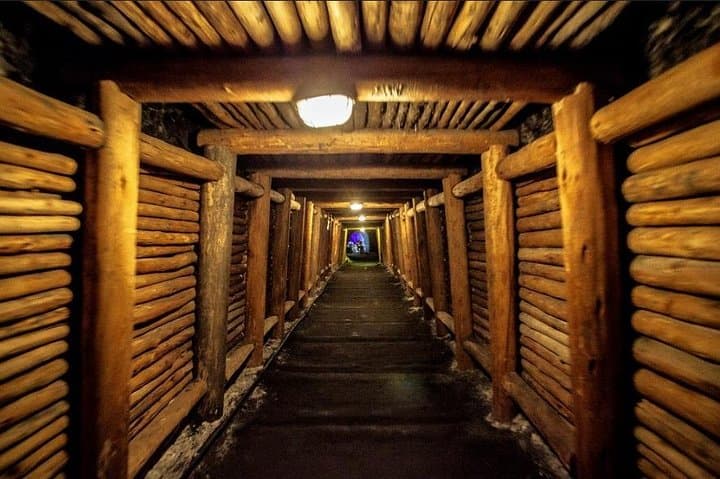

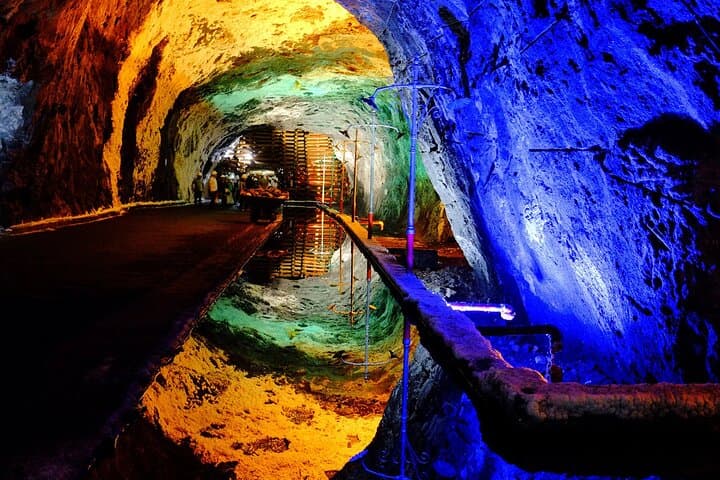
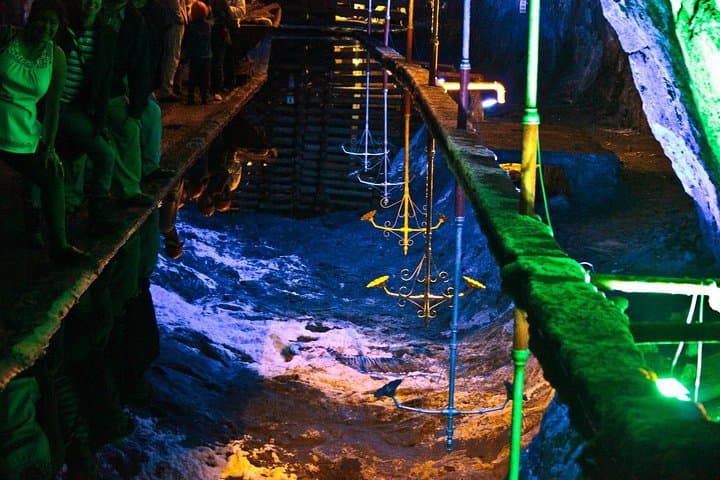
A narrow crack of daylight shuts behind you as heavy German doors — originals from 1817 — close and the mine inhales. Inside, pools mirror the low, warm lighting and galleries curve like the ribs of the earth; the air tastes faintly of salt and history. The Nemocón Salt Mines are less a cavern than a series of worked rooms that keep the beating economic and cultural heart of the Sabana de Bogotá visible beneath farmland.
A narrow crack of daylight shuts behind you as heavy German doors — originals from 1817 — close and the mine inhales. Inside, pools mirror the low, warm lighting and galleries curve like the ribs of the earth; the air tastes faintly of salt and history. The Nemocón Salt Mines are less a cavern than a series of worked rooms that keep the beating economic and cultural heart of the Sabana de Bogotá visible beneath farmland.
Geologically the site is part of the Eastern Cordillera’s Miocene evaporite deposits: thick salt beds shaped by ancient inland seas and later carved by miners. Visitors trace footsteps from pre-Colombian extraction through colonial shafts to 19th-century engineering, with fossils (mastodons, megatheriums, ammonites) telling the older story of the basin. Culturally, salt shaped local settlement and trade; Nemocón’s town square and colorful façades reflect that civic lineage.
Practically, expect a 5–6 hour round-trip from Bogotá with private transport, bilingual guides, and 1,600 meters of passages to explore. Highlights include the underground chapel, a salt waterfall, the wishing pool and occasional film-set structures. The descent and ascent include stone steps and uneven surfaces — accessible for most but not stroller-friendly. Carry water, a light jacket (temperatures drop indoors), and a headlamp if you prefer extra light. Photography is allowed but avoid touching salt formations: oils can damage crystalline surfaces. Time your visit to avoid Bogotá peak traffic and pair the mine visit with a short walk through Nemocón’s main square to sample local arepas and learn from a small municipal museum. This is an easy, richly layered half-day that pairs geology and social history with tangible, walkable exploration.