THE ADVENTURE COLLECTIVE® · Independent discovery and booking for outdoor travel

Leave Lima before sunrise for a long, private transfer into the Peruvian desert and a small-plane flight that reveals the iconic Nazca Lines. Optional stops at ground viewpoints and Huacachina Oasis make this a full-day cultural and scenic excursion.
Leave Lima before sunrise for a long, private transfer into the Peruvian desert and a small-plane flight that reveals the iconic Nazca Lines. Optional stops at ground viewpoints and Huacachina Oasis make this a full-day cultural and scenic excursion.
Before dawn the van slips out of Lima, headlights cutting across the coastal plain as the ocean’s horizon blanches. Hours later the desert opens — a flat, bone-dry canvas where long, carved lines begin to make sense only when the plane lifts and the ground rearranges into extraordinary forms. The flight over the Nazca Lines is abrupt and theatrical: figures reveal themselves — a hummingbird, a monkey, geometric trapezoids — while the wind pushes the small aircraft gently, the pilot translating the land’s drawings into a story.
Verified experiences and guided adventures in the surrounding area.
Operated by GET2PERU.COM · Nazca, Ica
Before dawn the van slips out of Lima, headlights cutting across the coastal plain as the ocean’s horizon blanches. Hours later the desert opens — a flat, bone-dry canvas where long, carved lines begin to make sense only when the plane lifts and the ground rearranges into extraordinary forms. The flight over the Nazca Lines is abrupt and theatrical: figures reveal themselves — a hummingbird, a monkey, geometric trapezoids — while the wind pushes the small aircraft gently, the pilot translating the land’s drawings into a story.
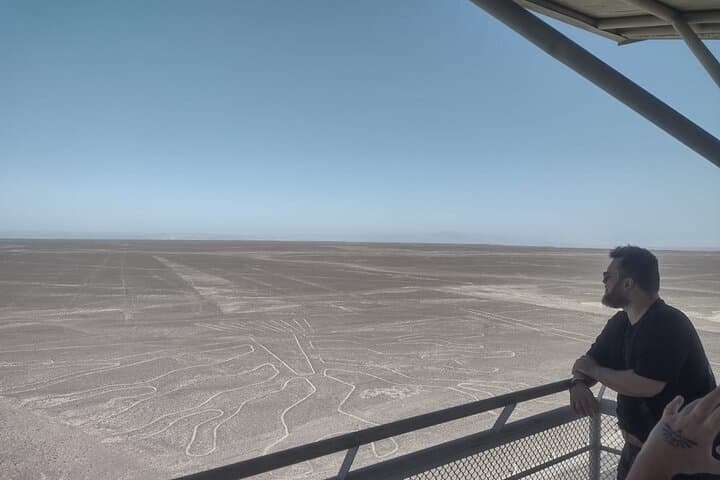
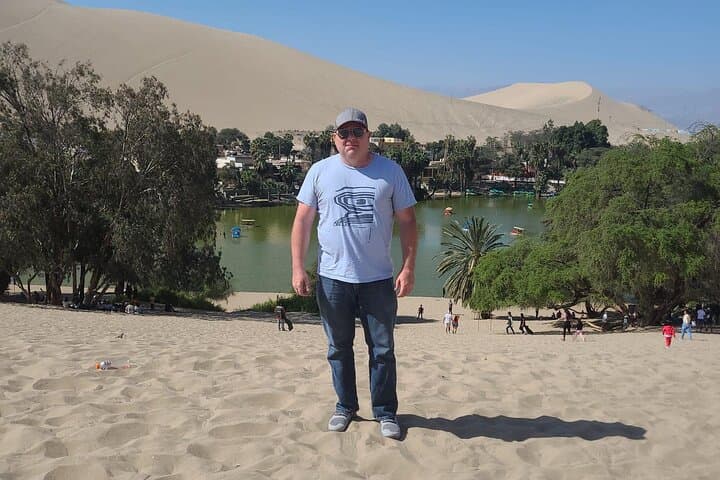
The lines were etched by the Nazca culture over 2,000–2,500 years ago, on an expanse of mineral-rich sediment and wind-packed sand that preserves etched grooves with unusual longevity. Nearby Palpa rooftops and metal observation towers offer alternative ground viewpoints; Huacachina’s palm-ringed lagoon, often appended to this itinerary, tells a different human story — an oasis of colonial-era legend and modern sandboarding energy.
Practically: expect a very long day — departures can leave between 3–7 a.m. for a full 15–18 hour round-trip from Lima. Flights over the figures last roughly 30–45 minutes, and the program usually includes two metal towers and a handful of hill viewpoints if you opt out of flying. Bring official ID or passport (required for boarding), motion-sickness medication if you’re prone to airsickness, sun protection, and a small camera with a strap. Weather cancellations are possible; the dry climate is your ally for visibility but morning humidity can still blur edges. This is a trip that pairs archaeological awe with straightforward logistics — long roads, clear skies, and a guide to stitch the story together.
moderate.
15–18 hours.
Suitable for anyone who can tolerate long vehicle transfers and short plane flights; minimal hiking required.
Flights over the Nazca Lines typically last about 30–45 minutes, giving time to pass over the major figures multiple times for optimal viewing.
Yes — the tour often includes stops at metal observation towers and nearby hills that offer closer, limited views and photographic angles without flying.
Because small fixed-wing aircraft are used, some passengers experience motion sickness; bringing medication or choosing a seat near the wings can help.
Operators usually cancel for safety in poor visibility or strong winds; this program’s policy allows refunds or rescheduling when flights are canceled for weather.
The Nazca people carved the lines between roughly 200 BCE and 600 CE, creating geoglyphs whose purpose is debated — from astronomical markers to ritual pathways.
The arid climate preserves the lines, but foot traffic, road dust, and development pose threats; viewing from aircraft or designated towers minimizes impact and helps protect fragile surfaces.
GET2PERU.COM operates guided outdoor trips and adventures with an emphasis on safety, stewardship, and memorable experiences.
Before dawn the van slips out of Lima, headlights cutting across the coastal plain as the ocean’s horizon blanches. Hours later the desert opens — a flat, bone-dry canvas where long, carved lines begin to make sense only when the plane lifts and the ground rearranges into extraordinary forms. The flight over the Nazca Lines is abrupt and theatrical: figures reveal themselves — a hummingbird, a monkey, geometric trapezoids — while the wind pushes the small aircraft gently, the pilot translating the land’s drawings into a story.
Before dawn the van slips out of Lima, headlights cutting across the coastal plain as the ocean’s horizon blanches. Hours later the desert opens — a flat, bone-dry canvas where long, carved lines begin to make sense only when the plane lifts and the ground rearranges into extraordinary forms. The flight over the Nazca Lines is abrupt and theatrical: figures reveal themselves — a hummingbird, a monkey, geometric trapezoids — while the wind pushes the small aircraft gently, the pilot translating the land’s drawings into a story.
The lines were etched by the Nazca culture over 2,000–2,500 years ago, on an expanse of mineral-rich sediment and wind-packed sand that preserves etched grooves with unusual longevity. Nearby Palpa rooftops and metal observation towers offer alternative ground viewpoints; Huacachina’s palm-ringed lagoon, often appended to this itinerary, tells a different human story — an oasis of colonial-era legend and modern sandboarding energy.
Practically: expect a very long day — departures can leave between 3–7 a.m. for a full 15–18 hour round-trip from Lima. Flights over the figures last roughly 30–45 minutes, and the program usually includes two metal towers and a handful of hill viewpoints if you opt out of flying. Bring official ID or passport (required for boarding), motion-sickness medication if you’re prone to airsickness, sun protection, and a small camera with a strap. Weather cancellations are possible; the dry climate is your ally for visibility but morning humidity can still blur edges. This is a trip that pairs archaeological awe with straightforward logistics — long roads, clear skies, and a guide to stitch the story together.