THE ADVENTURE COLLECTIVE® · Independent discovery and booking for outdoor travel

Save hours of driving and see the Nazca Lines from the viewpoint that makes sense—the air. This full-day from Pisco pairs a 1h40m overflight of key geoglyphs with dune buggy and sandboarding at Huacachina for a tight mix of archaeology and adrenaline.
Save hours of driving and see the Nazca Lines from the viewpoint that makes sense—the air. This full-day from Pisco pairs a 1h40m overflight of key geoglyphs with dune buggy and sandboarding at Huacachina for a tight mix of archaeology and adrenaline.
You lift from the coastal runway at Pisco and the desert opens beneath you — a burnt-gold plain cut by the precise, enigmatic lines of an ancient people. The pilot banks gently, giving the plane a circling arc that frames the Hummingbird, Monkey and Condor so they read like drawings on a map rather than the puzzle pieces they are from the ground.
Verified experiences and guided adventures in the surrounding area.
Operated by Peruvian Worldview Tours · Ica, Ica
You lift from the coastal runway at Pisco and the desert opens beneath you — a burnt-gold plain cut by the precise, enigmatic lines of an ancient people. The pilot banks gently, giving the plane a circling arc that frames the Hummingbird, Monkey and Condor so they read like drawings on a map rather than the puzzle pieces they are from the ground.
The Nazca Lines were made by the Nazca culture between roughly 200 BCE and 700 CE; their scale only makes sense from the air, which is why this overflight remains the most direct way to interpret them. Geologically the region is a hyper-arid coastal plain, wind-polished and strewn with pebbles whose dark varnish creates the contrast that reveals the geoglyphs. After the flight the day shifts from sky to sand: Huacachina’s dunes rise like waves, offering a different kind of momentum — buggy thrusts, loose sand underfoot and the immediate rush of sandboarding down steep faces.
Practical guidance: flights last about 1h 40m overhead, and the full tour runs roughly 10–12 hours with hotel pickup in Ica or Paracas. Book morning departures when thermals are lighter and visibility is best; bring motion-sickness prevention if you’re sensitive to small aircraft banking. For the dunes, closed-toe shoes and a simple leg covering save you from hot sand. Expect a mix of shared flight seating and a private buggy in Huacachina; lunches are on your own in Ica.
This combo is efficient travel — it compresses a long drive into an aerial hour and pairs archaeology with high-adrenaline desert play, so come prepared to switch from quiet observation to full-throttle sand runs in a single day.
easy.
10–12 hours.
Suitable for most fitness levels; involves short walks, boarding a small plane, and standing during dune activities.
The aerial portion is about 1 hour 40 minutes total; the pilot will circle each major geoglyph to allow good viewing and photos.
Visibility depends on weather and flight routing; pilots aim to pass over the main geoglyphs (Hummingbird, Monkey, Spider, Condor), but exact viewing can vary.
Yes — the dune buggy portion is guided and sandboarding can be done standing or kneeling; guides give basic instruction and safety gear.
Flights can be canceled for weather or low availability; most operators refund the tour or offer rebooking options—confirm the provider’s cancellation terms when you book.
The Nazca Lines were created by the Nazca culture during the first millennium CE; the designs are large-scale ground markings cleared of darker surface stones to expose lighter soil beneath.
The geoglyphs are fragile and vulnerable to vehicle tracks and uncontrolled tourism; stick to flight-viewing and marked sites, and support operators who follow local conservation rules.
Peruvian Worldview Tours operates guided outdoor trips and adventures with an emphasis on safety, stewardship, and memorable experiences.
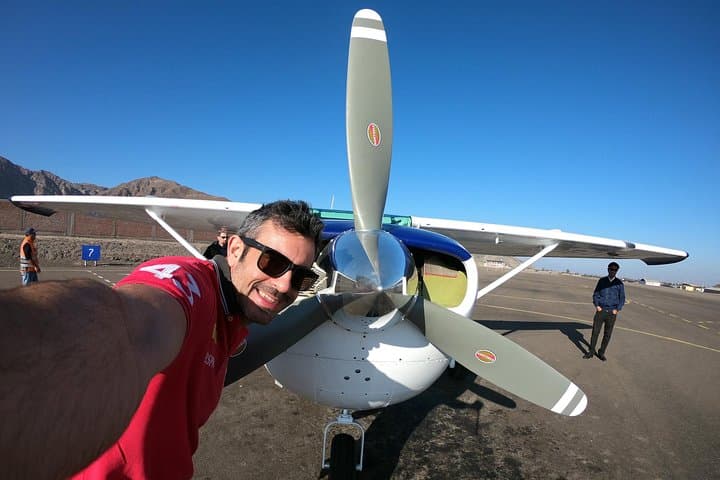
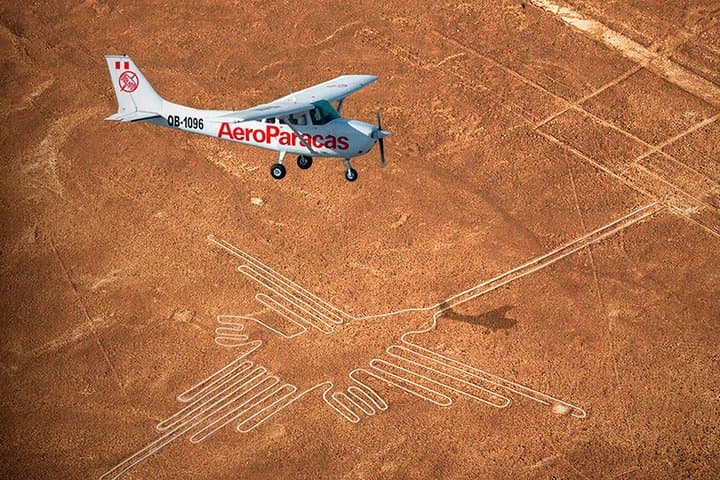
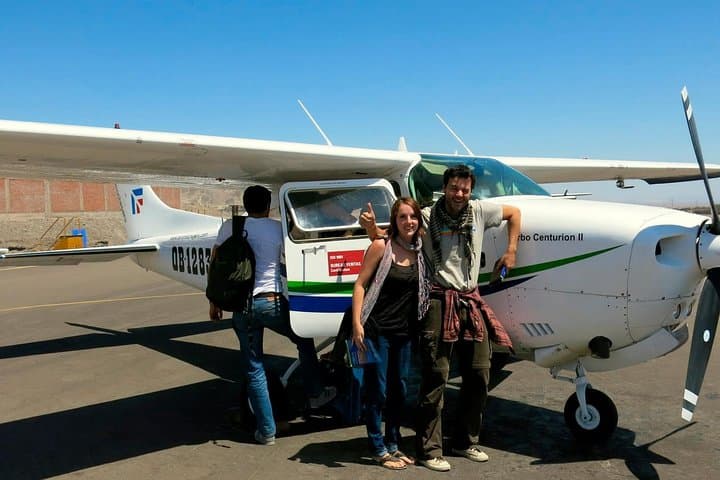
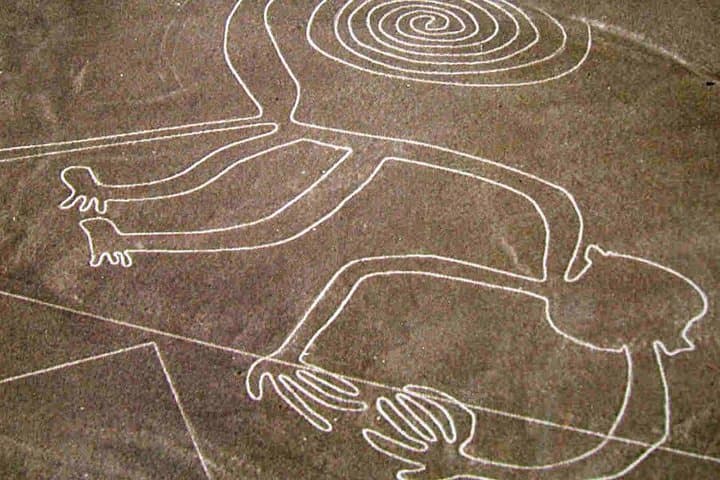
You lift from the coastal runway at Pisco and the desert opens beneath you — a burnt-gold plain cut by the precise, enigmatic lines of an ancient people. The pilot banks gently, giving the plane a circling arc that frames the Hummingbird, Monkey and Condor so they read like drawings on a map rather than the puzzle pieces they are from the ground.
You lift from the coastal runway at Pisco and the desert opens beneath you — a burnt-gold plain cut by the precise, enigmatic lines of an ancient people. The pilot banks gently, giving the plane a circling arc that frames the Hummingbird, Monkey and Condor so they read like drawings on a map rather than the puzzle pieces they are from the ground.
The Nazca Lines were made by the Nazca culture between roughly 200 BCE and 700 CE; their scale only makes sense from the air, which is why this overflight remains the most direct way to interpret them. Geologically the region is a hyper-arid coastal plain, wind-polished and strewn with pebbles whose dark varnish creates the contrast that reveals the geoglyphs. After the flight the day shifts from sky to sand: Huacachina’s dunes rise like waves, offering a different kind of momentum — buggy thrusts, loose sand underfoot and the immediate rush of sandboarding down steep faces.
Practical guidance: flights last about 1h 40m overhead, and the full tour runs roughly 10–12 hours with hotel pickup in Ica or Paracas. Book morning departures when thermals are lighter and visibility is best; bring motion-sickness prevention if you’re sensitive to small aircraft banking. For the dunes, closed-toe shoes and a simple leg covering save you from hot sand. Expect a mix of shared flight seating and a private buggy in Huacachina; lunches are on your own in Ica.
This combo is efficient travel — it compresses a long drive into an aerial hour and pairs archaeology with high-adrenaline desert play, so come prepared to switch from quiet observation to full-throttle sand runs in a single day.