THE ADVENTURE COLLECTIVE® · Independent discovery and booking for outdoor travel

A long day that begins in Lima and takes you over the enigmatic Nazca Lines before finishing at the dune-ringed Huacachina Oasis. Expect a 35-minute Cessna flyover, early pickup, and optional dune activities.
A long day that begins in Lima and takes you over the enigmatic Nazca Lines before finishing at the dune-ringed Huacachina Oasis. Expect a 35-minute Cessna flyover, early pickup, and optional dune activities.
You leave Lima before dawn, the Pacific a thin gray ribbon to your left, and the coastal highway unfurls under headlights as the city recedes. By mid-morning the landscape has changed: a flat, ochre desert split by faint tracks and the improbably precise lines that become visible from the ramp of a small Cessna.
Verified experiences and guided adventures in the surrounding area.
Operated by AMERICAN TRAVEL PERU · Nazca, Ica
You leave Lima before dawn, the Pacific a thin gray ribbon to your left, and the coastal highway unfurls under headlights as the city recedes. By mid-morning the landscape has changed: a flat, ochre desert split by faint tracks and the improbably precise lines that become visible from the ramp of a small Cessna.
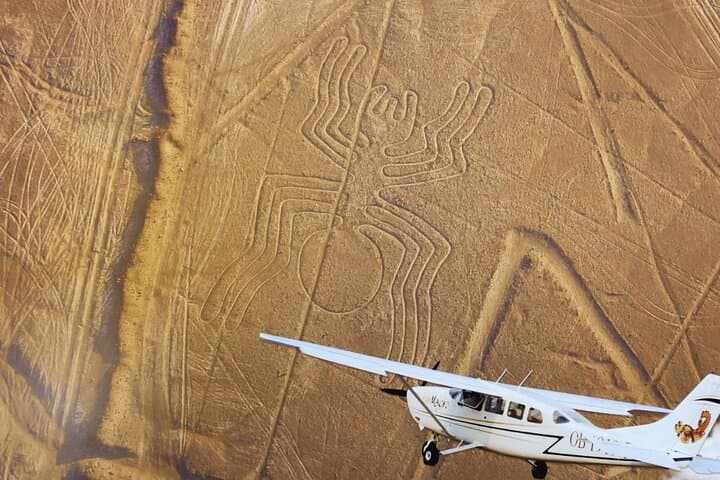
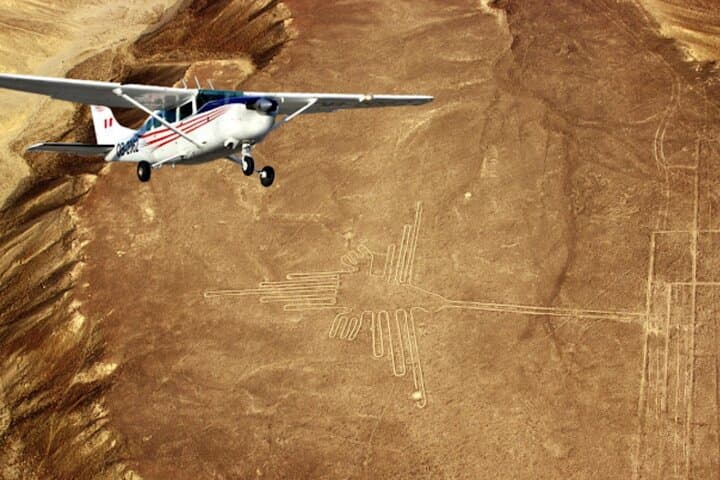
At María Reiche Aerodrome you watch a short film about the Nazca culture—engineers of earth and stone—and then climb into a 6-seat plane with panoramic windows. The aircraft banks low over the hummingbird, monkey and condor, and the pilot points out line intersections and scale; the geoglyphs feel deliberate and stubborn against the desert’s sweep.
Geology here is stark: wind-polished gravel plains overlying older marine sediments. The Nazca people removed dark surface stones to expose lighter earth, producing figures best appreciated from the air. Cultural theories range from astronomical maps to ritual pathways; the truth remains debated and part of the mystery.
Later the tour stops at the green mirror of Huacachina, where towering dunes dare you to try a buggy run or sandboard. The day is long—roughly 16–18 hours door-to-door—so practical planning matters: prepare for early pickup, motion-sickness on small aircraft, strong coastal sun and long stretches of coach travel. Bring layered clothing for a cool desert morning and warmer afternoons, secure a window seat for photos, and respect protected areas by following the guide’s instructions. This is a compact day of aviation, archaeology and desert play—packed, memorable, and logistical in equal measure.
moderate.
16–18 hours.
Suitable for travelers in average fitness who can tolerate long vehicle transfers and a short low-altitude flight; minimal walking required.
The tour includes a 30–35 minute flyover in a small Cessna 207A, during which pilots make low passes over the primary geoglyphs.
No special fitness is required—the day involves long vehicle travel and short, easy walks at stops; travelers should tolerate long days and vehicle motion.
Most geoglyphs are best appreciated from the air; a few viewpoints and towers offer partial views from the ground but not full-scale perspectives.
This tour’s policy advises against participation for pregnant travelers; check with the operator and your healthcare provider before booking.
The Nazca Lines were created by the Nazca culture between roughly 200 BCE and 600 CE by removing dark surface stones to reveal lighter soil, producing large-scale geoglyphs whose purpose is still debated.
The geoglyphs are vulnerable to erosion, illegal road construction and human damage; stick to authorized flights and follow guides’ instructions to minimize impact.
AMERICAN TRAVEL PERU operates guided outdoor trips and adventures with an emphasis on safety, stewardship, and memorable experiences.
You leave Lima before dawn, the Pacific a thin gray ribbon to your left, and the coastal highway unfurls under headlights as the city recedes. By mid-morning the landscape has changed: a flat, ochre desert split by faint tracks and the improbably precise lines that become visible from the ramp of a small Cessna.
You leave Lima before dawn, the Pacific a thin gray ribbon to your left, and the coastal highway unfurls under headlights as the city recedes. By mid-morning the landscape has changed: a flat, ochre desert split by faint tracks and the improbably precise lines that become visible from the ramp of a small Cessna.
At María Reiche Aerodrome you watch a short film about the Nazca culture—engineers of earth and stone—and then climb into a 6-seat plane with panoramic windows. The aircraft banks low over the hummingbird, monkey and condor, and the pilot points out line intersections and scale; the geoglyphs feel deliberate and stubborn against the desert’s sweep.
Geology here is stark: wind-polished gravel plains overlying older marine sediments. The Nazca people removed dark surface stones to expose lighter earth, producing figures best appreciated from the air. Cultural theories range from astronomical maps to ritual pathways; the truth remains debated and part of the mystery.
Later the tour stops at the green mirror of Huacachina, where towering dunes dare you to try a buggy run or sandboard. The day is long—roughly 16–18 hours door-to-door—so practical planning matters: prepare for early pickup, motion-sickness on small aircraft, strong coastal sun and long stretches of coach travel. Bring layered clothing for a cool desert morning and warmer afternoons, secure a window seat for photos, and respect protected areas by following the guide’s instructions. This is a compact day of aviation, archaeology and desert play—packed, memorable, and logistical in equal measure.