THE ADVENTURE COLLECTIVE® · Independent discovery and booking for outdoor travel

Ride a dune buggy across the Nazca desert to visit Cahuachi’s plazas and the Chauchilla cemetery. This four-hour loop blends bumpy, hands-on exploration with clear insights into pre-Inca engineering and funerary practice.
Ride a dune buggy across the Nazca desert to visit Cahuachi’s plazas and the Chauchilla cemetery. This four-hour loop blends bumpy, hands-on exploration with clear insights into pre-Inca engineering and funerary practice.
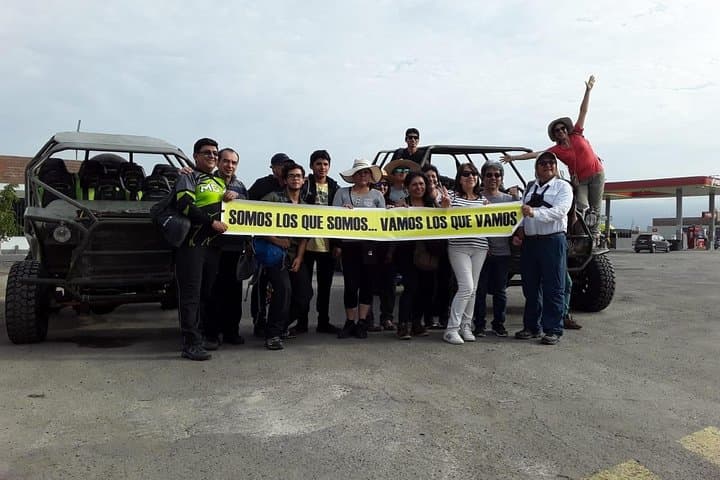
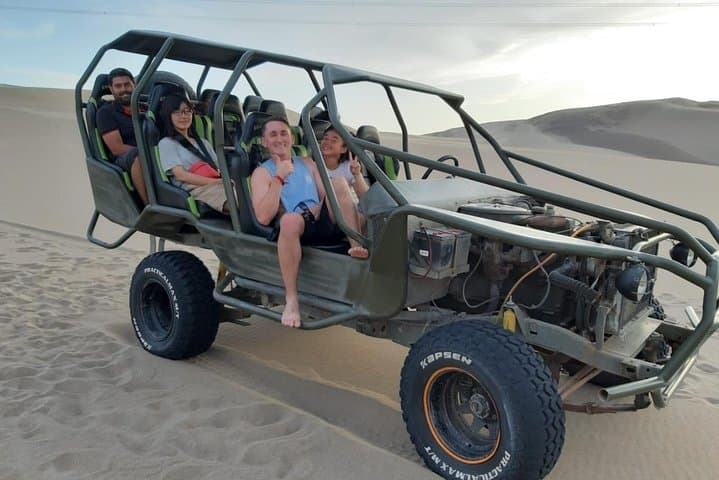
A coarse wind lifts dust into the low sun as a battered dune buggy slides across the pale desert outside Nazca. Riders lean into turns, the engine rattling like a heartbeat, while scrub and broken pottery tell a slow story underfoot. The landscape itself feels active—sand and stone nudging visitors toward terraces, mounds and the straight scars of ancient hydraulic work.
Verified experiences and guided adventures in the surrounding area.
Operated by EdunasTours Peru · Nazca, Ica
A coarse wind lifts dust into the low sun as a battered dune buggy slides across the pale desert outside Nazca. Riders lean into turns, the engine rattling like a heartbeat, while scrub and broken pottery tell a slow story underfoot. The landscape itself feels active—sand and stone nudging visitors toward terraces, mounds and the straight scars of ancient hydraulic work.
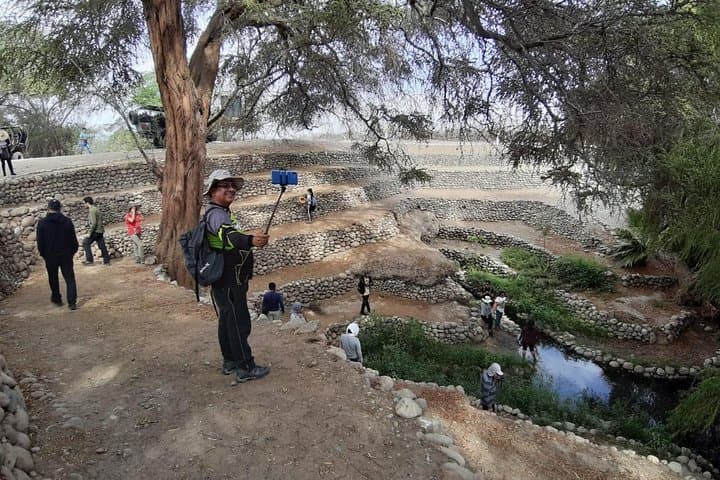
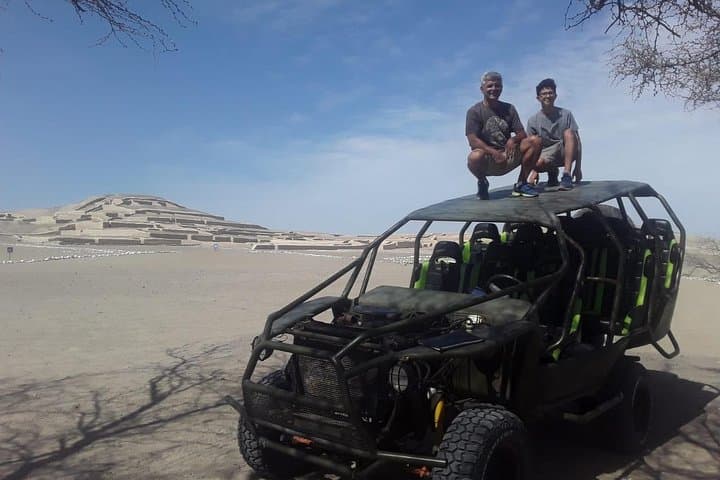
This route threads through classic Nasca-country archaeology: the ceremonial plazas of Cahuachi, evidence of pre-Inca irrigation ingenuity, and the open, eerie rows of graves at Chauchilla where mummified remains and pottery expose funerary practice. Geologically the basin is wind-swept alluvium atop older volcanic and marine sediments; the thin soil and arid climate preserved lines of human activity and fragile organic remains.
Culturally, guides connect the dots between the Nasca people’s desert engineering and their cosmology visible in lineings and plazas. Local townspeople still repair pottery and run small workshops in Nazca city, offering a close-up of living craft traditions.
Practical guidance: the four-hour buggy loop includes stops for short walks and photo viewpoints; expect bumpy terrain and occasional short hikes of 10–20 minutes. Bring sun protection, a brimmed hat and a refillable water bottle; closed-toe shoes handle sandy tracks best. Motion sensitivity is common—sit toward the center of the buggy and ride steadily. Respect archaeological sites: stay on marked paths, do not touch exposed textiles or bones, and follow your accredited guide’s instructions. Morning light is best for photos; late afternoons cool but can fill with dust. This is a short, tactile way to experience the human imprint on the Peruvian desert—hands-on, slightly rugged, and historically rich.
easy.
4 hours.
Suitable for most fitness levels; participants should be able to walk short distances (10–20 minutes) on uneven ground.
The listed duration is four hours including guided stops at archaeological sites and photo viewpoints.
Children can join but infants must sit on laps; the tour provider advises against pregnant travelers due to bumpy conditions.
The tour includes transportation, guided commentary and tickets to the sites noted in the itinerary.
Photography for personal use is allowed at most stops; drone use is typically restricted and requires special permits—check with the operator in advance.
The Nasca culture (c. 100 BCE–800 CE) left large ceremonial centers like Cahuachi and engineered irrigation works that reveal sophisticated water management in an arid valley.
Archaeological sites are fragile; visitors should avoid touching artifacts or excavated remains, follow established paths, and support local conservation efforts by respecting site rules.
EdunasTours Peru operates guided outdoor trips and adventures with an emphasis on safety, stewardship, and memorable experiences.
A coarse wind lifts dust into the low sun as a battered dune buggy slides across the pale desert outside Nazca. Riders lean into turns, the engine rattling like a heartbeat, while scrub and broken pottery tell a slow story underfoot. The landscape itself feels active—sand and stone nudging visitors toward terraces, mounds and the straight scars of ancient hydraulic work.
A coarse wind lifts dust into the low sun as a battered dune buggy slides across the pale desert outside Nazca. Riders lean into turns, the engine rattling like a heartbeat, while scrub and broken pottery tell a slow story underfoot. The landscape itself feels active—sand and stone nudging visitors toward terraces, mounds and the straight scars of ancient hydraulic work.
This route threads through classic Nasca-country archaeology: the ceremonial plazas of Cahuachi, evidence of pre-Inca irrigation ingenuity, and the open, eerie rows of graves at Chauchilla where mummified remains and pottery expose funerary practice. Geologically the basin is wind-swept alluvium atop older volcanic and marine sediments; the thin soil and arid climate preserved lines of human activity and fragile organic remains.
Culturally, guides connect the dots between the Nasca people’s desert engineering and their cosmology visible in lineings and plazas. Local townspeople still repair pottery and run small workshops in Nazca city, offering a close-up of living craft traditions.
Practical guidance: the four-hour buggy loop includes stops for short walks and photo viewpoints; expect bumpy terrain and occasional short hikes of 10–20 minutes. Bring sun protection, a brimmed hat and a refillable water bottle; closed-toe shoes handle sandy tracks best. Motion sensitivity is common—sit toward the center of the buggy and ride steadily. Respect archaeological sites: stay on marked paths, do not touch exposed textiles or bones, and follow your accredited guide’s instructions. Morning light is best for photos; late afternoons cool but can fill with dust. This is a short, tactile way to experience the human imprint on the Peruvian desert—hands-on, slightly rugged, and historically rich.