THE ADVENTURE COLLECTIVE® · Independent discovery and booking for outdoor travel

Spend a few hours navigating Marrakech’s medieval souks with a local guide who opens hidden alleys, introduces artisans, and helps you bargain smartly. This practical shopping tour blends cultural context with stops at workshops and a rooftop tea break overlooking the medina.
Spend a few hours navigating Marrakech’s medieval souks with a local guide who opens hidden alleys, introduces artisans, and helps you bargain smartly. This practical shopping tour blends cultural context with stops at workshops and a rooftop tea break overlooking the medina.
Visitors push through a low wooden gate and the medina opens like a city-sized market: narrow alleys drawing light into shaded corridors, merchants arranging bowls of turmeric and saffron beside leather slippers and handwoven rugs. The tour moves at a brisk, practical pace—two to three hours of tight turns, rooftop viewpoints and focused stops at artisan workshops.
Verified experiences and guided adventures in the surrounding area.
Operated by marrakech-guided · Marrakech, Marrakesh-Safi
Visitors push through a low wooden gate and the medina opens like a city-sized market: narrow alleys drawing light into shaded corridors, merchants arranging bowls of turmeric and saffron beside leather slippers and handwoven rugs. The tour moves at a brisk, practical pace—two to three hours of tight turns, rooftop viewpoints and focused stops at artisan workshops.
Marrakech's souks grew from the city's role as a crossroads of caravan trade; guilds of smiths, weavers and dyers organized by craft, and many of those same neighborhoods still house family-run workshops. The old foundouks (caravanserai) and rooftop terraces give a sense of the medina’s layered history and how trade shaped the city's economy and daily life.
Expect cobbled lanes, occasional stairs and crowded stalls where bargaining is part of the rhythm. The guide in this tour helps translate prices, points out authentic techniques—plasterwork, shoemaking, weaving—and leads you to a rooftop tea stop overlooking the square, an excellent vantage to watch Jemaa el‑Fna spill into evening performance.
Practical guidance: wear sturdy closed-toe shoes for uneven stone and short flights of stairs; carry small denomination Moroccan dirhams and a secure cross-body bag; aim for morning or late afternoon to avoid peak heat and closing-hour crowds. If you plan purchases, ask the guide about customs-friendly packaging for ceramics and textiles. This is a walking-first, culture-rich experience tailored to shoppers who want context as well as bargains.
easy.
2–3 hours.
Suitable for most fitness levels—requires comfortable walking on cobbles and negotiating short staircases.
Yes—haggling is part of the culture; start lower than the asked price and be polite; the guide can advise reasonable ranges.
Most small vendors prefer cash; some larger shops accept cards but plan for cash for better selection and bargaining.
Parts of the medina have narrow, uneven alleys and steps; while some segments accept strollers, it can be awkward—check with the operator if you require full accessibility.
Depends on what you buy—small souvenirs for a few dirhams, quality textiles or ceramics from tens to hundreds; ask the guide for targeted supplier recommendations based on your budget.
The medina of Marrakech dates back to the 11th century and was inscribed as a UNESCO World Heritage site in 1985; its souks grew from caravan trade and guild-organized crafts.
Support local artisans by choosing handmade goods and avoid single-use plastics; respect workshops by asking before photographing craftsmen at work.
marrakech-guided operates guided outdoor trips and adventures with an emphasis on safety, stewardship, and memorable experiences.
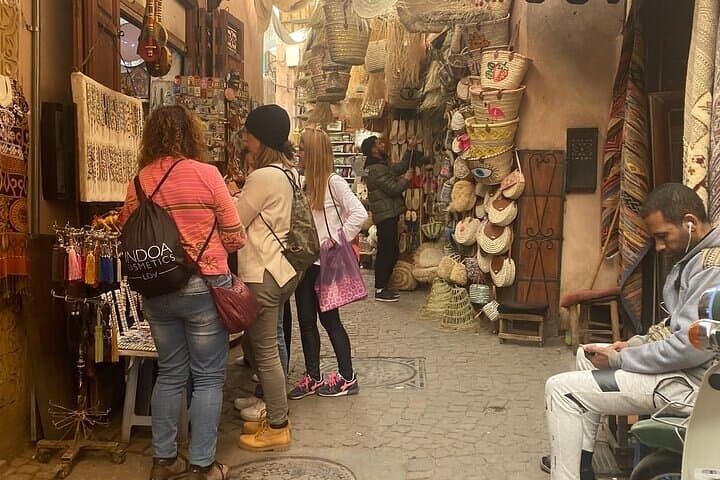
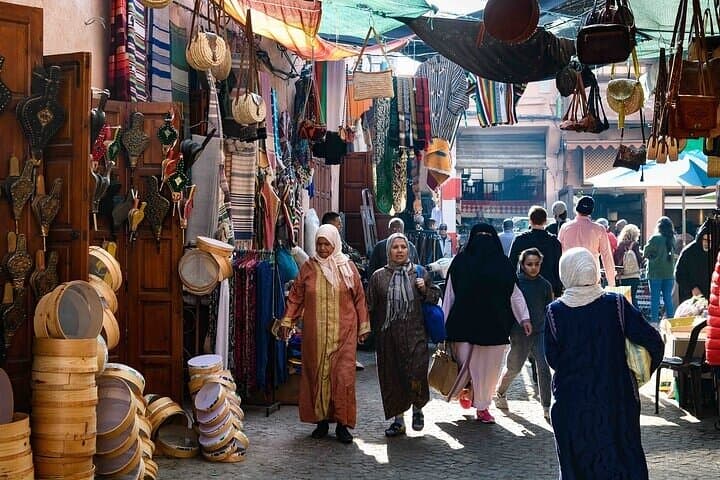
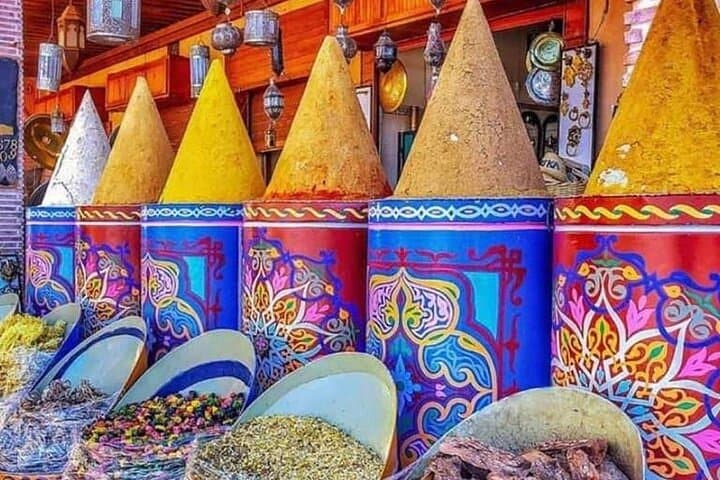
Visitors push through a low wooden gate and the medina opens like a city-sized market: narrow alleys drawing light into shaded corridors, merchants arranging bowls of turmeric and saffron beside leather slippers and handwoven rugs. The tour moves at a brisk, practical pace—two to three hours of tight turns, rooftop viewpoints and focused stops at artisan workshops.
Visitors push through a low wooden gate and the medina opens like a city-sized market: narrow alleys drawing light into shaded corridors, merchants arranging bowls of turmeric and saffron beside leather slippers and handwoven rugs. The tour moves at a brisk, practical pace—two to three hours of tight turns, rooftop viewpoints and focused stops at artisan workshops.
Marrakech's souks grew from the city's role as a crossroads of caravan trade; guilds of smiths, weavers and dyers organized by craft, and many of those same neighborhoods still house family-run workshops. The old foundouks (caravanserai) and rooftop terraces give a sense of the medina’s layered history and how trade shaped the city's economy and daily life.
Expect cobbled lanes, occasional stairs and crowded stalls where bargaining is part of the rhythm. The guide in this tour helps translate prices, points out authentic techniques—plasterwork, shoemaking, weaving—and leads you to a rooftop tea stop overlooking the square, an excellent vantage to watch Jemaa el‑Fna spill into evening performance.
Practical guidance: wear sturdy closed-toe shoes for uneven stone and short flights of stairs; carry small denomination Moroccan dirhams and a secure cross-body bag; aim for morning or late afternoon to avoid peak heat and closing-hour crowds. If you plan purchases, ask the guide about customs-friendly packaging for ceramics and textiles. This is a walking-first, culture-rich experience tailored to shoppers who want context as well as bargains.