THE ADVENTURE COLLECTIVE® · Independent discovery and booking for outdoor travel

Experience the Natural History Museum with a reserved free-entry slot and an English audio guide that points out the must-see fossils, the blue whale skeleton, and hidden research spaces. Pre-booked entry reduces wait time on busy days and helps families navigate the highlights at their own pace.
Experience the Natural History Museum with a reserved free-entry slot and an English audio guide that points out the must-see fossils, the blue whale skeleton, and hidden research spaces. Pre-booked entry reduces wait time on busy days and helps families navigate the highlights at their own pace.
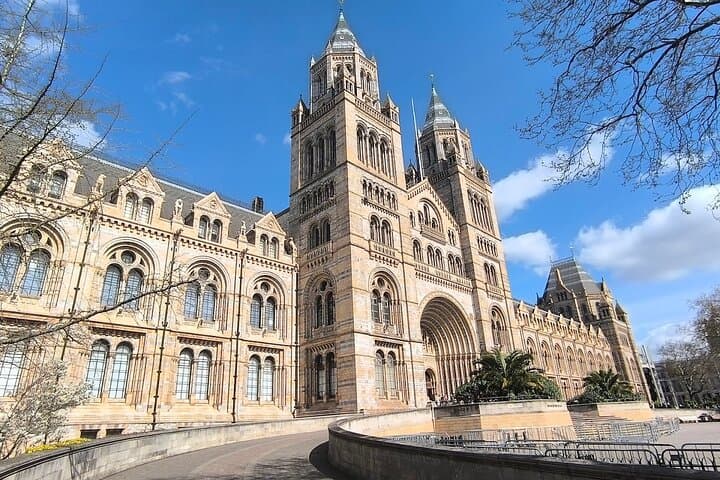
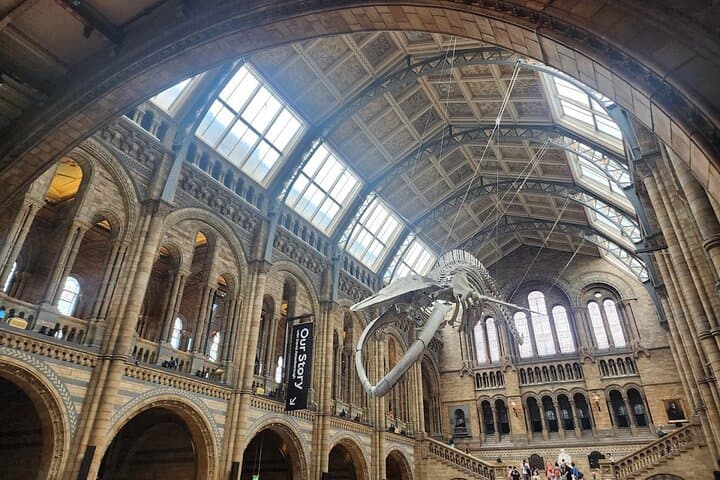
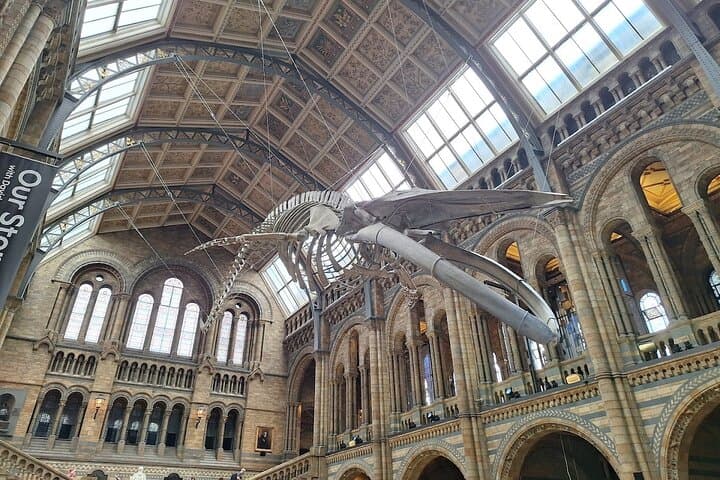
Step through the museum's grand arched entrance and the air changes—echoes of footsteps, the hush around glass cases, and the suspended bones of a blue whale that seem to cut the hall in two.
Verified experiences and guided adventures in the surrounding area.
Operated by Wanderung · London, England
Step through the museum's grand arched entrance and the air changes—echoes of footsteps, the hush around glass cases, and the suspended bones of a blue whale that seem to cut the hall in two.
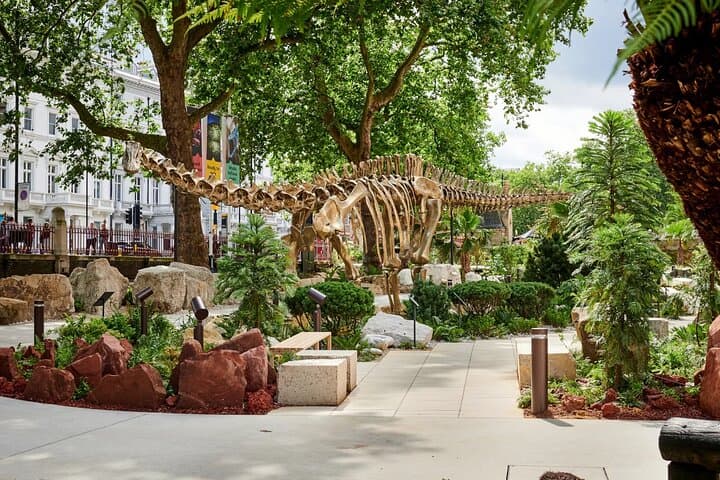
The Natural History Museum on Cromwell Road opened its doors in 1881, a Victorian-era building by Alfred Waterhouse built to house national scientific collections. Its galleries chart deep time: carved stone staircases lead to fossil halls where dinosaur skeletons loom, while Earth galleries reveal the planet's geology and mineral wealth. The museum also doubles as an active research institution and a cultural hub—temporary exhibitions, the Darwin Centre’s research labs, and a seasonal wildlife garden just outside offer quieter corners away from the main crowds.
This reserved-entry package pairs a timed, pre-booked pdf ticket with an English audio guide you play on your own device. It’s designed for families and independent explorers who want a focused route to the highlights—Hintze Hall, the dinosaur galleries, and the minerals collection—without the guesswork.
Timing matters: arrive at your booked slot, show the pdf on your phone or printout to bypass booking issues, and bring headphones and a fully charged device. Allow two to four hours to move at a relaxed pace; mobility access is good but check specific galleries for temporary closures. Keep museum rules in mind—no flash photography in some displays, and leave room in your day for a café break and the museum shop if you want souvenirs.
easy.
2–4 hours.
Suitable for all fitness levels; expect moderate walking and standing on paved floors
Yes — entry to the permanent exhibitions is free; this booking reserves a timed entry slot and provides an English audio guide link.
You’ll get a confirmation immediately and then a separate email or WhatsApp containing the pdf reservation ticket and the audio guide link—show the pdf on arrival.
The audio guide is downloadable—follow the instructions in the email to save it for offline playback; ensure you download before you arrive if you prefer no streaming.
Yes, the museum is stroller- and wheelchair-accessible with lifts and ramps, although some temporary exhibits may have restricted access—check ahead for specifics.
The Natural History Museum opened in 1881 and was designed by Alfred Waterhouse to house the national natural history collections separated from the British Museum.
The museum is active in biodiversity research and citizen science; visitors are asked to respect exhibits and support conservation messaging by not touching specimens.
Wanderung operates guided outdoor trips and adventures with an emphasis on safety, stewardship, and memorable experiences.
Step through the museum's grand arched entrance and the air changes—echoes of footsteps, the hush around glass cases, and the suspended bones of a blue whale that seem to cut the hall in two.
Step through the museum's grand arched entrance and the air changes—echoes of footsteps, the hush around glass cases, and the suspended bones of a blue whale that seem to cut the hall in two.
The Natural History Museum on Cromwell Road opened its doors in 1881, a Victorian-era building by Alfred Waterhouse built to house national scientific collections. Its galleries chart deep time: carved stone staircases lead to fossil halls where dinosaur skeletons loom, while Earth galleries reveal the planet's geology and mineral wealth. The museum also doubles as an active research institution and a cultural hub—temporary exhibitions, the Darwin Centre’s research labs, and a seasonal wildlife garden just outside offer quieter corners away from the main crowds.
This reserved-entry package pairs a timed, pre-booked pdf ticket with an English audio guide you play on your own device. It’s designed for families and independent explorers who want a focused route to the highlights—Hintze Hall, the dinosaur galleries, and the minerals collection—without the guesswork.
Timing matters: arrive at your booked slot, show the pdf on your phone or printout to bypass booking issues, and bring headphones and a fully charged device. Allow two to four hours to move at a relaxed pace; mobility access is good but check specific galleries for temporary closures. Keep museum rules in mind—no flash photography in some displays, and leave room in your day for a café break and the museum shop if you want souvenirs.