THE ADVENTURE COLLECTIVE® · Independent discovery and booking for outdoor travel

Spend two hours along the National Mall with a local guide who brings monuments and memorials alive. This concise walking tour covers the U.S. Capitol to the Lincoln Memorial with contextual stories, practical stops, and tips for avoiding the biggest crowds.
Spend two hours along the National Mall with a local guide who brings monuments and memorials alive. This concise walking tour covers the U.S. Capitol to the Lincoln Memorial with contextual stories, practical stops, and tips for avoiding the biggest crowds.
You step away from the Washington Monument Lodge and onto a long paved spine where flags snap and footsteps set the tempo. The Mall stretches ahead — a wide, open plain of stone and grass edged by museums, where the Capitol and Lincoln Memorial bookend two centuries of American story.
Verified experiences and guided adventures in the surrounding area.
Operated by UTG Experience · Washington, DC
You step away from the Washington Monument Lodge and onto a long paved spine where flags snap and footsteps set the tempo. The Mall stretches ahead — a wide, open plain of stone and grass edged by museums, where the Capitol and Lincoln Memorial bookend two centuries of American story.
The walk threads recent and older history: L’Enfant’s 18th‑century plan, neoclassical memorials from the early 20th century, and 1960s civil rights gatherings that turned these lawns into stages. Geologically, the Mall sits on the Atlantic Coastal Plain, a flat lowland shaped by the Potomac; the ground is manmade in places, which keeps grades forgiving for almost all walkers.
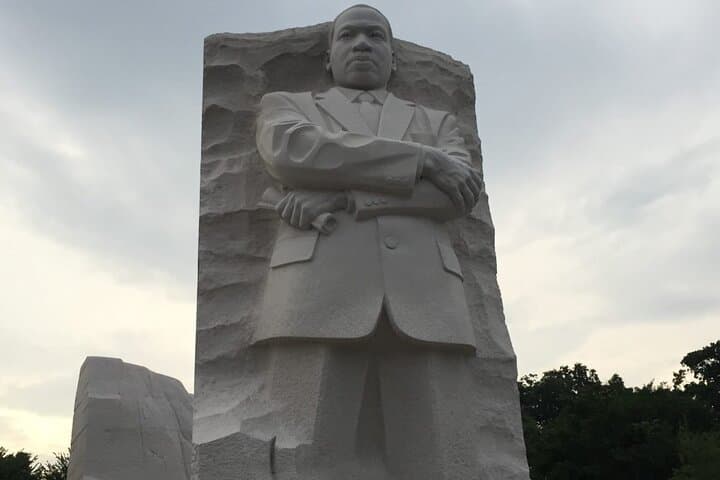
Culturally, the route mixes official commemoration — bronze, marble, inscriptions — with everyday life: buskers, school groups, and locals walking dogs. Guides point out design details you’d miss solo, from sculptural reliefs at the Korean War Memorial to the Capitol’s guardian statuary.
Practically: expect 1.5–2 miles of mostly flat, paved walking over about two hours with frequent stops. The tour is accessible to most fitness levels, but mornings cut the heat and crowds. Bring water, a light layer for wind off the Potomac, and a charged phone for photos and maps. Restrooms and water fountains are available at intervals, but lines can form during peak season.
This short, focused tour gives context to what you see — who is memorialized, why the monuments look the way they do, and where to return later for deeper exploration.
easy.
2 hours.
Suitable for most fitness levels; can be completed by anyone comfortable walking 1.5–2 miles at a relaxed pace.
The guided route covers roughly 1.5–2 miles (about 2.5–3.2 km) between the Capitol area and the Lincoln Memorial with frequent stops.
Much of the National Mall is paved and accessible; notify the operator when booking to confirm accommodations and guide assistance.
No — Smithsonian museums are free but admission is not part of the tour; the guide focuses on outdoor monuments and history.
Tours typically run in light rain; check the operator’s cancellation policy and bring waterproof gear for wind and rain.
The National Mall was laid out under Pierre L’Enfant’s plan and later developed into a ceremonial core of the capital; it has hosted major civic events like the 1963 March on Washington.
Heavy visitation stresses grass and monuments — stick to paved paths, pack out trash, and respect restricted areas to protect the park.
UTG Experience operates guided outdoor trips and adventures with an emphasis on safety, stewardship, and memorable experiences.
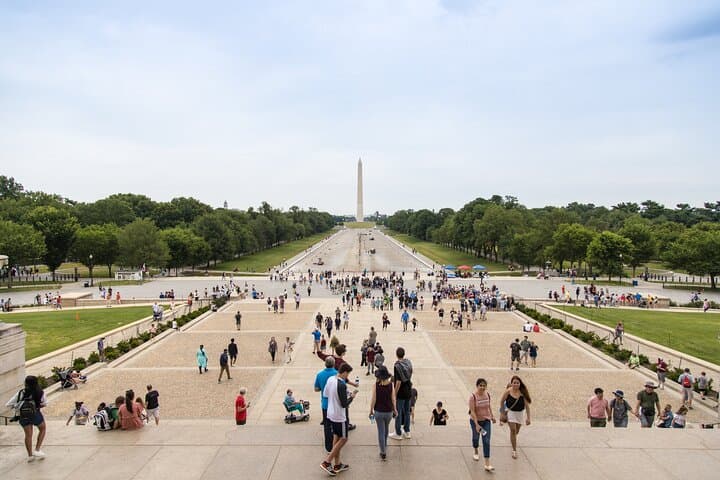


You step away from the Washington Monument Lodge and onto a long paved spine where flags snap and footsteps set the tempo. The Mall stretches ahead — a wide, open plain of stone and grass edged by museums, where the Capitol and Lincoln Memorial bookend two centuries of American story.
You step away from the Washington Monument Lodge and onto a long paved spine where flags snap and footsteps set the tempo. The Mall stretches ahead — a wide, open plain of stone and grass edged by museums, where the Capitol and Lincoln Memorial bookend two centuries of American story.
The walk threads recent and older history: L’Enfant’s 18th‑century plan, neoclassical memorials from the early 20th century, and 1960s civil rights gatherings that turned these lawns into stages. Geologically, the Mall sits on the Atlantic Coastal Plain, a flat lowland shaped by the Potomac; the ground is manmade in places, which keeps grades forgiving for almost all walkers.
Culturally, the route mixes official commemoration — bronze, marble, inscriptions — with everyday life: buskers, school groups, and locals walking dogs. Guides point out design details you’d miss solo, from sculptural reliefs at the Korean War Memorial to the Capitol’s guardian statuary.
Practically: expect 1.5–2 miles of mostly flat, paved walking over about two hours with frequent stops. The tour is accessible to most fitness levels, but mornings cut the heat and crowds. Bring water, a light layer for wind off the Potomac, and a charged phone for photos and maps. Restrooms and water fountains are available at intervals, but lines can form during peak season.
This short, focused tour gives context to what you see — who is memorialized, why the monuments look the way they do, and where to return later for deeper exploration.