THE ADVENTURE COLLECTIVE® · Independent discovery and booking for outdoor travel

Move through 2½ hours of masterworks with a private guide at London’s National Gallery. Learn the stories behind Botticelli, Van Gogh and Turner while getting practical tips for a focused, crowd-smart visit.
Move through 2½ hours of masterworks with a private guide at London’s National Gallery. Learn the stories behind Botticelli, Van Gogh and Turner while getting practical tips for a focused, crowd-smart visit.
A hush settles over Trafalgar Square as you step through the Gallery’s neoclassical facade; light from high clerestory windows pools on gilt frames and the guide’s soft voice draws you toward a Botticelli. The building, completed in the mid-19th century, holds the kind of quiet that encourages close looking—brushstrokes become gestures, faces lean in to meet yours.
Verified experiences and guided adventures in the surrounding area.
Operated by LivTours · London, England
A hush settles over Trafalgar Square as you step through the Gallery’s neoclassical facade; light from high clerestory windows pools on gilt frames and the guide’s soft voice draws you toward a Botticelli. The building, completed in the mid-19th century, holds the kind of quiet that encourages close looking—brushstrokes become gestures, faces lean in to meet yours.
The National Gallery’s collection spans the medieval altar-piece to the threshold of modernism, with concentrations in Italian Renaissance, Dutch Golden Age, Spanish Baroque and 19th-century British and French painting. The museum’s history mirrors Britain’s collecting habits: aristocratic donations, state acquisitions and Victorian-era civic pride that turned Trafalgar Square into a cultural focal point. Architecturally, the gallery sits atop London clay and Portland stone—a solid, urban stage for light to reveal color and texture.
Expect to encounter works by Botticelli, Leonardo, Michelangelo, Velázquez, Rubens, Rembrandt, Constable, Turner, Monet and Van Gogh within a compact route guided for coherence. Local culture presses in at the exits: buskers in the square, cafés for debriefing, and a bustling gift shop where reproductions and catalogues await.
Practicalities matter: tours run about 2½ hours, the gallery enforces strict no-food/no-drink and conducts bag searches, and most areas are wheelchair accessible. Arrive by Tube (Charing Cross) to avoid queues, carry only essentials, and book ahead—the private format limits group size. Time your visit midweek or late afternoon for fewer crowds; bring comfortable shoes, a charged phone for notes, and curiosity: the paintings will do the rest.
easy.
2–3 hours.
Suitable for all fitness levels; requires standing and walking on flat museum floors for the duration.
The tour lists a private expert guide; confirm with the operator whether admission is included in your booking since policies can vary.
Yes—most public areas and surfaces are wheelchair accessible; notify the operator of any specific needs when booking.
Photography for personal use is generally allowed without flash; tripods or professional equipment may need prior approval.
Full refund available if you cancel at least 24 hours before the scheduled departure; within 24 hours the booking is non‑refundable.
Founded in 1824, the National Gallery grew from private donations into a national collection reflecting Britain’s 19th‑century drive to make art publicly accessible.
The Gallery runs active conservation and research programs; visitors help by following no-flash and no-touch rules to protect works for future generations.
LivTours operates guided outdoor trips and adventures with an emphasis on safety, stewardship, and memorable experiences.
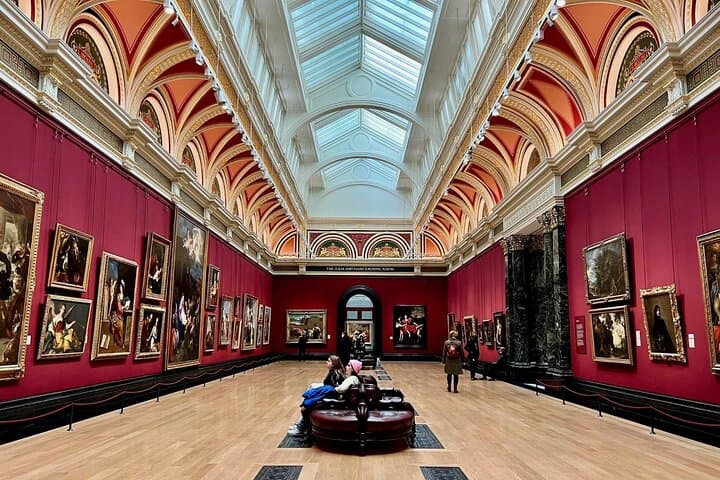
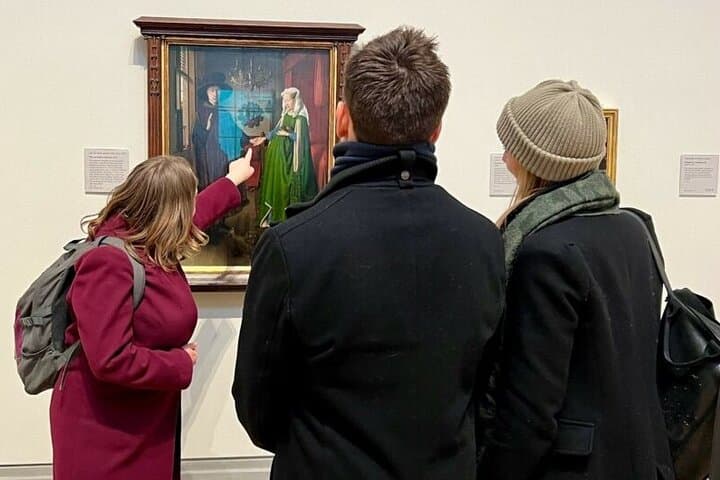
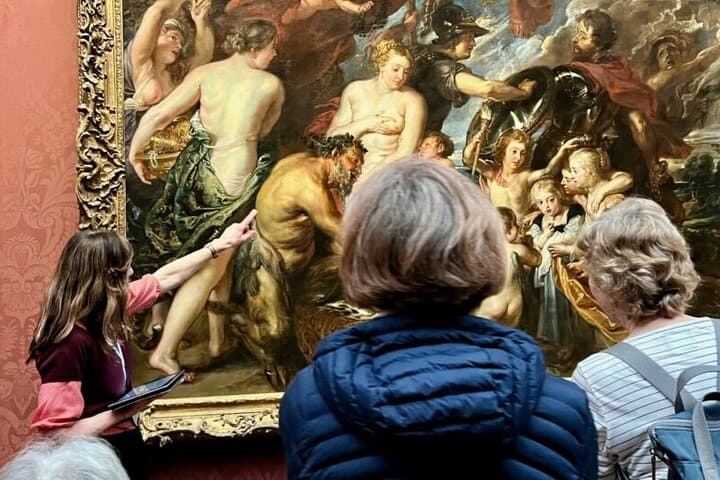
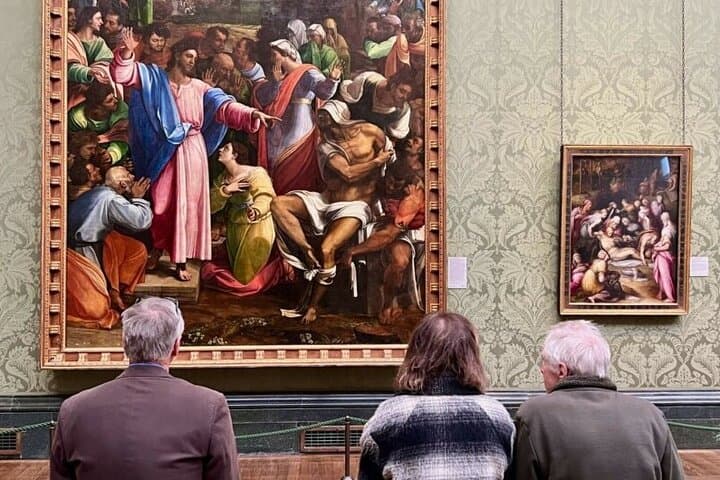
A hush settles over Trafalgar Square as you step through the Gallery’s neoclassical facade; light from high clerestory windows pools on gilt frames and the guide’s soft voice draws you toward a Botticelli. The building, completed in the mid-19th century, holds the kind of quiet that encourages close looking—brushstrokes become gestures, faces lean in to meet yours.
A hush settles over Trafalgar Square as you step through the Gallery’s neoclassical facade; light from high clerestory windows pools on gilt frames and the guide’s soft voice draws you toward a Botticelli. The building, completed in the mid-19th century, holds the kind of quiet that encourages close looking—brushstrokes become gestures, faces lean in to meet yours.
The National Gallery’s collection spans the medieval altar-piece to the threshold of modernism, with concentrations in Italian Renaissance, Dutch Golden Age, Spanish Baroque and 19th-century British and French painting. The museum’s history mirrors Britain’s collecting habits: aristocratic donations, state acquisitions and Victorian-era civic pride that turned Trafalgar Square into a cultural focal point. Architecturally, the gallery sits atop London clay and Portland stone—a solid, urban stage for light to reveal color and texture.
Expect to encounter works by Botticelli, Leonardo, Michelangelo, Velázquez, Rubens, Rembrandt, Constable, Turner, Monet and Van Gogh within a compact route guided for coherence. Local culture presses in at the exits: buskers in the square, cafés for debriefing, and a bustling gift shop where reproductions and catalogues await.
Practicalities matter: tours run about 2½ hours, the gallery enforces strict no-food/no-drink and conducts bag searches, and most areas are wheelchair accessible. Arrive by Tube (Charing Cross) to avoid queues, carry only essentials, and book ahead—the private format limits group size. Time your visit midweek or late afternoon for fewer crowds; bring comfortable shoes, a charged phone for notes, and curiosity: the paintings will do the rest.