THE ADVENTURE COLLECTIVE® · Independent discovery and booking for outdoor travel

Stand before the original Declaration, Constitution and Bill of Rights on a focused 1.5–2 hour semi-private tour. Practical tips on security, photography rules and where to find less-crowded exhibits help you get the most from the visit.
Stand before the original Declaration, Constitution and Bill of Rights on a focused 1.5–2 hour semi-private tour. Practical tips on security, photography rules and where to find less-crowded exhibits help you get the most from the visit.
The tour begins under the vaulted Rotunda dome, where light strikes the glass and the room grows quiet as visitors gather. Guides move the group in measured steps so the documents — the Declaration of Independence, the Constitution and the Bill of Rights — can be viewed without hurry, their ink and paper drawing attention to a very human moment in American history.
Verified experiences and guided adventures in the surrounding area.
Operated by Babylon Tours DC · Washington, DC
The tour begins under the vaulted Rotunda dome, where light strikes the glass and the room grows quiet as visitors gather. Guides move the group in measured steps so the documents — the Declaration of Independence, the Constitution and the Bill of Rights — can be viewed without hurry, their ink and paper drawing attention to a very human moment in American history.
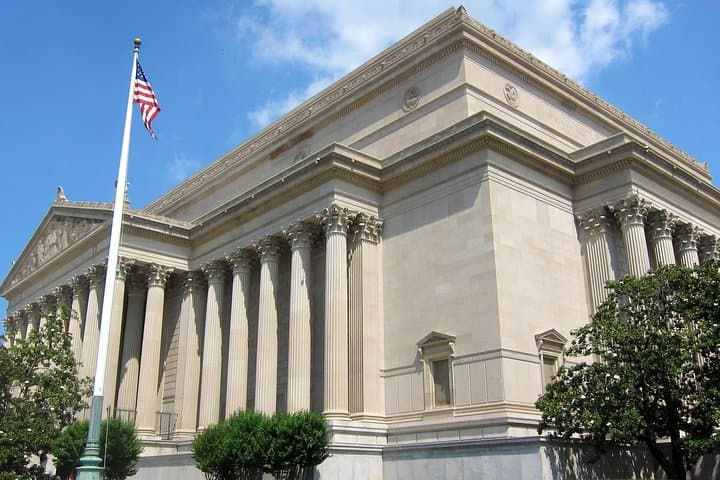
The National Archives Building (opened 1935) is a neoclassical archive that preserves centuries of legal and political records. Geologically, the stone façade reflects quarried marbles popular in early 20th-century federal architecture; culturally, the Archives sits at the crossroads of ceremonial Pennsylvania Avenue and civic memory. The Public Vaults hold presidential letters and artifacts that trace policy and protest; the Rubenstein Gallery houses the Magna Carta replica that inspired later constitutional principles.
Practical guidance centers on preparation: this semi-private tour lasts roughly 1.5–2 hours, with periods of standing and quiet listening. Security checks are strict — no large bags or suitcases — and some rooms require whispering or silence. Photography rules vary by room; your guide will orient you before entry. Dress comfortably but appropriately for a federal building; layers are useful since climate control keeps document rooms cool.
Expect an intimate pace: the guide contextualizes signatures and citations, then points out subtle conservation choices that keep ink readable for centuries. For first-time visitors and history buffs alike, the skip-the-line format reduces crowd friction but does not eliminate security queues. Leave time afterward to walk the nearby National Mall and read the exhibits you’ll now appreciate with greater clarity.
easy.
1.5–2 hours.
A moderate level of mobility is useful — participants should be able to stand and walk short distances at a calm pace.
Skip-the-line access reduces wait but does not bypass security screening; during peak periods or increased security some lines can still form.
Photography rules vary: the Rotunda is generally photograph-friendly, while specific exhibit rooms may restrict photos or flash — the guide will brief you before entry.
The National Archives has accessible entrances and routes; notify the operator in advance to confirm accommodations and meet accessibility needs.
Families are welcome, but the tour involves long stretches of standing and quiet; it’s best for school-age children who can follow museum rules and remain quiet in restricted rooms.
The National Archives Building opened in 1935 to centralize federal records; its holdings span foundational documents through modern civil rights materials.
Climate-controlled galleries and strict handling rules protect fragile paper and ink; limiting flash photography and physical contact helps preserve documents for future generations.
Babylon Tours DC operates guided outdoor trips and adventures with an emphasis on safety, stewardship, and memorable experiences.
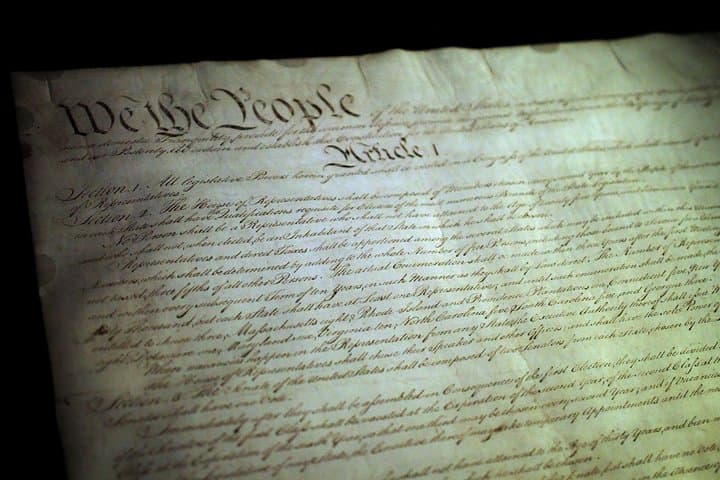
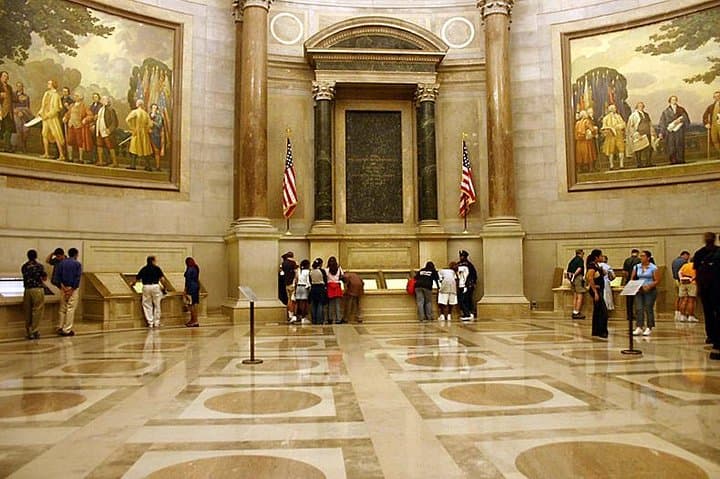
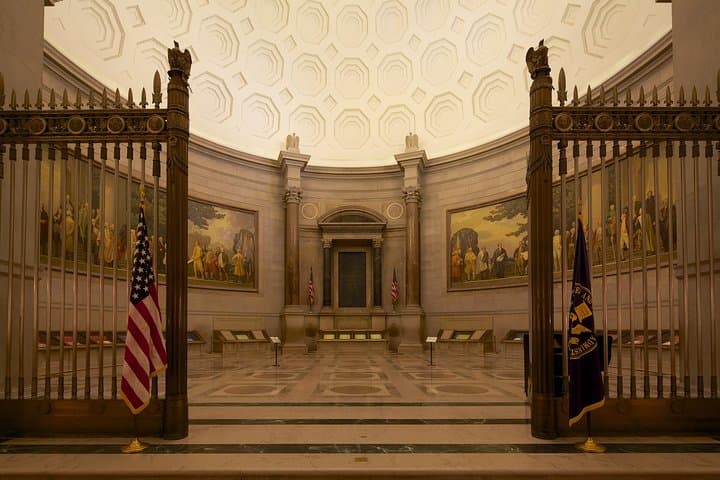
The tour begins under the vaulted Rotunda dome, where light strikes the glass and the room grows quiet as visitors gather. Guides move the group in measured steps so the documents — the Declaration of Independence, the Constitution and the Bill of Rights — can be viewed without hurry, their ink and paper drawing attention to a very human moment in American history.
The tour begins under the vaulted Rotunda dome, where light strikes the glass and the room grows quiet as visitors gather. Guides move the group in measured steps so the documents — the Declaration of Independence, the Constitution and the Bill of Rights — can be viewed without hurry, their ink and paper drawing attention to a very human moment in American history.
The National Archives Building (opened 1935) is a neoclassical archive that preserves centuries of legal and political records. Geologically, the stone façade reflects quarried marbles popular in early 20th-century federal architecture; culturally, the Archives sits at the crossroads of ceremonial Pennsylvania Avenue and civic memory. The Public Vaults hold presidential letters and artifacts that trace policy and protest; the Rubenstein Gallery houses the Magna Carta replica that inspired later constitutional principles.
Practical guidance centers on preparation: this semi-private tour lasts roughly 1.5–2 hours, with periods of standing and quiet listening. Security checks are strict — no large bags or suitcases — and some rooms require whispering or silence. Photography rules vary by room; your guide will orient you before entry. Dress comfortably but appropriately for a federal building; layers are useful since climate control keeps document rooms cool.
Expect an intimate pace: the guide contextualizes signatures and citations, then points out subtle conservation choices that keep ink readable for centuries. For first-time visitors and history buffs alike, the skip-the-line format reduces crowd friction but does not eliminate security queues. Leave time afterward to walk the nearby National Mall and read the exhibits you’ll now appreciate with greater clarity.